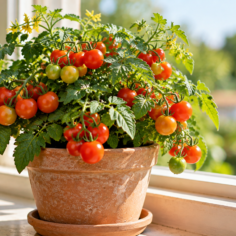

Balcony gardening comes with a specific set of constraints — limited floor space, weight considerations, and often more wind and sun exposure than a ground-level garden — but within those constraints, a surprising amount of productive growing is possible with the right approach.
Assess Your Balcony’s Conditions First
Before choosing plants or containers, take stock of a few key factors: how many hours of direct sun the space actually gets (many balconies are surprisingly shadier than expected due to building overhangs or neighboring structures), which direction it faces (south-facing generally gets the most sun in the Northern Hemisphere), how exposed it is to wind, and what weight restrictions apply, since many balconies — particularly in apartment buildings — have real load limits worth checking with your building management before filling the space with heavy, soil-filled containers.
Maximizing Limited Floor Space
Use vertical growing wherever possible. Wall-mounted planters, hanging baskets, and tiered plant stands multiply your growing area without using additional floor space, which is often the single most limited resource on a balcony.
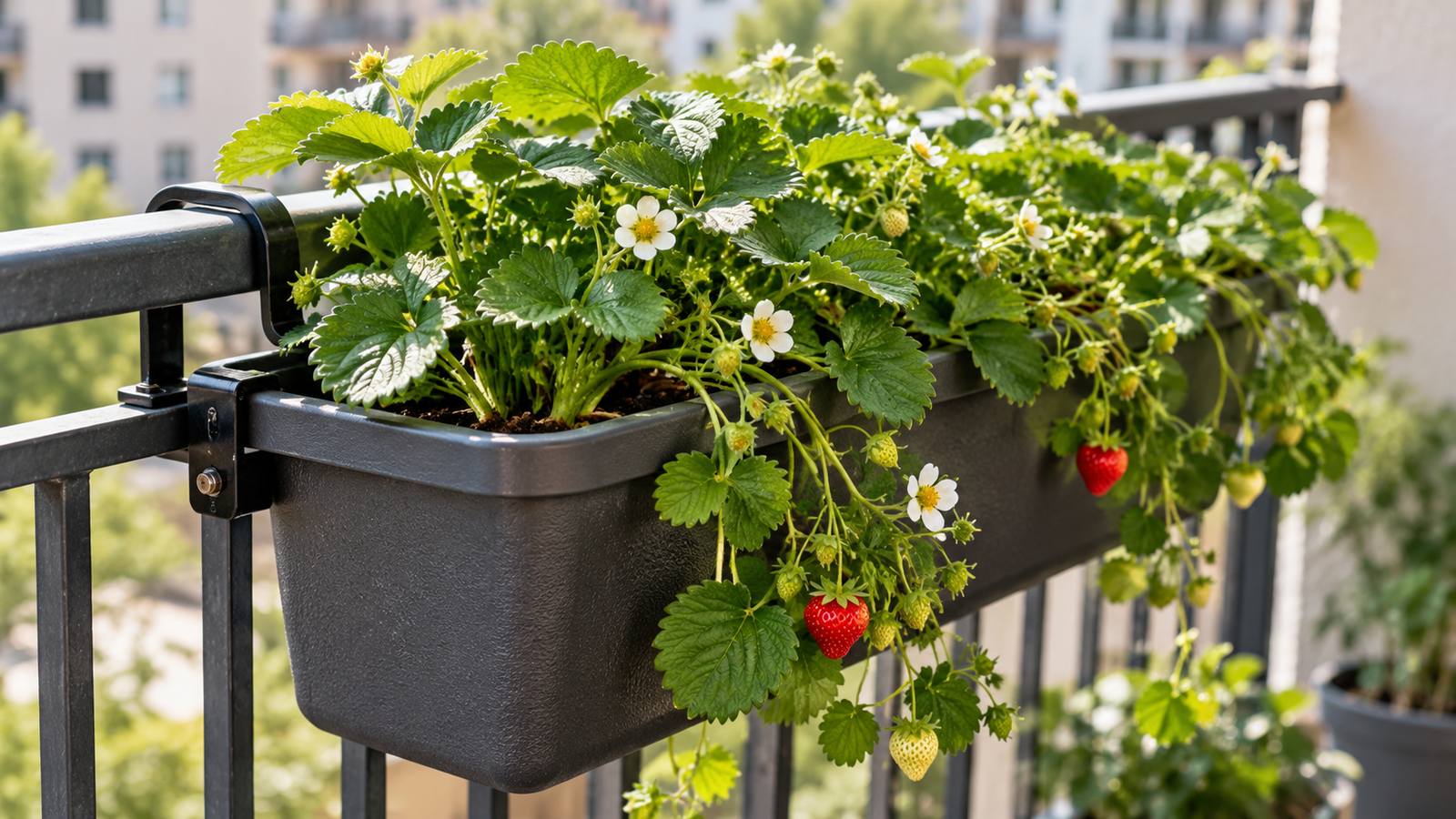
Choose railing planters. Rail-mounted containers that hook over or clamp onto a balcony railing add an entire growing zone that would otherwise go completely unused, ideal for herbs, trailing tomatoes, or strawberries.
Go up with trellises. Vining vegetables like cucumbers, pole beans, and even some compact melon varieties can be trained vertically on a trellis or netting, producing considerably more food per square foot of floor space than the same plants left to sprawl.
Group containers by size and water needs, placing larger, heavier containers toward the back or against sturdier structural points and lighter ones toward the front or on rail mounts, both for practical watering routine and for weight distribution.
Best Vegetables for Balcony Growing
Compact and dwarf varieties consistently outperform full-size ones in balcony conditions: dwarf or patio tomato varieties, bush beans, compact cucumber varieties, peppers, lettuce and other leafy greens, radishes, and most common herbs all adapt well to container life in a balcony setting. Strawberries do particularly well in rail planters or hanging containers, taking advantage of vertical space that would otherwise be wasted.
Windy Balcony Gardening Tips
Wind is one of the most underestimated challenges of balcony gardening, particularly on higher floors where wind speed and consistency both increase noticeably compared to ground level.
Choose sturdy, wind-tolerant plants. Herbs like rosemary and thyme, and vegetables with lower profiles like lettuce and radishes, handle wind exposure better than tall, top-heavy plants like unstaked tomatoes.
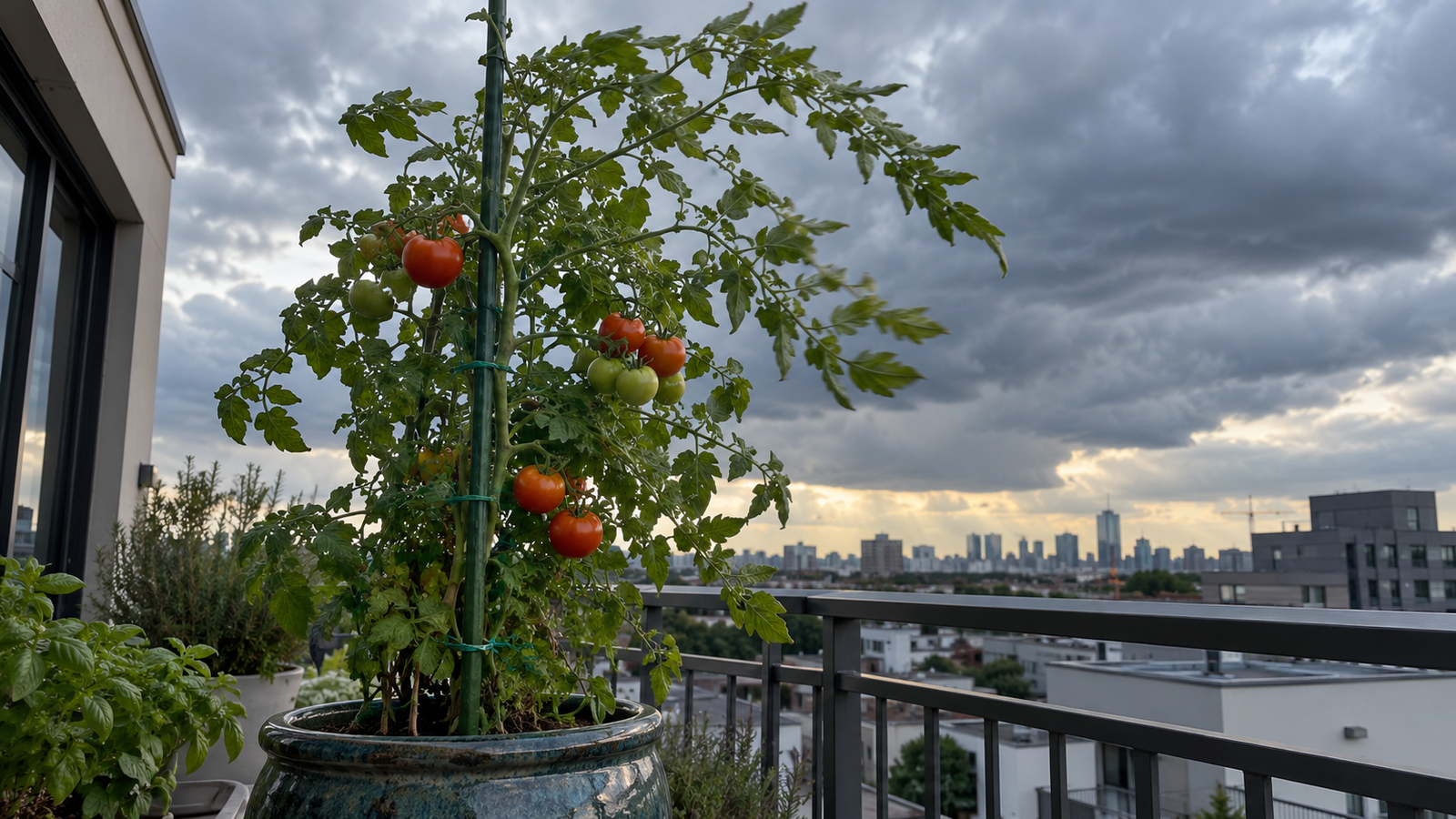
Use heavier containers for taller plants. A lightweight plastic pot with a tall, top-heavy tomato plant is a genuine tipping hazard on a windy balcony; heavier terracotta or ceramic containers provide more stability, or plastic containers can be weighted at the bottom with rocks or sand before adding soil.
Stake and tie taller plants securely. Even wind-tolerant plants benefit from a sturdy stake and regular tying as they grow, since a gust that wouldn’t bother a ground-level garden can snap or topple an unsupported container plant several floors up.
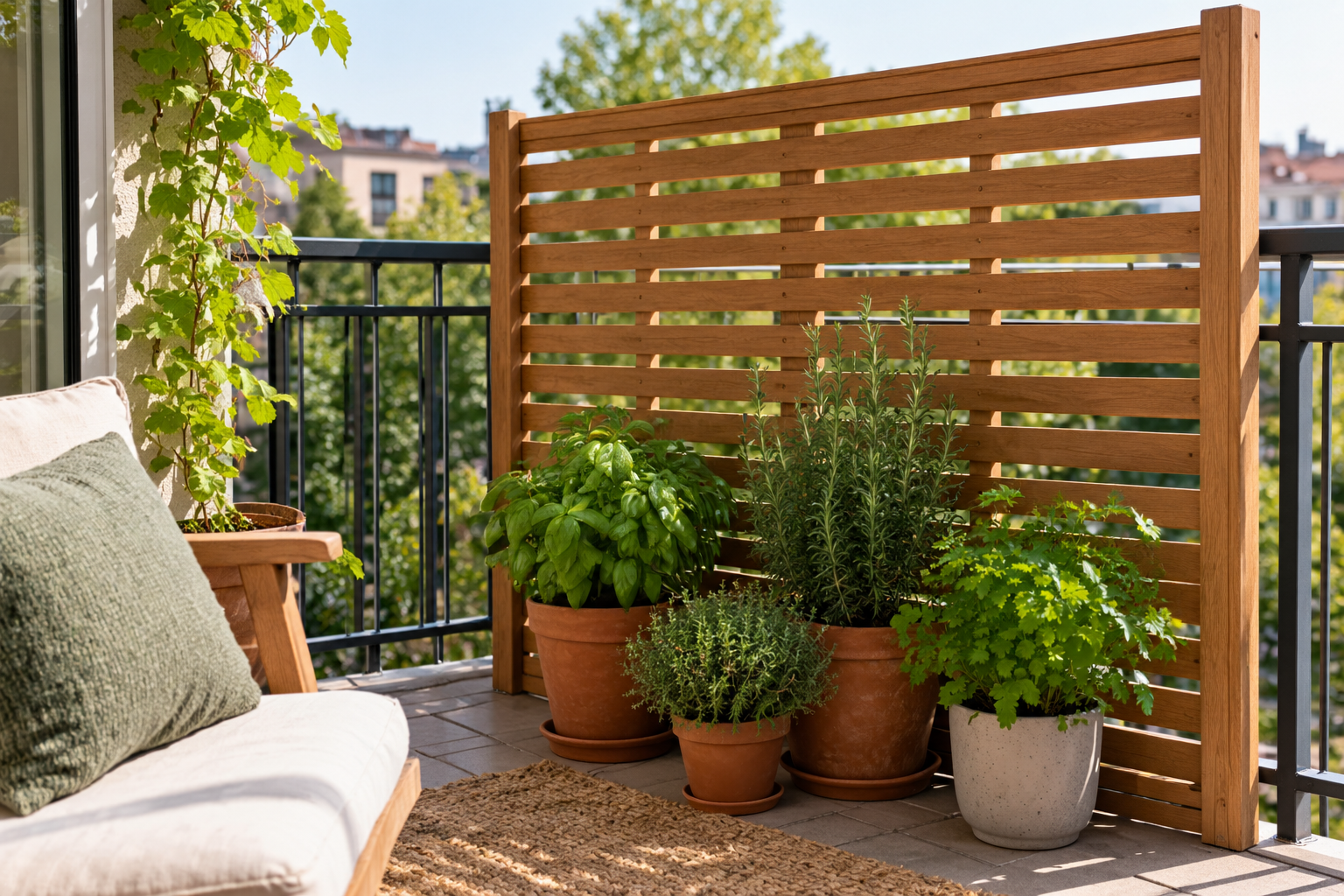
Install a windbreak. A section of lattice, a solid or semi-solid privacy screen, or even strategically placed larger, sturdier plants can meaningfully reduce wind intensity for more vulnerable plants positioned behind them.
Water more frequently. Wind significantly accelerates soil moisture evaporation compared to still conditions, meaning windy balcony containers often need more frequent watering than the same setup would require in a sheltered spot.
Group smaller pots together. Clustering containers, rather than spacing them out individually, provides some mutual wind shelter and reduces individual exposure compared to isolated pots scattered across the space.
Managing Sun Exposure on Balconies
Balconies, particularly those with light-colored flooring or walls, can experience intensified heat and light through reflection, sometimes creating a noticeably hotter microclimate than the same sun exposure would produce at ground level. In very hot, sunny balcony conditions, afternoon shade — from a shade cloth, an umbrella, or positioning behind a taller plant — can prevent heat stress in more sensitive vegetables.
Soil and Container Considerations
Use lightweight potting mix specifically formulated for containers rather than garden soil, both for proper drainage and to help manage the overall weight load on the balcony structure. Self-watering containers are particularly useful for balcony gardening, since they reduce the frequency of watering needed (helpful given how quickly wind and sun exposure can dry out standard containers) while still maintaining consistent soil moisture.
Watering Efficiently on a Balcony
Since balcony containers often dry out faster than ground-level ones due to wind and heat exposure, a simple drip irrigation system on a timer can be a worthwhile investment for anyone managing more than a handful of containers, removing the need for daily manual watering, especially useful during hot spells or when away for a few days.
A Sample Small Balcony Layout
For a modest balcony (roughly 4×8 feet), a reasonable, productive layout might include: two or three rail planters along the railing for herbs and trailing strawberries, one or two larger containers (with wind-stabilizing weight) for a dwarf tomato and a pepper plant, a shallow wide container for a mix of lettuce and radishes, and a vertical trellis structure against the sturdiest wall for pole beans or cucumbers — combining vertical space, rail space, and floor space to maximize output from a genuinely small footprint.
The Bottom Line
Balcony vegetable gardening succeeds by working around its specific constraints rather than fighting them: use vertical and rail space aggressively to multiply limited floor area, choose compact or dwarf plant varieties suited to container life, and take wind seriously with sturdy containers, staking, and possibly a windbreak, particularly on higher floors. With those adjustments, a balcony can produce a genuinely satisfying harvest despite its small footprint.
Last modified: November 11, 2026