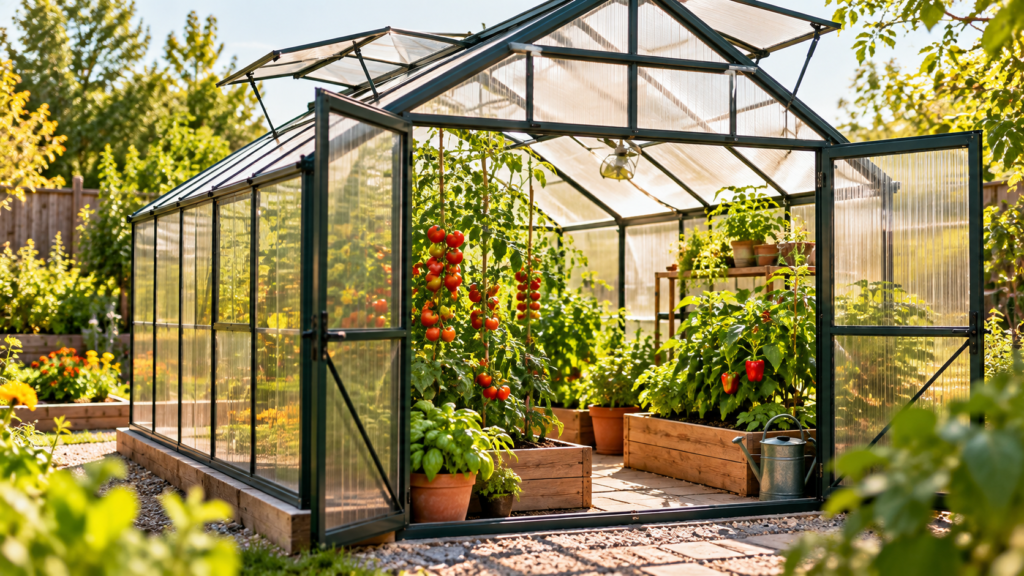
A greenhouse fundamentally changes what’s possible in a garden — extending the growing season on both ends, protecting tender plants from unpredictable weather, and creating a controlled environment for starting seeds or growing crops that wouldn’t otherwise survive local conditions. It also introduces new challenges that don’t exist in open-garden growing, making a bit of upfront knowledge genuinely valuable before diving in.
Choosing the Right Type of Greenhouse
Freestanding greenhouses offer the most flexibility in size and placement and are the most common choice for a dedicated growing space, ranging from small kit-based structures to larger custom builds.
Lean-to greenhouses, attached to an existing house or garage wall, take advantage of the building’s existing heat retention and can be a more affordable, space-efficient option for a smaller-scale setup.
Cold frames and mini greenhouses, while not full-sized structures, offer many of the same season-extension benefits on a smaller scale and are a reasonable starting point for a beginner wanting to test greenhouse growing before committing to a larger structure.
Hoop houses (high tunnels), built from bent piping covered in greenhouse plastic, offer a more affordable, DIY-friendly way to cover a larger growing area than a small kit greenhouse would, without the cost of glass or polycarbonate paneling.
Key Factors for Greenhouse Placement
Sun exposure matters enormously — a greenhouse should generally be sited to receive as much direct sun as possible, particularly in winter when the sun sits lower in the sky and existing structures or trees can cast longer shadows than they would in summer.
Wind exposure affects both heat retention and structural stability; a location with some wind protection (without full shade) helps maintain more stable internal temperatures and reduces stress on the structure itself.
Drainage around the greenhouse site prevents water pooling issues that could affect the foundation or create excess humidity inside.
Accessibility to water and, ideally, electricity simplifies both daily watering routines and any supplemental heating, cooling, or lighting equipment you may eventually want to add.
Managing Temperature in a Greenhouse
This is one of the biggest adjustments for beginners, since greenhouses can swing to temperature extremes — both too hot and too cold — much more dramatically than open garden conditions.
Ventilation is essential, even in cooler climates, since a closed greenhouse on a sunny day, even in winter, can reach surprisingly high internal temperatures capable of stressing or damaging plants if not vented. Roof vents, side vents, or simply propping doors open on warm days all help manage this, and automatic vent openers (which open based on temperature without needing manual adjustment) are a worthwhile investment for anyone who can’t check the greenhouse multiple times a day.
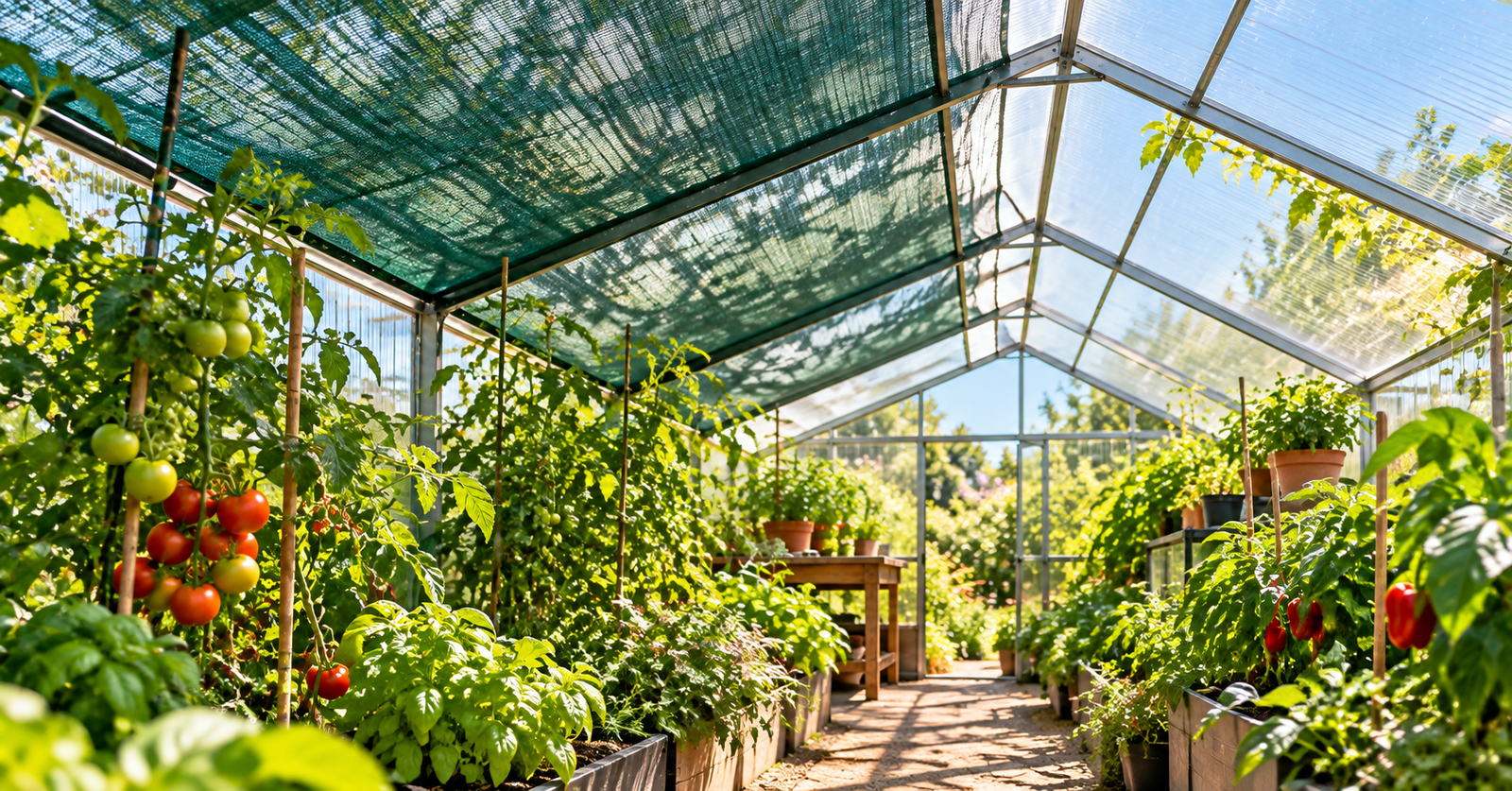
Shade cloth during the hottest months helps prevent overheating and can reduce the need for constant, active venting adjustment during peak summer heat.
Supplemental heating may be necessary for winter growing in colder climates, ranging from simple passive solutions (thermal mass like water barrels that absorb heat during the day and release it at night) to active heating systems for more serious winter production.

Watering in a Greenhouse
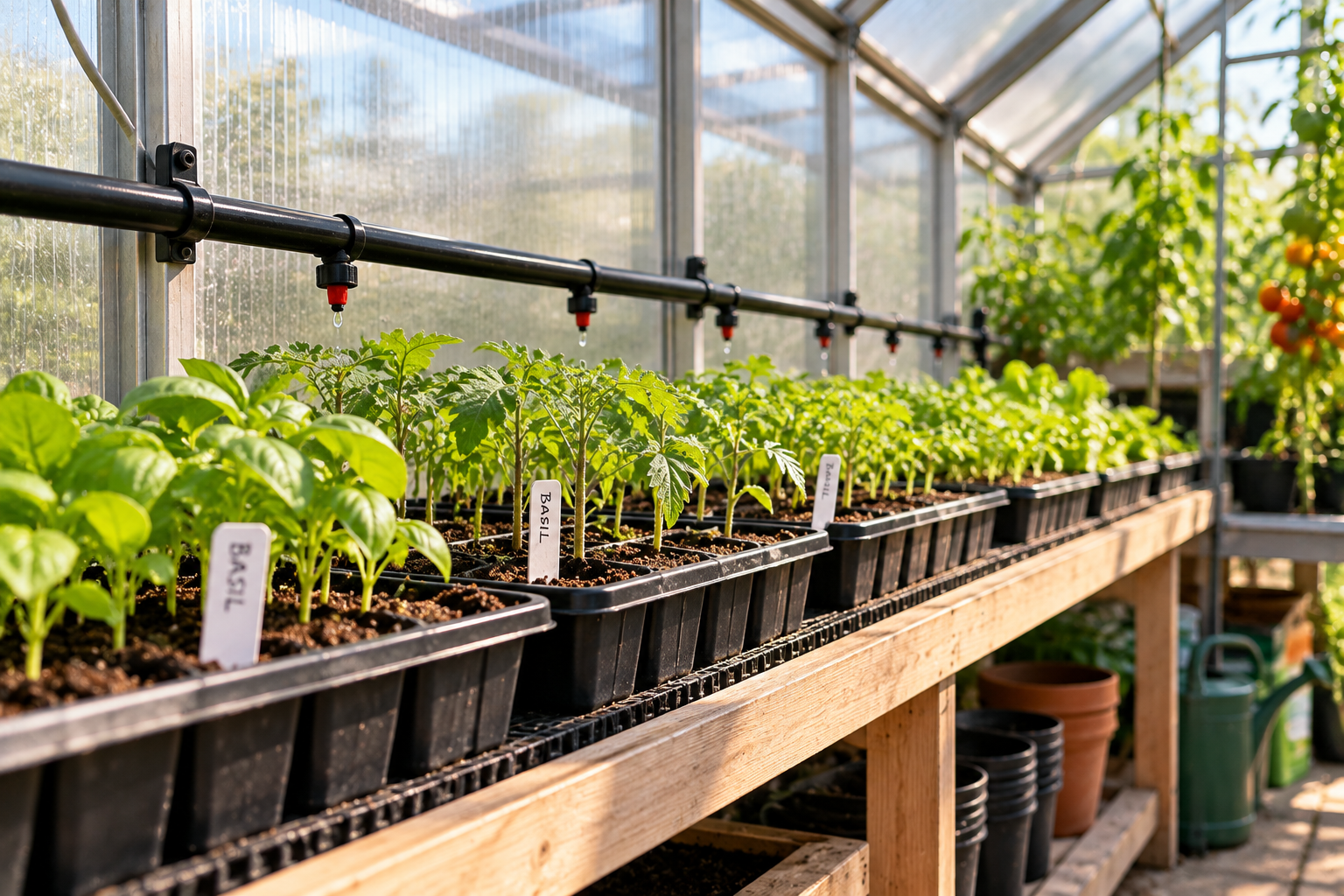
Greenhouse conditions often require more attentive watering than open garden growing, since the enclosed environment can dry out quickly on hot days due to increased heat, while also potentially staying too humid in cooler, less-ventilated conditions, creating a real balancing act. Drip irrigation systems are particularly well suited to greenhouse use, providing more consistent, controlled watering than hand-watering while also helping manage humidity by keeping water off foliage.
Managing Humidity and Airflow
Greenhouses can develop excessive humidity, particularly in cooler weather when venting is minimized, creating favorable conditions for fungal diseases like powdery mildew and botrytis. Good airflow — through vents, doors, or a small circulation fan — helps manage this even when full ventilation isn’t practical due to outside temperature, and watering at the soil level rather than overhead further reduces the humidity load on foliage.
What to Grow in a Beginner Greenhouse
Season extension for familiar crops is often the most valuable and straightforward first use of a greenhouse — starting tomatoes, peppers, and other warm-season crops earlier than outdoor conditions would allow, or extending a fall harvest of greens well past when outdoor frost would otherwise end the season.
Crops that benefit from consistent, protected conditions, like many leafy greens, herbs, and some flowers, tend to perform well in a beginner greenhouse setup without requiring especially advanced management.
More demanding, tropical, or out-of-zone crops (citrus, for instance, in a colder climate) are certainly possible in a greenhouse but generally represent a more advanced project best approached after building some baseline greenhouse management experience with more forgiving crops first.
Common Beginner Mistakes
Underestimating ventilation needs, leading to overheating on sunny days even in cold weather, which can stress or kill plants faster than the cold conditions the greenhouse was meant to protect against in the first place.
Overwatering in a humid, poorly ventilated environment, compounding fungal disease risk that greenhouse conditions already tend to favor more than open garden growing.
Placing the greenhouse in a shadier spot than realized, particularly relevant for winter growing when the sun’s lower angle can put a greenhouse in more shade than the same location experiences in summer.
Skipping pest monitoring. Greenhouses, like indoor growing spaces generally, lack the full range of natural predators an open garden has, meaning pest populations like aphids and spider mites can sometimes build up faster and more persistently than they would outdoors.
Getting Started: A Reasonable First Season
For a genuine beginner, starting with a smaller structure (even a cold frame or small kit greenhouse) focused on season extension for familiar crops — starting seeds earlier in spring, or extending a fall greens harvest — provides a manageable way to build the specific skills greenhouse growing requires (ventilation management, watering adjustment, humidity control) before scaling up to a larger structure or more ambitious year-round growing goals.
The Bottom Line
Greenhouse gardening opens up real possibilities for extending your growing season and protecting tender plants, but success depends heavily on managing temperature swings and humidity — challenges that don’t exist in open garden growing. Start with adequate ventilation planning from day one, choose familiar, forgiving crops for your first season, and build up to more ambitious projects as you develop a feel for how your specific greenhouse behaves through the changing seasons.
Last modified: November 15, 2026