
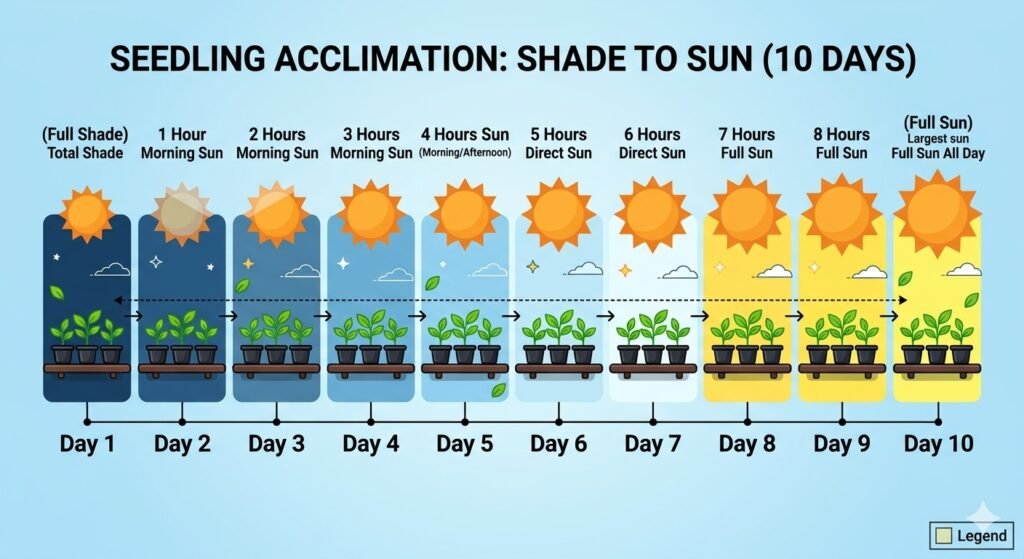
Hardening off is the process of gradually acclimating indoor-raised seedlings to outdoor conditions before their final transplant — and it’s one of the most commonly skipped steps in vegetable gardening, usually because gardeners underestimate just how different indoor and outdoor conditions really are for a young plant.
Why Hardening Off Matters So Much
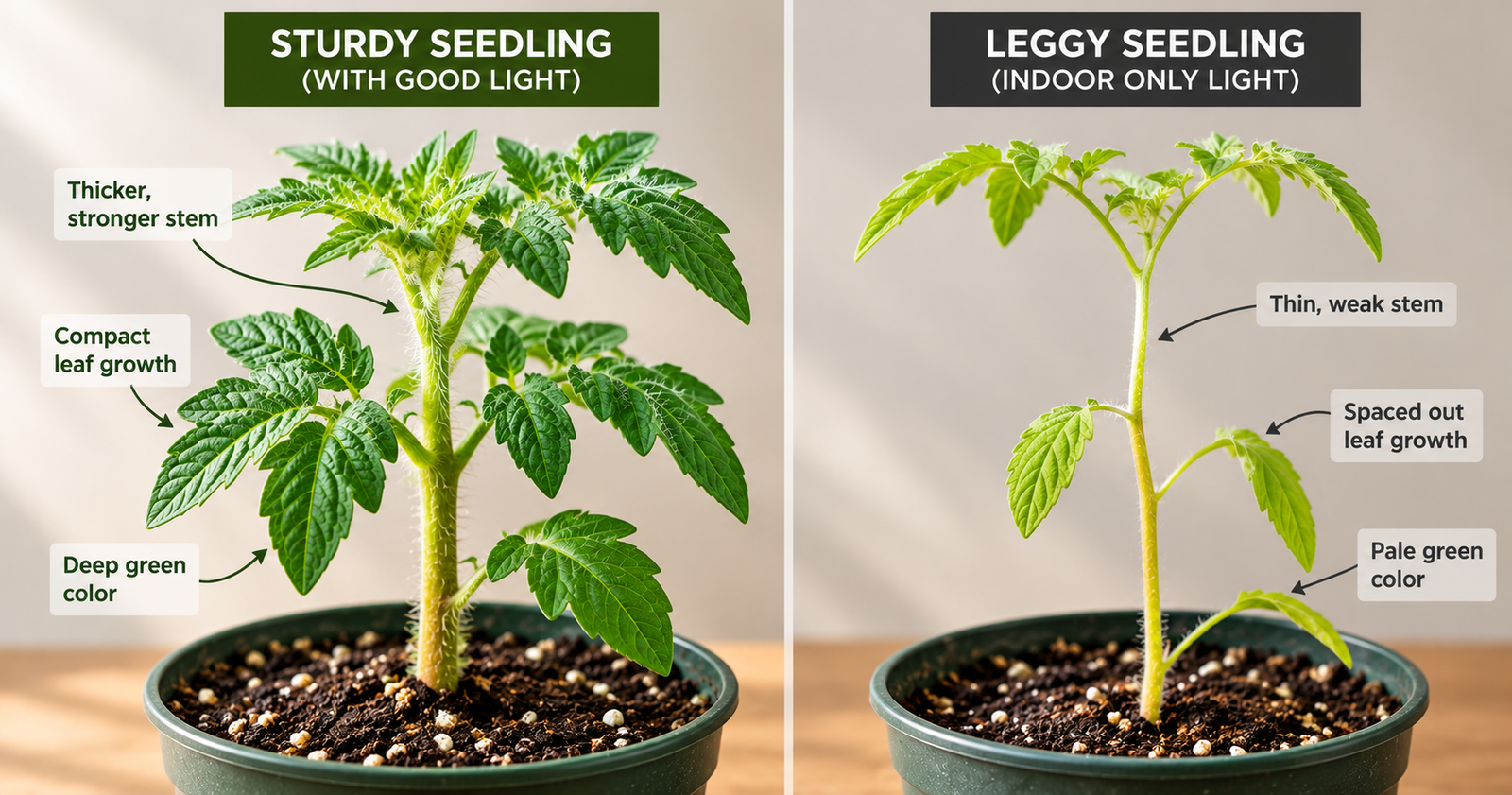
Seedlings raised indoors, even under a strong grow light, grow up in a remarkably gentle environment: stable temperatures, no wind, no direct sun intensity, and no fluctuation in humidity. Their leaf tissue develops thinner cell walls and a thinner waxy cuticle than a plant grown outdoors from the start, because there’s no environmental pressure requiring anything sturdier.
Move that seedling straight outside, and it faces direct UV exposure, wind, temperature swings, and lower humidity all at once — stress that can cause sunscald, wilting, stunted growth, or outright death within days, even if the seedling looked perfectly healthy the moment before transplanting. Hardening off works by giving the plant’s tissue time to toughen up gradually, developing thicker cuticles and stronger cell structure in response to incremental outdoor exposure.
When to Start Hardening Off
Begin the process about 7–10 days before your planned transplant date, once your last frost date has passed (or is close enough that you’re comfortable with the remaining risk) and seedlings have developed their first set of true leaves and look sturdy enough to handle handling.
Step-by-Step Hardening Off Process
Day 1–2: Short, sheltered exposure
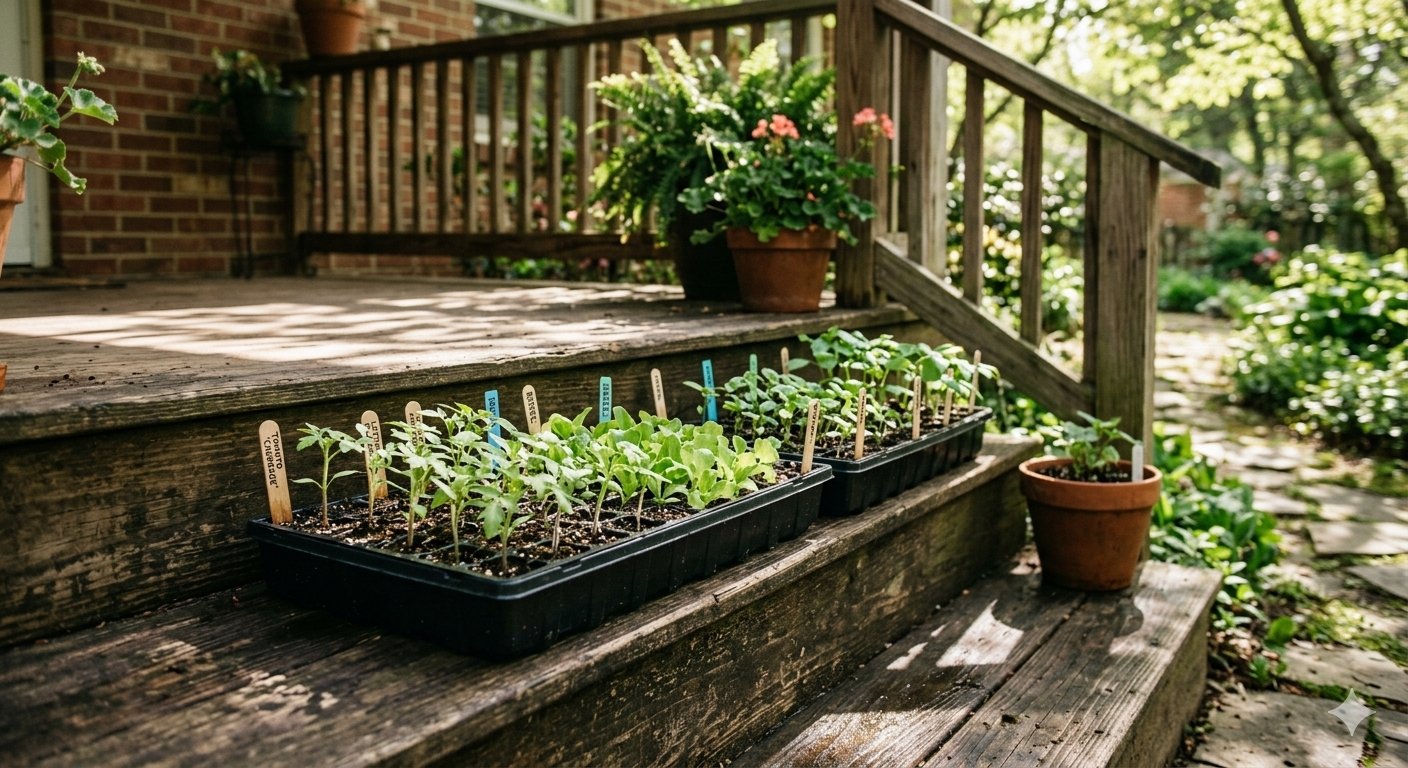
Place seedlings outside in a shaded, wind-protected spot for just 1–2 hours, then bring them back indoors. This first exposure should be gentle — think dappled shade under a porch roof or against a sheltered wall, not direct sun or open wind.
Day 3–4: Extend time, introduce some sun
Increase outdoor time to 2–4 hours, and allow some morning sun exposure (the gentlest part of the day) while still avoiding harsh afternoon sun and any strong wind.
Day 5–6: Longer exposure, more direct sun
Extend to 4–6 hours outside, including a longer stretch of direct sun. Start leaving them out slightly later into the afternoon.
Day 7–8: Nearly a full day outside
Move to 6–8 hours outdoors, including a real stretch of direct afternoon sun. If nighttime temperatures are safely above what the seedlings can tolerate (generally above 45–50°F for most warm-season vegetables), you can begin leaving them out overnight as well.
Day 9–10: Full day and night outside
By this point, seedlings should handle a full day of direct sun and, conditions permitting, overnight exposure. If they look strong and unstressed after a night outside, they’re ready for transplanting into their final garden location.
Signs You’re Moving Too Fast
Watch for these signs of stress during the process, and if you see them, dial back to a more sheltered stage for a day or two before trying again:
- Wilting that doesn’t recover once moved to shade
- Bleached or scorched patches on leaves from too much direct sun too soon
- Leaves curling or drooping in strong wind exposure introduced too early
- Stunted, purple-tinged growth, often from cold stress if nights are cooler than the plant can handle
Adjusting the Timeline for Weather
The 7–10 day timeline is a general guideline, not a fixed rule. In consistently mild, calm weather, hardening off can move slightly faster; during an unusually cold, windy, or intensely sunny stretch, it’s worth slowing down and extending the process by a few extra days rather than rushing seedlings into conditions they’re not ready for.
What Happens If You Skip Hardening Off
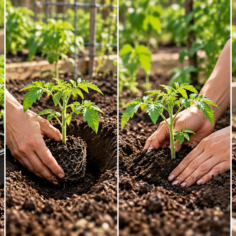
Transplanting straight from indoor conditions to the garden without any acclimation period often causes what’s sometimes called "transplant shock" — a combination of leaf scorch, wilting, and stunted growth that can set a plant back by weeks even if it eventually recovers, and in more severe cases can kill the seedling outright, undoing weeks of careful seed-starting effort in a single afternoon.
A Simpler Alternative: Cold Frames
If daily monitoring and moving trays in and out feels impractical, a cold frame offers a lower-effort alternative. Seedlings can live in the cold frame for the hardening-off period, with the lid propped open a little more each day to gradually increase exposure, then fully open during the day as the process progresses, before finally transplanting into the open garden. This automates much of the gradual exposure without requiring you to physically move trays multiple times a day.
After Transplanting: A Few More Days of Grace
Even after a full hardening-off period, newly transplanted seedlings benefit from a little extra care in their first few days in the ground — providing temporary shade during an unusually hot or windy stretch, and watching for any signs of ongoing stress. Full establishment typically takes another week or two, during which consistent watering matters more than usual as the root system settles into its new environment.
The Bottom Line
Hardening off asks for patience more than skill: 7–10 days of gradually increasing outdoor exposure, watching closely for stress signals, and resisting the urge to rush a strong-looking seedling straight into full sun and wind. That short window of extra care is often the single biggest factor separating transplants that thrive from ones that struggle or fail within days of hitting the garden.
For the indoor stage and tomato planting dates, see How to Start Seeds Indoors: Beginner’s Guide and When to Plant Tomatoes: Seeds & Transplants.
Last modified: October 17, 2026



[…] Before moving your plants outside, review Last Frost Date by ZIP Code: Find Your Planting Date and Hardening Off Seedlings: A Step-by-Step Guide. […]
[…] Harden off first. Seedlings raised indoors need a 7–10 day gradual acclimation to outdoor sun, wind, and temperature before their final transplant — skipping this step is one of the most common causes of severe transplant shock, independent of how carefully the physical transplanting itself is handled. […]