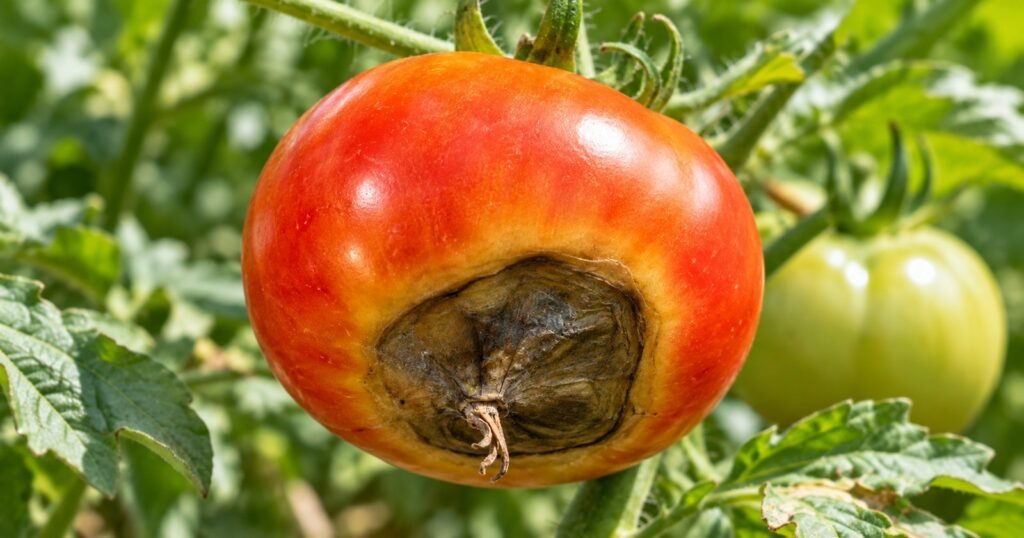
Blossom end rot is one of the most common and most misunderstood tomato problems — a dark, sunken, leathery patch that develops on the bottom (blossom end) of otherwise healthy-looking fruit, often just as it’s beginning to ripen. Understanding what actually causes it changes how you treat it, and the real cause surprises a lot of gardeners.
How to Identify Blossom End Rot
What it looks like: A water-soaked, dark spot at the blossom end of the fruit (opposite the stem) that enlarges and turns dark brown to black, developing a leathery, sunken, sometimes flattened texture as it progresses. It’s distinct from insect damage or fungal disease because it appears specifically at the bottom of the fruit and has this characteristic dry, leathery rather than moldy or mushy appearance.
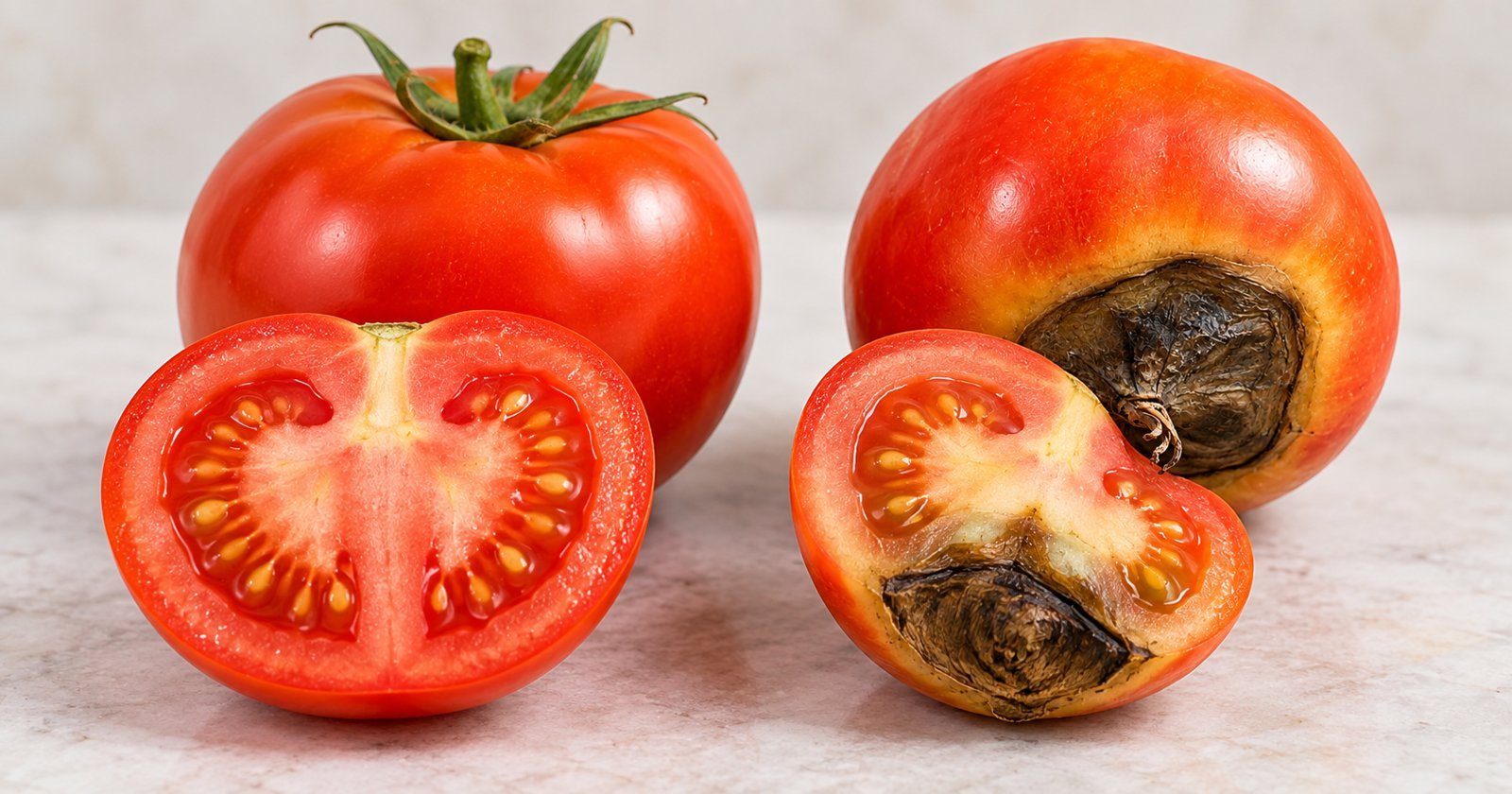
When it appears: Most commonly on the first fruits of the season, though it can appear at any point, and it’s particularly common during periods of inconsistent watering or rapid fruit growth following a dry spell.
The Real Cause: Calcium and Water, Not Just Calcium
This is the most important thing to understand about blossom end rot, because it changes the fix. Blossom end rot is caused by a localized calcium deficiency within the developing fruit — but in the vast majority of cases, this isn’t because the soil actually lacks calcium. Most garden soils contain plenty of calcium. The real problem is usually inconsistent water availability, which disrupts the plant’s ability to move calcium to where it’s needed most: the rapidly growing fruit tissue.
Calcium moves through a plant exclusively via water flow (unlike some nutrients that can be redistributed internally), so anything that disrupts steady water uptake — a dry spell, uneven watering, root damage, or excessive humidity that slows the plant’s water movement (transpiration) — can starve the fastest-growing part of the fruit of calcium even when plenty is technically present in the soil.
Common Causes of Blossom End Rot
Inconsistent watering is by far the most common cause — alternating between drought stress and heavy watering disrupts the steady water flow calcium transport depends on.
Rapid early-season fruit growth, particularly on the first fruit set of the season, when the plant’s root system may not yet be fully established enough to keep pace with the water demands of quickly developing fruit.
Excessive nitrogen fertilization, which can promote rapid vegetative growth that outcompetes fruit for available calcium and water resources.
Root damage, from overly aggressive cultivation near the plant’s base, transplant shock, or pest damage, all of which reduce the root system’s capacity to take up water and calcium consistently.
True calcium-deficient or highly acidic soil, which does happen but is considerably less common than the watering-related causes above.
Excess soil salts, which can interfere with calcium uptake even when calcium itself is present, sometimes from over-fertilizing or from naturally salty soil and irrigation water.
How to Treat Blossom End Rot
1. Remove affected fruit
Fruit already showing blossom end rot won’t recover — remove it to redirect the plant’s energy toward developing fruit rather than fruit that’s already compromised.
2. Fix your watering routine first
Since inconsistent watering is the leading cause, establishing a consistent, deep watering schedule is the single most impactful change you can make. Water deeply and consistently, aiming for roughly 1–2 inches of water per week (including rainfall), rather than shallow, frequent watering or letting soil swing between very dry and very wet.
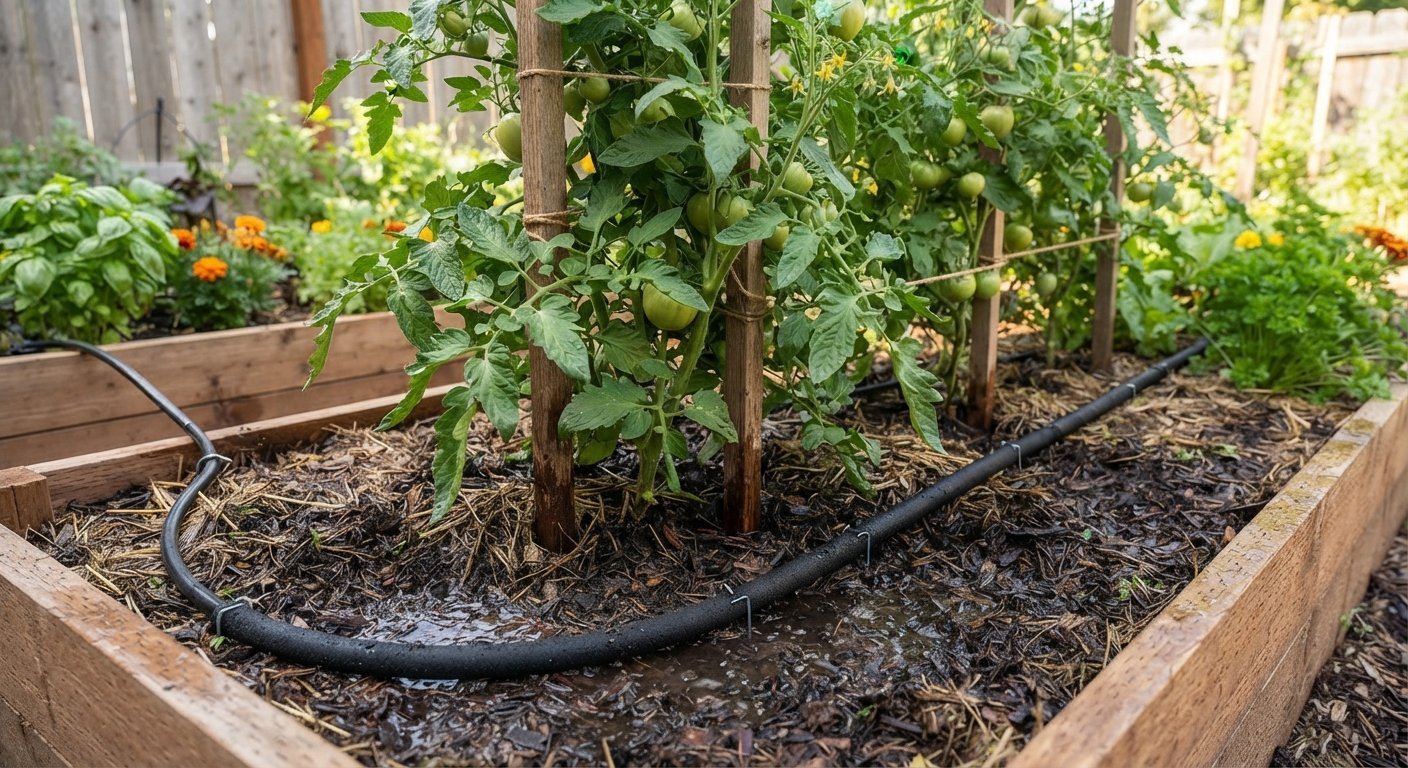
3. Mulch to buffer soil moisture swings
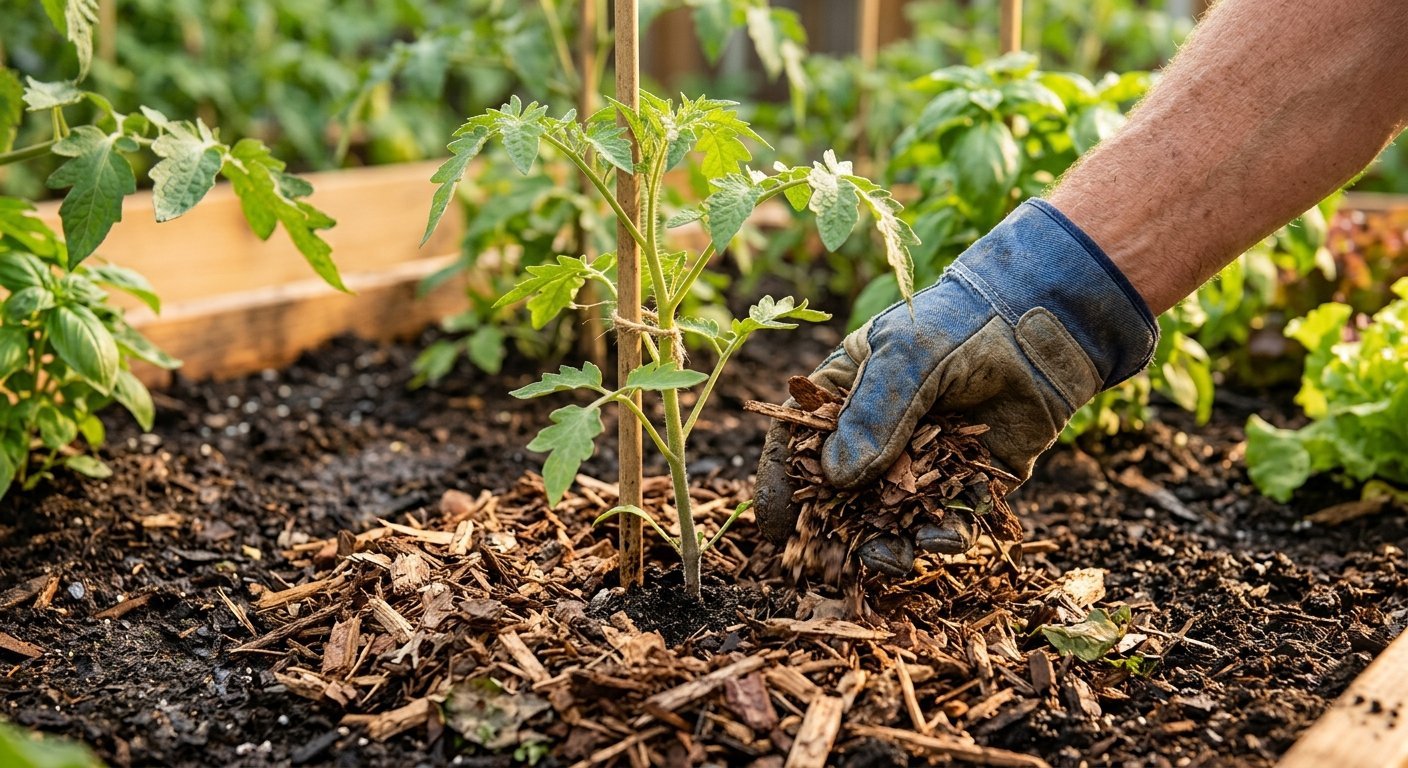
A 2–3 inch layer of mulch around tomato plants significantly reduces how quickly soil dries out between waterings, smoothing out the moisture swings that disrupt calcium transport in the first place.
4. Test soil pH and calcium levels if the problem persists
If consistent watering doesn’t resolve the issue over subsequent fruit sets, a soil test (through a local extension office for the most reliable results) can confirm whether true calcium deficiency or an overly acidic pH is a contributing factor, which would call for a different fix — like adding agricultural lime to raise pH and calcium levels together.
5. Consider a foliar calcium spray as a supplemental measure
Calcium sprays applied directly to foliage and developing fruit are sometimes used as a supplemental treatment, though research on their actual effectiveness is mixed — since the underlying problem is usually water-related calcium transport rather than a true soil shortage, a foliar spray addresses the symptom more than the root cause and shouldn’t replace fixing the watering routine.
6. Avoid excessive nitrogen fertilizer
If you’ve been feeding heavily with a high-nitrogen fertilizer, consider switching to a more balanced formula, since excessive nitrogen can worsen the water and calcium competition between vegetative growth and fruit development.
How to Treat Blossom End Rot on Future Fruit
The good news: blossom end rot often resolves on its own as the season progresses and the plant’s root system matures, especially once watering becomes more consistent. Many gardeners see the problem concentrated in the first flush of fruit, with later fruit sets developing normally once watering routines stabilize and root systems fully establish.
Preventing Blossom End Rot From the Start
Water consistently from the beginning, rather than waiting for a problem to appear before establishing a routine — a soaker hose or drip irrigation system on a timer removes much of the guesswork and inconsistency that comes with manual watering.
Mulch early, before the first real dry spell of the season has a chance to stress developing fruit.
Avoid over-fertilizing with nitrogen, using a balanced fertilizer instead, particularly once plants begin flowering and setting fruit.
Amend soil with compost before planting, which improves overall water retention and drainage balance, reducing the extreme moisture swings that contribute to the problem.
Choose less-susceptible varieties if blossom end rot has been a recurring problem — some tomato varieties, particularly certain paste and plum types, are more prone to it than others.
The Bottom Line
Blossom end rot is almost always a symptom of inconsistent water availability disrupting calcium transport to fruit, not a true calcium shortage in the soil, which means the real fix is a steady, consistent watering routine and a good layer of mulch, rather than reaching straight for a calcium supplement. Remove affected fruit, stabilize watering, and in most cases, subsequent fruit sets on the same plant will develop normally as conditions even out.
For soil preparation and ongoing tomato care, see How to Fix Compacted Soil (Plus a Complete Soil Health Guide) and How to Prune Tomato Plants for Bigger, Healthier Harvests.
Last modified: October 5, 2026