Pruning tomatoes intimidates a lot of gardeners who worry about cutting away something they shouldn’t, but done correctly, it’s one of the most impactful things you can do for plant health, airflow, and fruit quality. The key is understanding what type of tomato you’re growing before you start, since the right approach differs significantly between them.
Determinate vs. Indeterminate: Why It Matters Before You Prune
Determinate tomatoes grow to a predetermined, compact size, set all their fruit within a relatively short window, and then stop producing new growth. These varieties need little to no pruning — removing significant growth can actually reduce your total harvest, since determinate plants don’t have the same capacity to compensate with vigorous new growth that indeterminate types do.
Indeterminate tomatoes continue growing and producing fruit throughout the entire season until frost kills them, and these are the varieties that benefit most from regular pruning, since their continuous growth habit can quickly become an unwieldy, disease-prone tangle without some management.
Check your seed packet or plant tag before deciding how aggressively to prune — this single distinction changes the entire approach.
Why Prune Tomatoes at All
Improved air circulation reduces humidity around the foliage, which lowers the risk of fungal diseases like early blight and powdery mildew that thrive in dense, still, humid conditions.
Better light penetration to lower leaves and developing fruit, supporting more even ripening and healthier overall growth throughout the plant rather than just at the top.
Redirected energy toward fruit production rather than excessive vegetative growth, often resulting in larger, though sometimes slightly fewer, fruits.
Easier harvesting and support, since a pruned, well-trained plant is simpler to tie to a stake or cage and easier to inspect for pests and disease.
Understanding Suckers
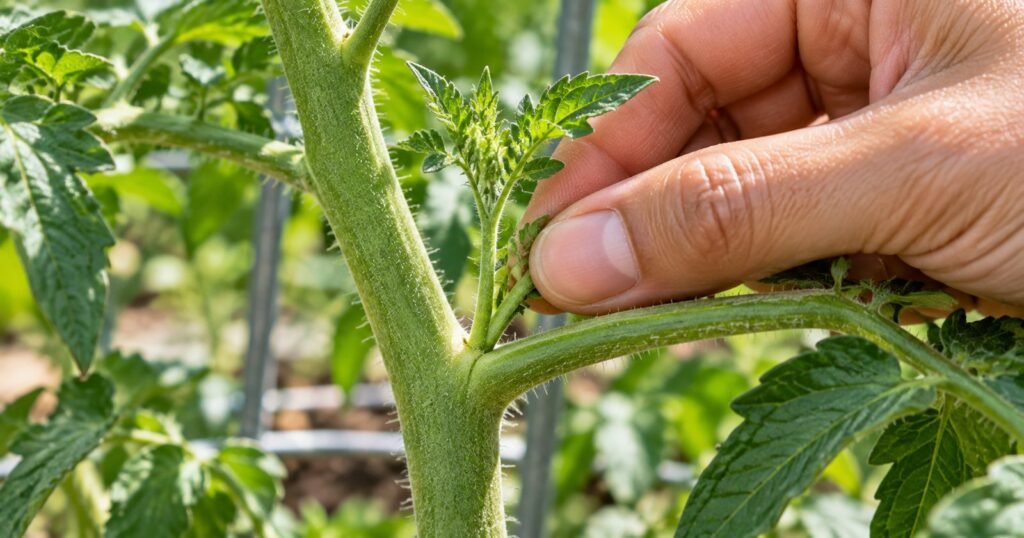
The central pruning decision for indeterminate tomatoes revolves around "suckers" — the small shoots that emerge from the joint (axil) between the main stem and a branch. Left alone, each sucker will grow into its own full stem, eventually producing its own suckers, and an unpruned indeterminate tomato plant can become an enormous, sprawling structure with dozens of competing stems.
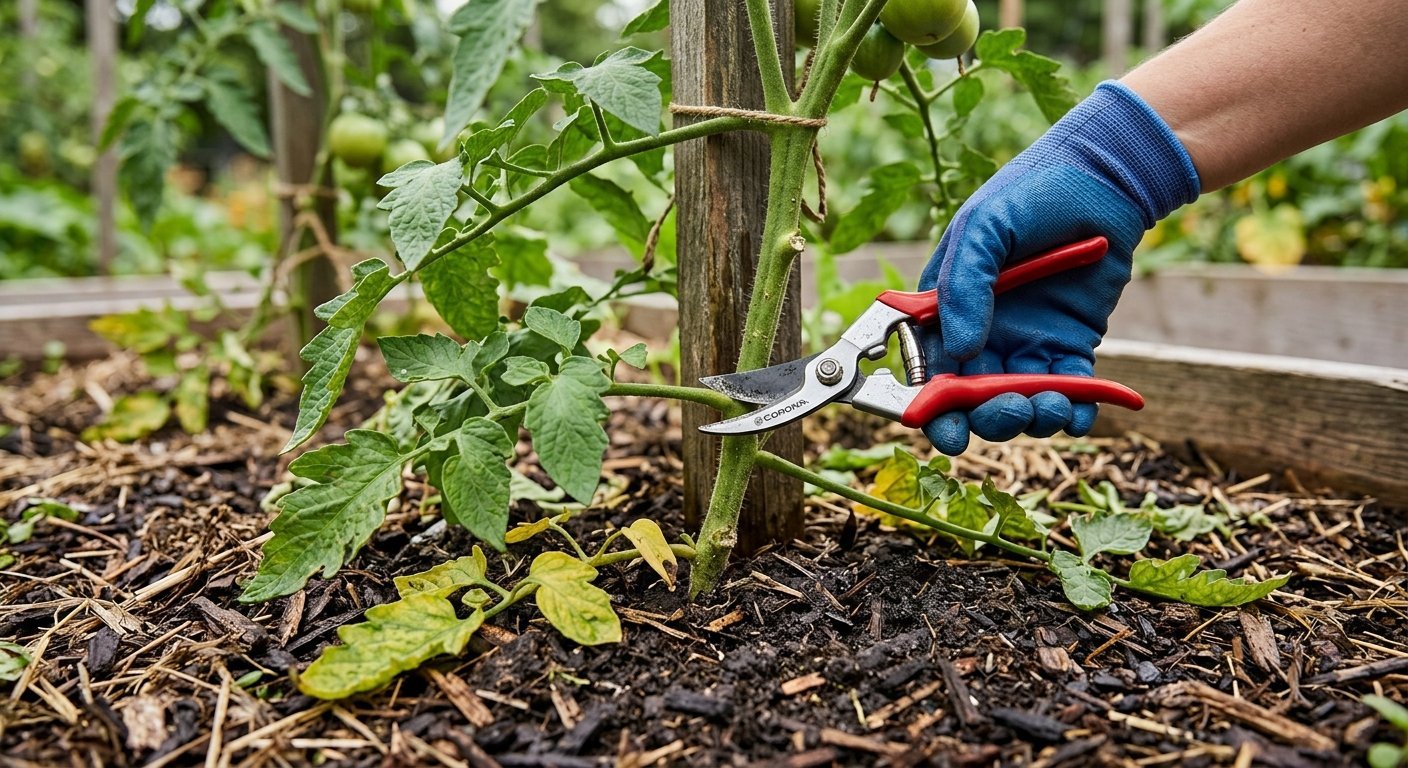
To remove a sucker: Simply pinch it off with your fingers while it’s still small (a few inches long), or use clean pruning shears for larger ones. Removing suckers while small causes minimal stress and heals almost immediately; waiting until they’ve grown into substantial branches makes removal a bigger cut and a bigger energy loss for the plant.
Common Pruning Approaches for Indeterminate Tomatoes
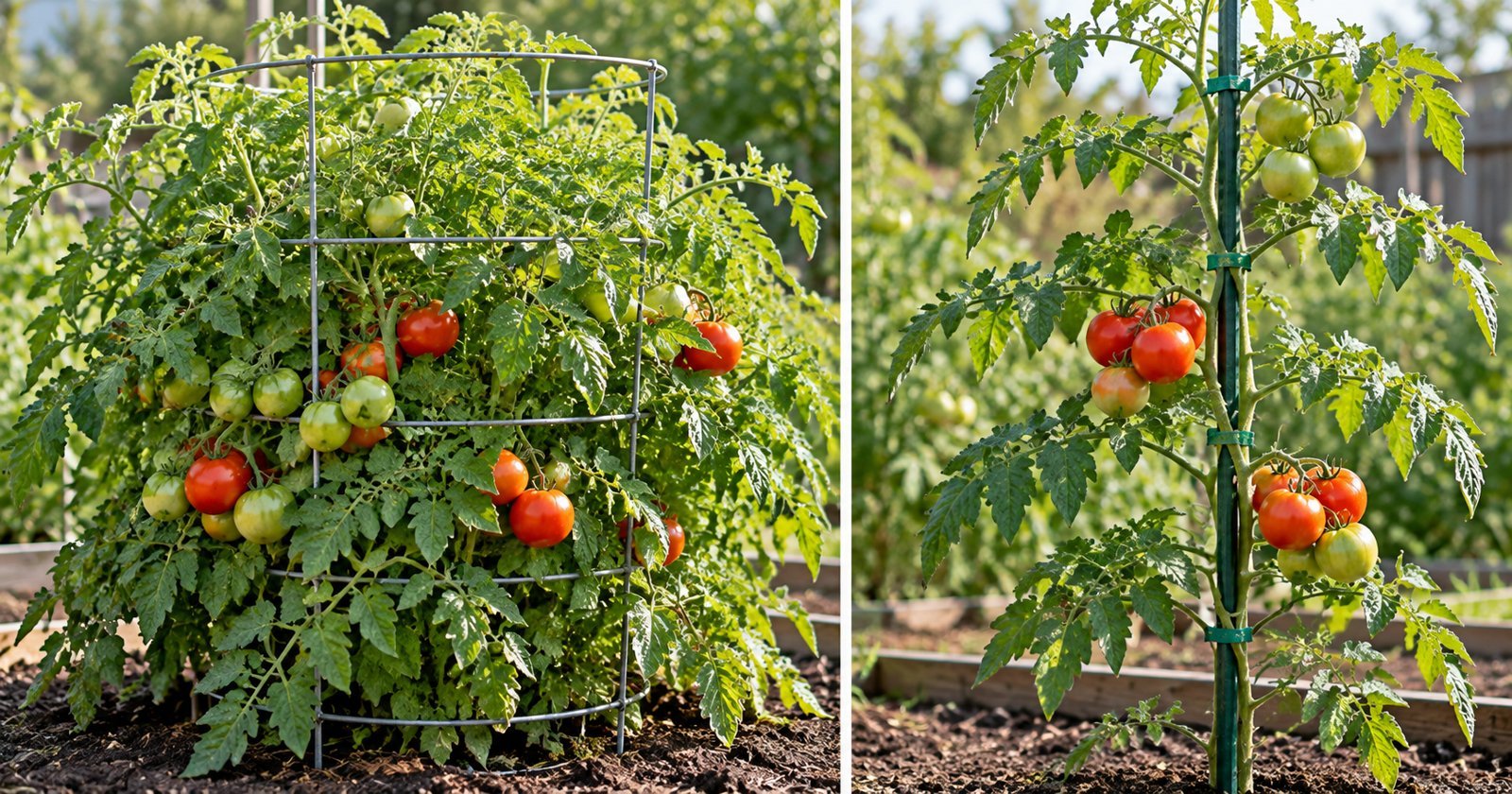
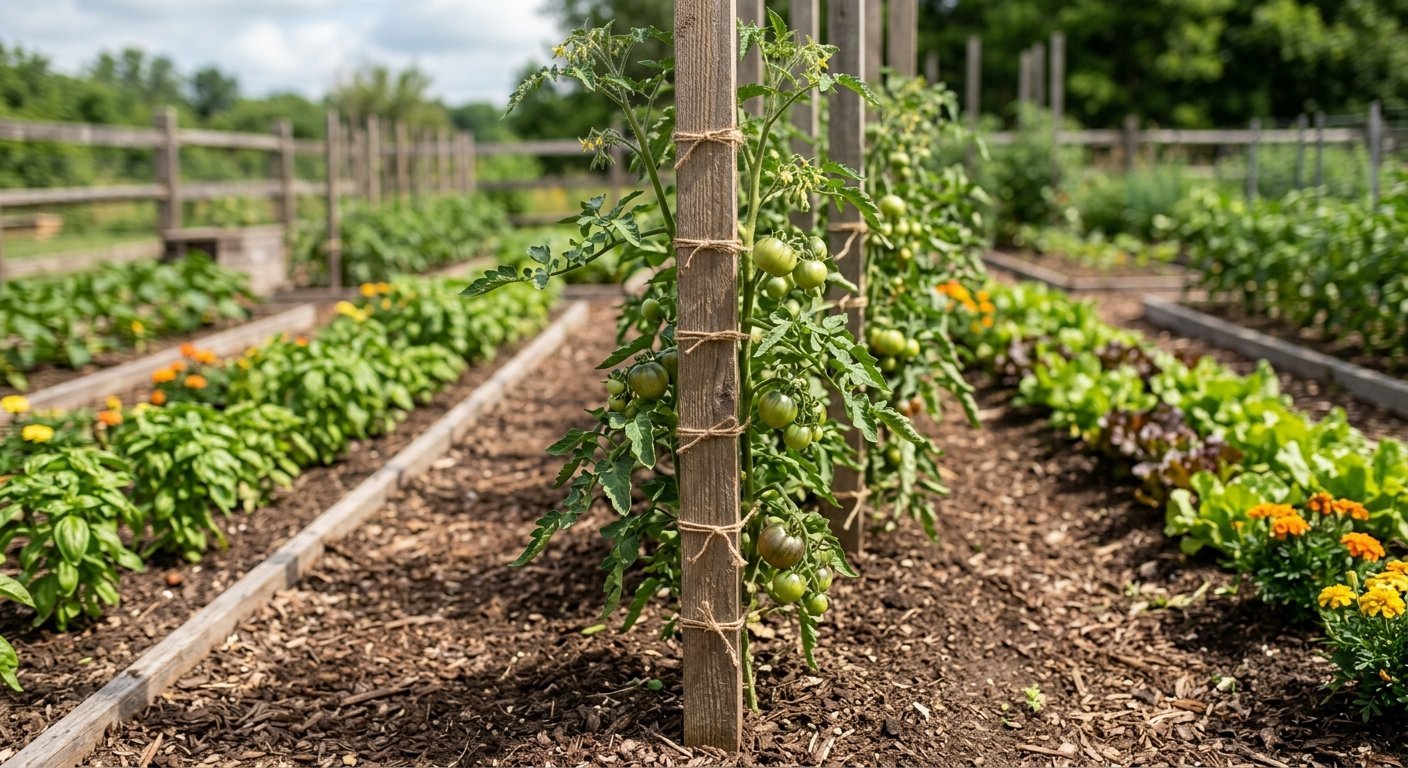
Single-leader (one main stem): All suckers are removed as they appear, training the plant to a single main stem, typically tied to a stake as it grows. This produces the most airflow and the largest individual fruit, but the lowest overall total yield, since you’re concentrating the plant’s energy into one stem rather than several.
Double or triple-leader (two or three main stems): One or two suckers, usually chosen from low on the plant, are allowed to grow into additional main stems while all others are removed. This is a common middle-ground approach, balancing higher total yield than single-leader pruning with still-manageable airflow and structure.
Minimal pruning (for caged plants): Many gardeners growing indeterminate tomatoes in a sturdy cage prune only lightly — removing lower suckers and any growth touching the ground — letting the cage support a bushier, less structured plant. This produces the highest total yield of the three approaches but sacrifices some airflow and requires a sturdy enough cage to support the resulting growth.
Removing Lower Leaves
Regardless of your suckering approach, removing the lowest leaves — particularly any touching or close to the soil — is broadly recommended for all tomato types. Lower leaves are the most likely to develop early blight and other soil-splashed fungal diseases, since rain or watering can splash soil-borne spores onto foliage close to the ground. Removing them as the plant grows, keeping the bottom 6–12 inches of stem clear of foliage, meaningfully reduces this risk.
When to Prune
Suckers: Check every few days to a week during peak growing season, removing new suckers while still small rather than letting them establish.
Lower leaves: Remove gradually as the plant grows taller, rather than stripping a large number of leaves at once, which can stress the plant.
Topping (removing the growing tip): Some gardeners top indeterminate plants about a month before the expected first frost, halting further vertical growth and flower production so the plant redirects its remaining energy into ripening the fruit already set, rather than continuing to produce new growth and flowers that won’t have time to mature before frost.
Tools and Technique
Use clean, sharp pruning shears for anything beyond finger-pinching small suckers, and clean the blades with rubbing alcohol between plants (or even between cuts on a plant showing any disease symptoms) to avoid spreading pathogens. Make cuts cleanly rather than tearing, since ragged wounds heal more slowly and offer an easier entry point for disease.
Common Pruning Mistakes
Removing too much foliage at once, which can stress the plant and, in hot climates, expose fruit to sunscald from suddenly increased sun exposure on previously shaded fruit.
Pruning determinate varieties as aggressively as indeterminate ones, unnecessarily reducing total harvest from a plant type that doesn’t benefit from the same approach.
Ignoring lower leaf removal, missing one of the simplest, most broadly beneficial pruning habits for disease prevention.
Using dirty tools, risking spreading disease between plants or even between different parts of the same plant.
The Bottom Line
Pruning tomatoes starts with knowing whether you’re growing a determinate variety (minimal pruning needed) or an indeterminate one (regular sucker removal genuinely helps), then choosing a suckering approach — single-leader, multi-leader, or minimal — that matches your priorities between fruit size, total yield, and airflow. Whatever approach you choose, removing lower leaves as the plant grows is a broadly beneficial habit worth adopting regardless of tomato type.
For tomato harvest timing and another common fruit problem, see When to Harvest Tomatoes (And How to Tell They’re Actually Ready) and Blossom End Rot on Tomatoes: Causes and How to Treat It.
Last modified: October 5, 2026