Compacted soil is one of those underlying problems that quietly limits a garden’s success without any single obvious symptom — plants grow slowly, water pools or runs off rather than soaking in, and roots struggle to expand, but it’s easy to blame watering or fertilizing before recognizing the soil structure itself as the real issue.
How to Tell If Your Soil Is Compacted
A few reliable signs: water pools on the surface after rain or irrigation rather than absorbing, the soil feels hard and resists a shovel or garden fork even when reasonably moist, plant roots appear stunted or shallow when you dig one up, and the soil surface may crack visibly when it dries out.
A simple test: try pushing a screwdriver or a thin metal rod into the soil when it’s moderately moist. If it meets significant resistance within the first few inches, compaction is likely present.
Why Soil Becomes Compacted
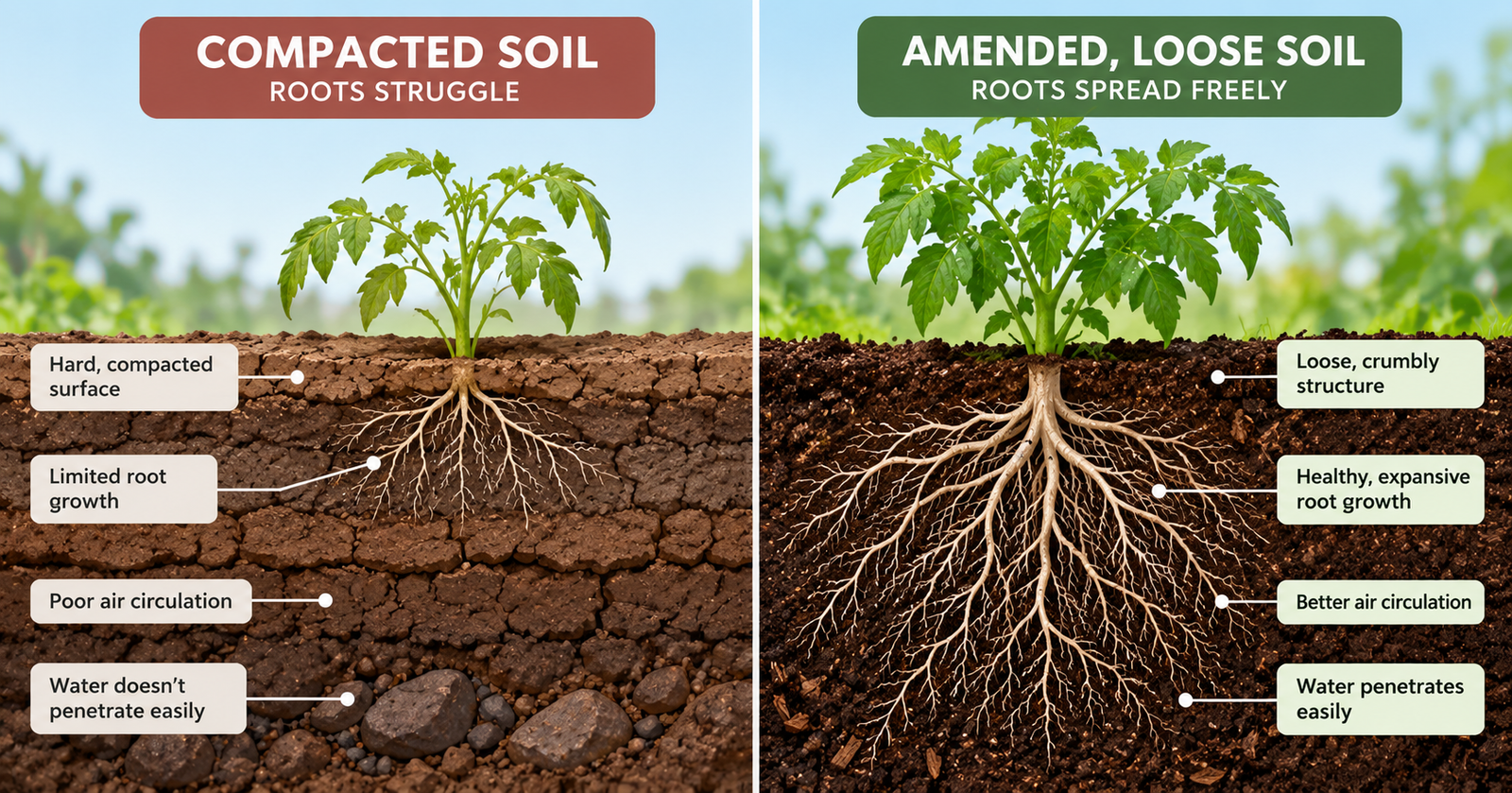
Foot traffic, heavy equipment, repeated tilling (which can actually break down soil structure over time despite loosening it temporarily), construction activity, and simply the weight of rain compacting bare, unprotected soil over time all contribute. Clay-heavy soils are particularly prone to compaction compared to sandier or more organic-rich soils, which naturally maintain better structure.
How to Fix Compacted Soil
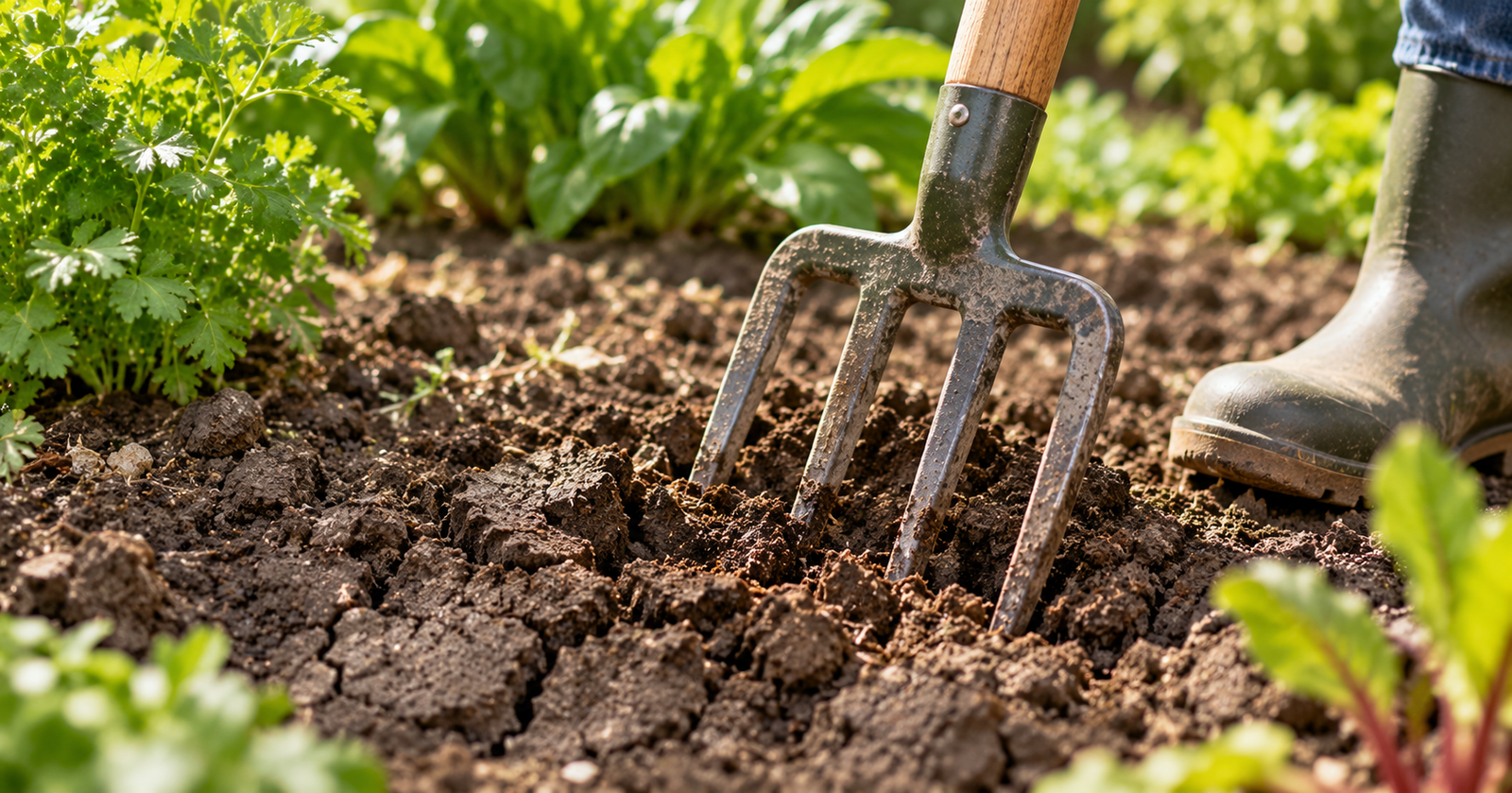
1. Aerate
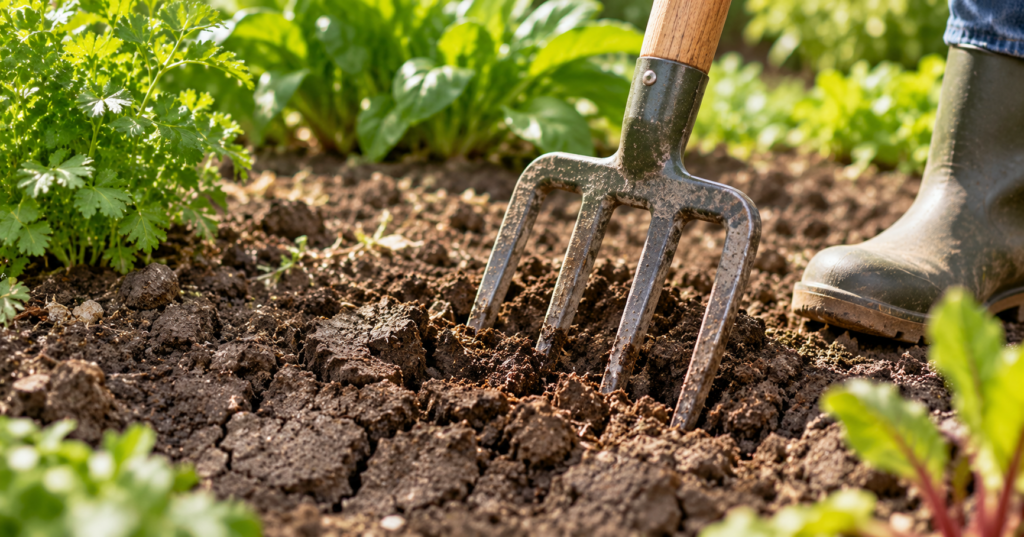
For lawns, a core aerator (which removes small plugs of soil rather than just poking holes) is the standard fix, relieving compaction and allowing air, water, and nutrients to penetrate more effectively. For garden beds, a broadfork or garden fork, pushed in and gently rocked back and forth without fully turning the soil over, loosens compacted layers with minimal disruption to soil structure.
2. Add organic matter
This is the most important long-term fix. Compost, aged manure, and other organic matter improve soil structure by creating the pore spaces that compacted soil lacks, while also feeding the soil biology (earthworms, beneficial fungi, and microbes) that naturally maintains good structure over time. A few inches worked into the top layer of soil, repeated each season, produces steadily improving structure over a few years.
3. Avoid walking on garden beds
Establishing permanent paths and beds, so foot traffic never compacts the actual growing area, prevents new compaction from undoing your repair efforts. Raised beds are a popular solution for this exact reason — they create a physical boundary that discourages stepping into the growing area.
4. Reduce tilling
While tilling can temporarily loosen compacted soil, repeated tilling over time actually breaks down the soil aggregates (clumps of soil particles held together by organic matter and fungal networks) that create good structure, ultimately making compaction worse in the long run. A one-time deep tilling to incorporate amendments into severely compacted soil is reasonable, but shifting toward no-till or minimal-till practices afterward preserves the improvement.
5. Use cover crops
Certain cover crops, particularly those with deep taproots like daikon radish or clover, physically break through compacted layers as they grow, and leave organic matter and channels behind when they die back or are cut down, improving structure for the next planting.
Organic Soil Amendments for a Vegetable Garden
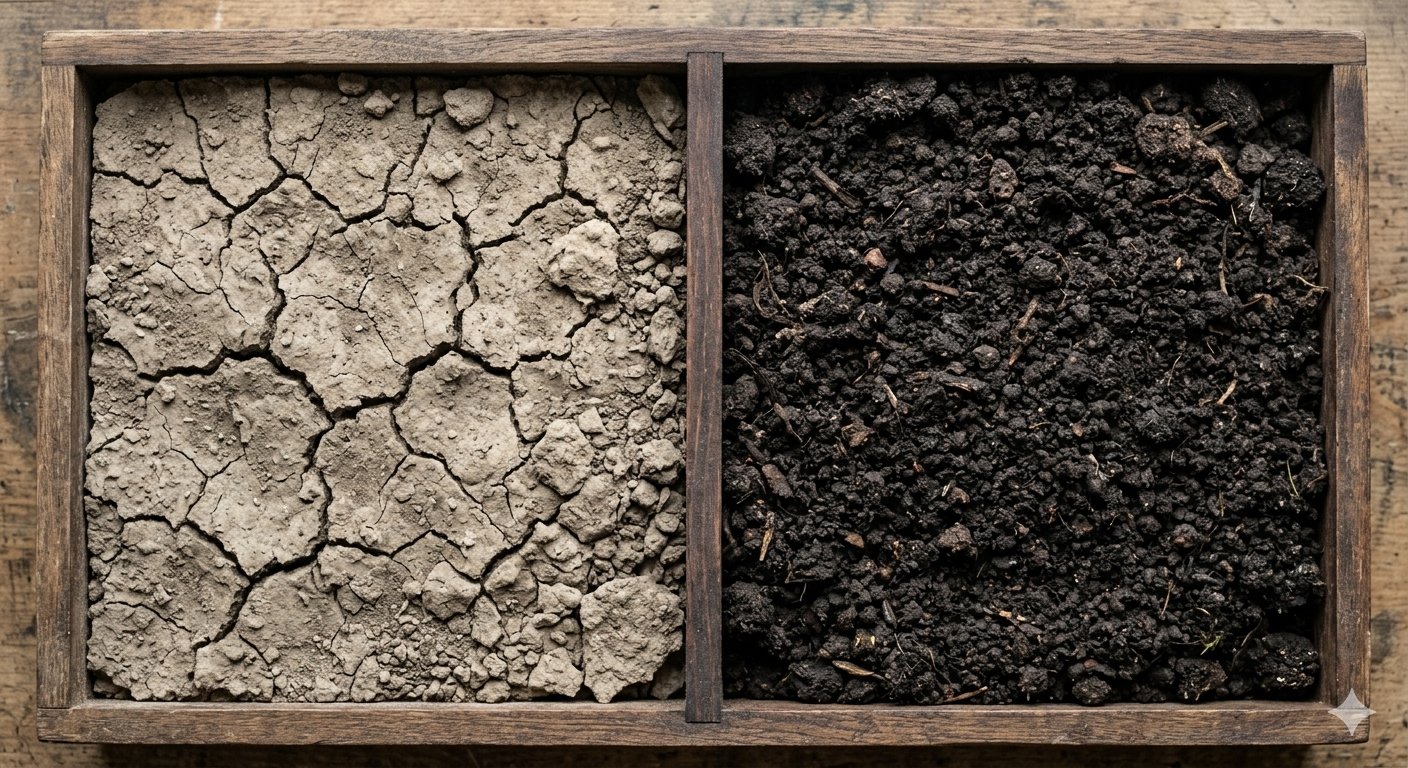
Beyond fixing compaction, ongoing soil amendment keeps vegetable gardens productive: compost is the most versatile all-purpose amendment, improving structure, drainage, and nutrient content simultaneously. Aged manure adds nutrients and organic matter, though it should be well-composted rather than fresh to avoid burning plants or introducing pathogens. Leaf mold (decomposed fallen leaves) is an excellent, often free soil conditioner. Worm castings offer a nutrient-rich, gentle amendment that also introduces beneficial microbial activity.
Best Soil for an Herb Garden
Most culinary herbs, particularly Mediterranean varieties like rosemary, thyme, and oregano, actually prefer lean, well-draining soil rather than the rich, moisture-retentive soil vegetables generally want — overly fertile, moisture-heavy soil can produce lush but less flavorful growth in these herbs. A sandy, well-draining mix with modest organic matter suits most herbs better than a heavily amended vegetable bed mix.
Best Potting Soil for Indoor Plants
Indoor potting mix should never be garden soil, which compacts badly in containers and can introduce pests. A quality all-purpose potting mix works for most common houseplants, while succulents and cacti need a specifically formulated fast-draining mix with extra perlite or sand. Orchids need their own specialized bark-based medium entirely, since their roots need much more air exposure than standard potting soil provides.
Refreshing Potting Soil Each Season
Potting soil in containers breaks down and compacts over time, and nutrients get depleted through repeated watering and plant uptake. For long-term container plants, refreshing the top few inches of soil each spring, or fully repotting every one to two years, restores structure and nutrition. For annual container plantings, starting with fresh soil each season, or at minimum thoroughly amending the old mix with fresh compost, prevents the gradual decline that comes from reusing depleted, compacted soil indefinitely.
Best Soil Moisture Meter for Houseplants
A basic analog soil moisture meter (inserted into the soil, providing a simple dry-to-wet reading on a dial) is inexpensive and useful for checking multiple plants quickly, though many experienced growers find the simple finger test just as reliable for most common houseplants. More advanced digital or smart meters, some connecting to a phone app, can track moisture, light, and even fertility over time, which is worth the extra cost for anyone managing a larger plant collection or particularly finicky species.
Best Soil pH for a Vegetable Garden
Most vegetables prefer a slightly acidic to neutral soil pH, generally in the 6.0–7.0 range. Outside this range, certain nutrients become chemically less available to plant roots even when technically present in the soil, which is why pH problems often masquerade as nutrient deficiencies. Blueberries are a notable exception, needing distinctly acidic soil (4.5–5.5) to thrive.
How to Test Garden Soil at Home
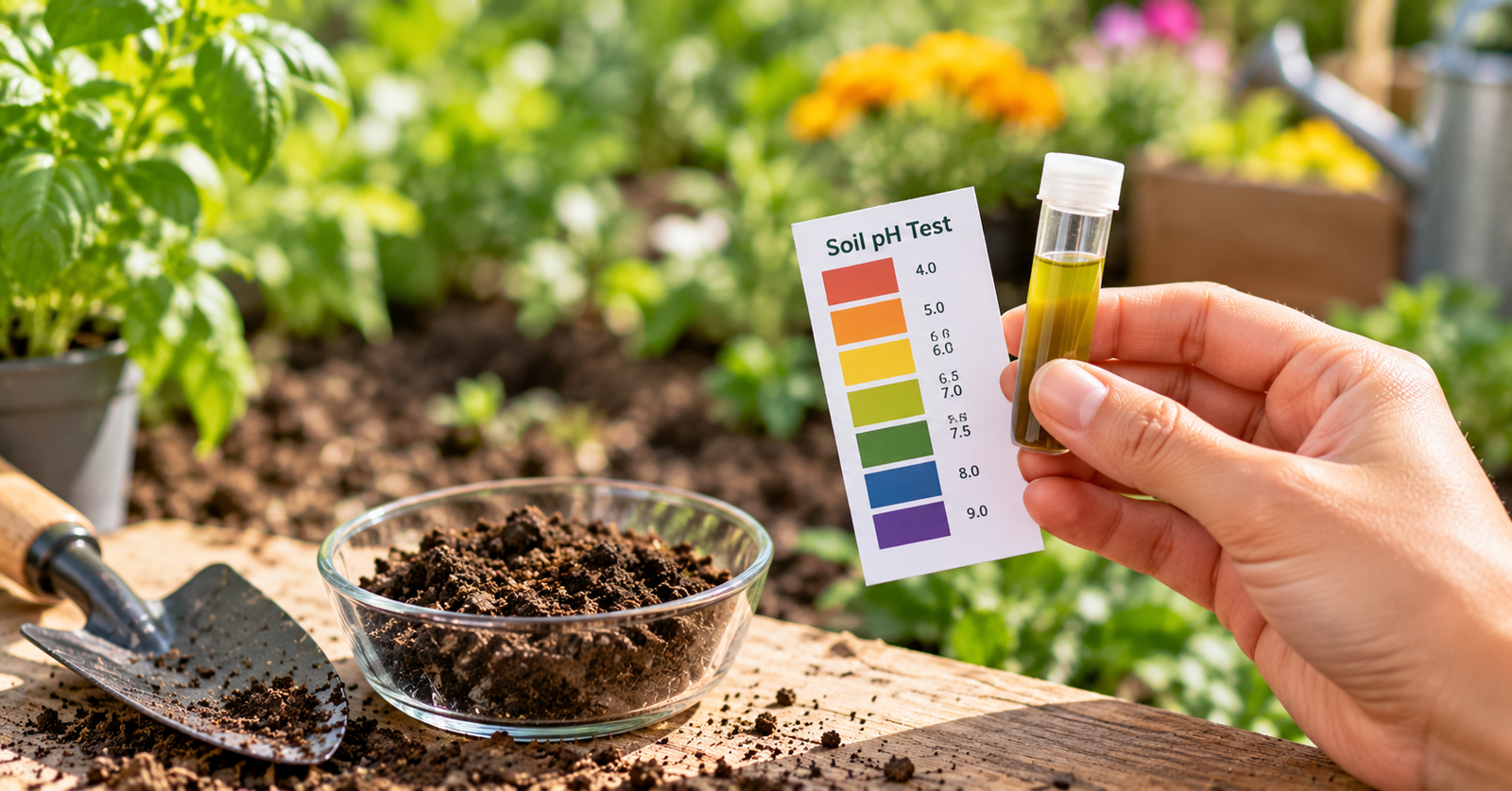
A basic home soil pH test kit, available at most garden centers, gives a quick approximate reading using a color-change reaction. For more detailed information — nutrient levels, organic matter content, and precise pH — sending a soil sample to your local agricultural extension office for lab testing is inexpensive and considerably more accurate than any home kit, and most extension services provide specific amendment recommendations based on your results and what you intend to grow.
The Bottom Line
Fixing compacted soil comes down to two complementary approaches: mechanically loosening it (aerating or forking) and rebuilding its structure over time with organic matter, while preventing new compaction through permanent paths and reduced tilling. From there, matching soil type to what you’re growing — lean and well-draining for herbs, rich and amended for vegetables, specialized mixes for houseplants — and testing periodically for pH keeps the whole garden’s foundation working in your favor rather than against you.
For container-growing choices and checking water-damaged roots, see Best Fruit to Grow in Containers and Root Rot Symptoms and Treatment.
Last modified: October 5, 2026