To get rid of slugs organically, combine nighttime hand-picking with fewer damp hiding places and morning watering. Use traps to monitor activity. If damage continues, consider an iron phosphate bait specifically labeled for organic use and your crop. Do not rely on eggshells or narrow copper tape alone.
Slugs are among the most frustrating garden pests precisely because of when they operate: mostly at night, in damp conditions, leaving behind a mess of ragged holes and telltale slime trails by morning while the culprit itself is nowhere to be seen. The good news is that slugs are also one of the more manageable pests to control without any synthetic chemicals at all.
How to Confirm Slugs Are the Problem
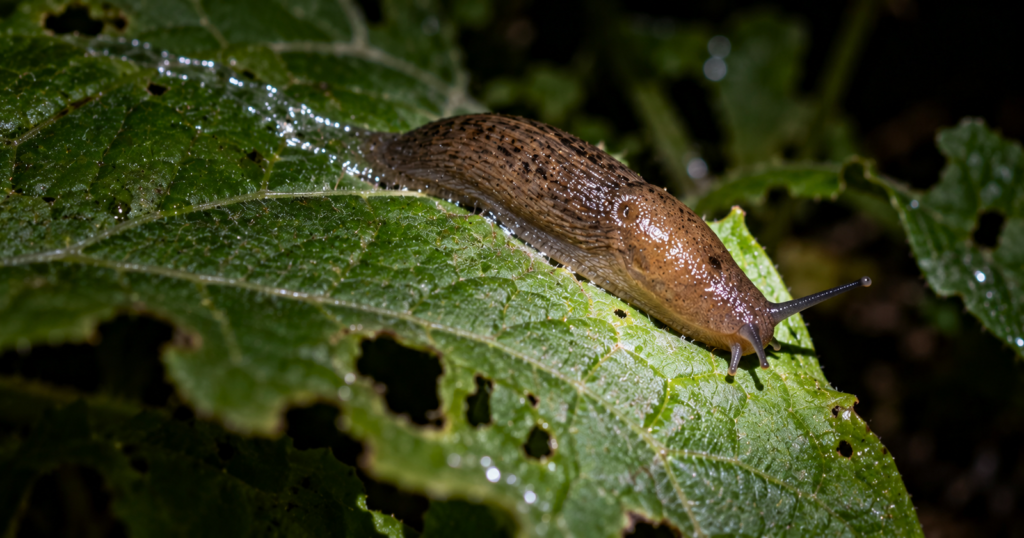
Slug damage has a few distinctive signs:
- Large, irregular holes in leaves, often concentrated on the most tender, low-growing foliage
- Silvery slime trails on leaves, soil, or nearby surfaces, especially visible in early morning light
- Damage concentrated on seedlings and young transplants, which slugs find easier to eat than tougher, more established growth
- Worse damage after rain or watering, since slugs are most active in moist conditions
Why Slugs Show Up
Slugs thrive in moist, sheltered environments and are most active at night or on overcast, humid days. Heavy mulch, dense ground cover, overwatering, and garden debris all provide the damp hiding spots slugs need during the day before emerging to feed at night.
Organic Slug Control Methods
1. Hand-picking at night
This sounds tedious but is genuinely one of the most effective single methods available. Head out with a flashlight an hour or two after dark, when slugs are actively feeding, and remove them by hand into a container of soapy water. A few consistent nights of this can dramatically reduce a local population, especially combined with other methods below.
2. Beer traps
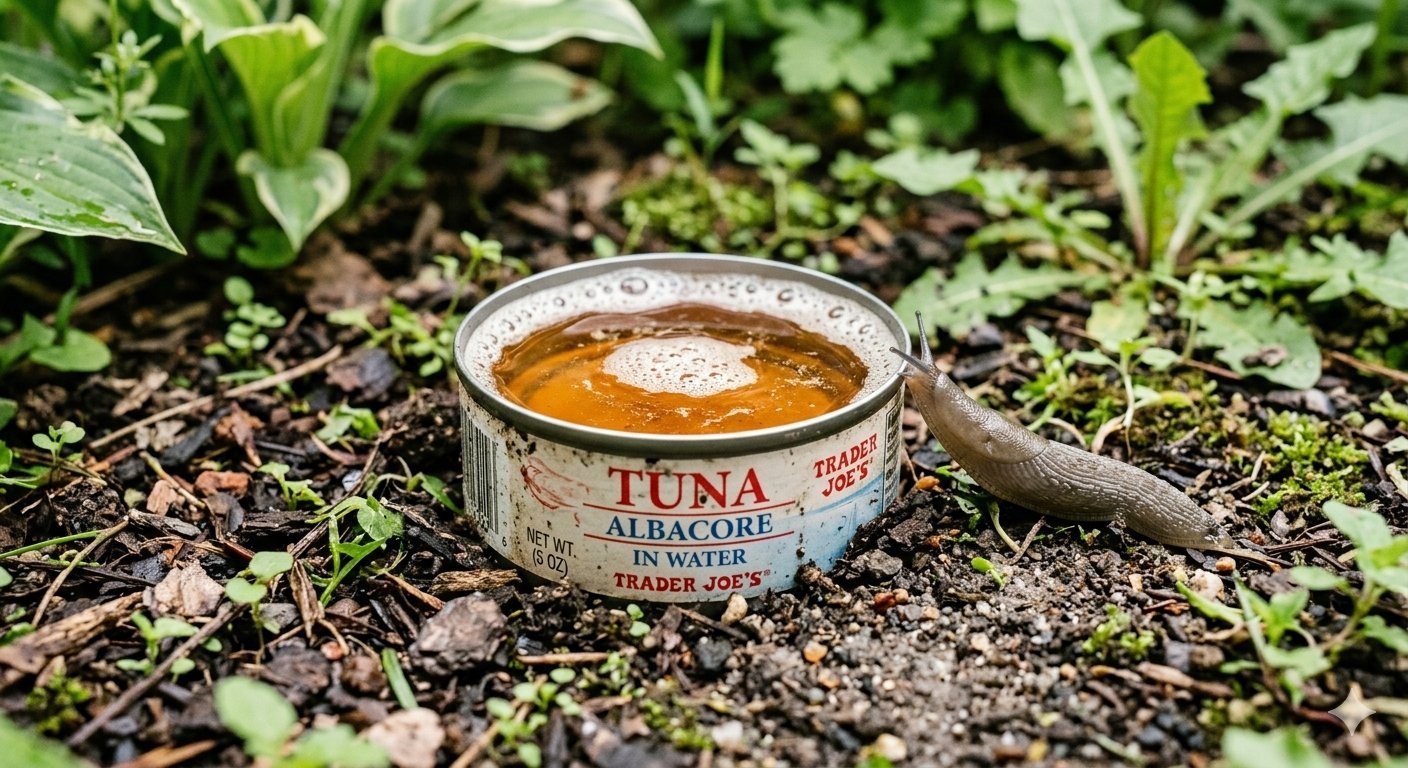
Beer traps catch nearby slugs but do not protect a whole garden on their own. Use a container with enough depth and vertical sides to prevent escape; a very shallow dish may be ineffective. Refresh the liquid after rain and check traps regularly. The shallow can pictured below illustrates the idea, not the recommended trap depth.
3. Diatomaceous earth
Diatomaceous earth becomes ineffective when damp and is generally a poor primary slug deterrent. Since slugs are active in moist conditions, prioritize hand-picking and habitat changes rather than relying on powder barriers.
4. Copper barriers
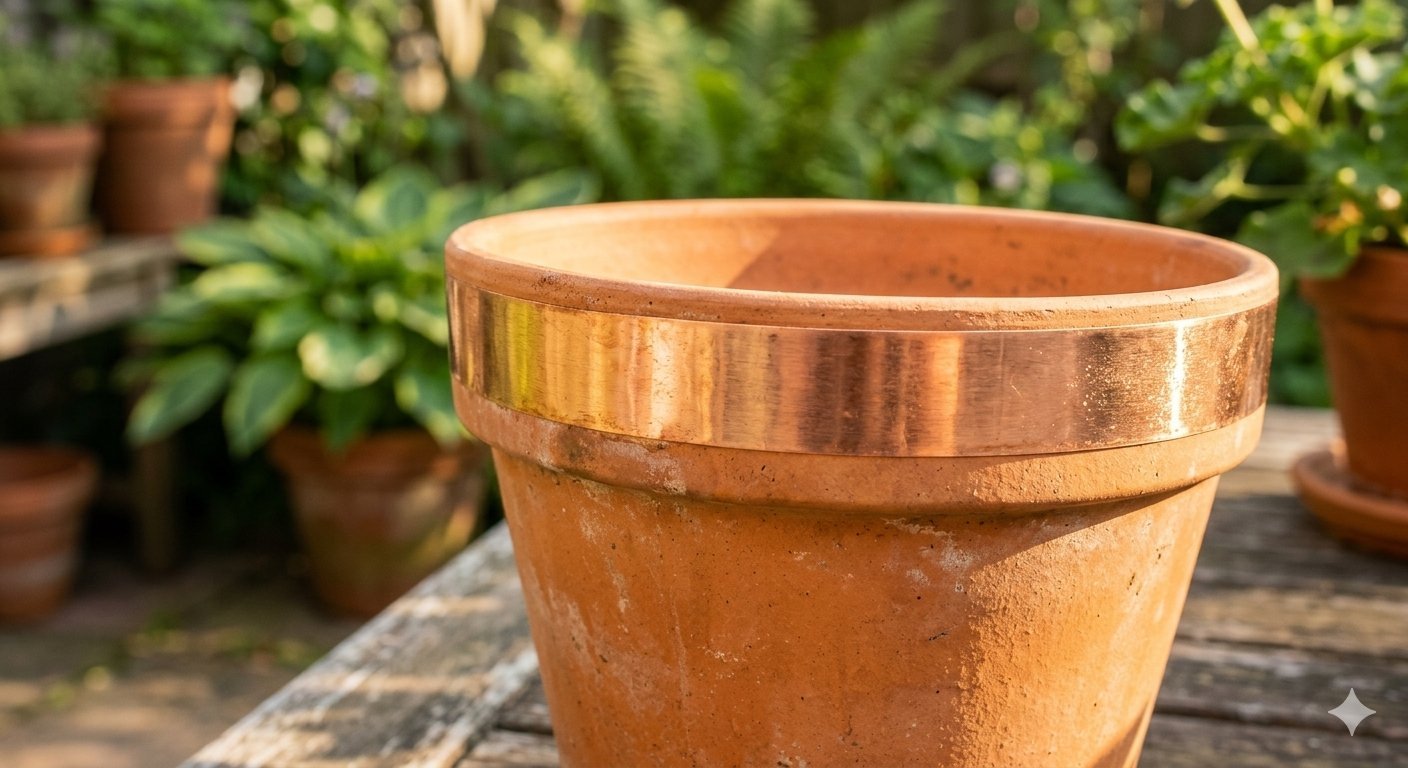
Copper barrier results vary. Some extension guidance supports wide, continuous bands, but an RHS garden trial found no reduction in damage from copper tape. Treat tape as an optional supplement, inspect for gaps and remove slugs already inside the pot.
5. Iron phosphate slug bait
Some iron phosphate baits are approved for organic growing, but approval depends on the specific product. Baits are pesticides, even when labeled organic. Follow the label for crop use, rate and placement, and keep children and pets from eating the pellets. Avoid blanket claims that a bait is harmless.
6. Remove daytime hiding spots
Since slugs shelter in dark, moist spots during the day, reducing available hiding places genuinely limits their local population. Clear away garden debris, thin dense ground cover, and avoid thick mulch layers directly against vulnerable plants (a little distance between mulch and stem helps).
7. Water in the morning, not the evening
Slugs are most active in moist nighttime conditions, so watering in the morning gives soil time to dry somewhat by evening, reducing the ideal conditions slugs prefer for nighttime feeding, compared to evening watering that leaves everything damp right as slugs become active.
8. Encourage natural predators
Birds, frogs, toads, ground beetles, and even some snakes prey on slugs. Creating habitat that supports these predators — a small water feature for frogs and toads, leaving some natural cover nearby, avoiding broad-spectrum pesticides that would harm them — provides ongoing, low-effort control.
9. Physical barriers around vulnerable plants
Crushed eggshells and sharp grit have not shown reliable protection in garden trials. Do not make them the main defense for vulnerable seedlings. Check plants after dark and combine removal with better growing conditions.
Which Plants Are Most at Risk
Slugs particularly favor young seedlings, lettuce and other leafy greens, hostas, and low-growing tender plants. Tougher, more mature plants with thicker leaves generally suffer less severe damage, which is why protecting new transplants and seedlings in their most vulnerable early weeks matters more than blanket protection across an entire garden.
Building a Complete Organic Slug Strategy
- Confirm fresh feeding damage and slime trails; inspect after dark.
- Remove slugs by hand and reduce nearby hiding spots.
- Water the root zone in the morning and avoid unnecessary evening wetness.
- Check traps and new damage regularly; use labeled organic-approved bait only if needed.
- Judge progress by new damage, not old holes that cannot heal.
Choosing an Organic Slug Control Method
| Method | Useful role | Limitation |
|---|---|---|
| Hand-picking | Remove active slugs | Needs repeated checks |
| Habitat changes | Reduce shelter and nighttime moisture | Keep plants adequately watered |
| Beer traps | Catch nearby slugs | Limited reach; maintain liquid depth |
| Iron phosphate bait | Additional control when needed | Follow the specific product label |
| Copper tape | Optional supplementary barrier | Mixed evidence; not a guarantee |
| Eggshells or diatomaceous earth | Low-priority remedies | Unreliable protection in real gardens |
Organic Slug Control Questions
Are holes in leaves always caused by slugs?
No. Inspect after dark for slugs and look for slime trails. Caterpillars and other pests also chew leaves, so confirm the cause before choosing a treatment.
Do eggshells keep slugs away?
Do not rely on them. Garden trials have found that eggshell barriers can fail to reduce feeding damage.
Can you use salt to kill slugs in the garden?
Avoid applying salt to garden soil. It can increase soil salinity and harm plants; use removal or properly labeled controls instead.
Is organic slug bait pesticide-free?
No. An organic-approved bait is still a pesticide. Check the product label and organic approval rather than assuming every iron phosphate product is suitable.
Sources
- University of Minnesota Extension: slugs in home gardens
- UC IPM: snail and slug management
- RHS: garden trials of slug barriers
Related Reading
For help recognizing other garden pests, see Tomato Hornworm Identification & Removal.
Last modified: October 5, 2026