Tomato hornworms are one of the most dramatic-looking garden pests — large enough to spot easily once you know what you’re looking for, yet remarkably good at hiding in plain sight thanks to their coloring. A single hornworm can defoliate a significant portion of a tomato plant within a few days, making early identification and quick action genuinely important.
How to Identify a Tomato Hornworm
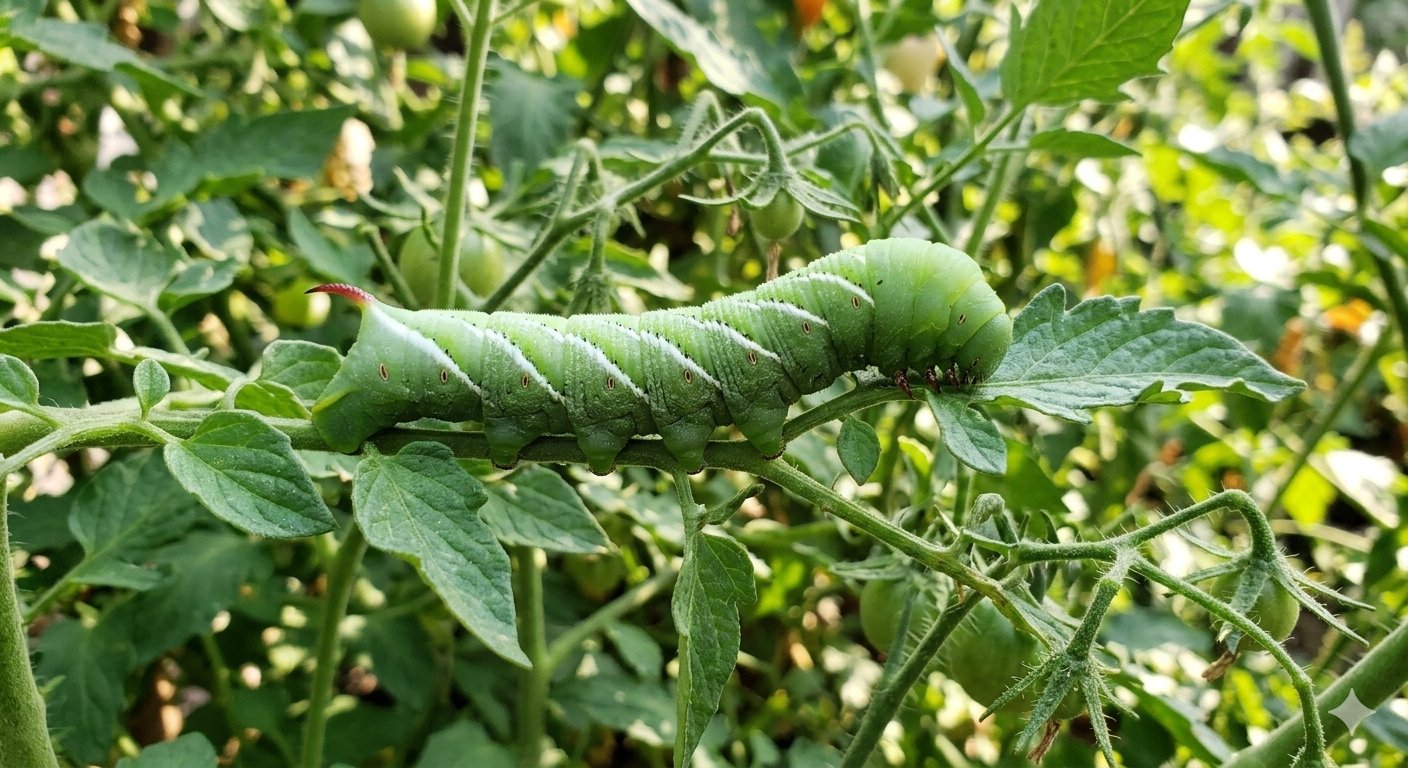
Tomato hornworms are the larval stage of the five-spotted hawk moth (also called the sphinx moth), and they’re large — mature larvae reach 3–4 inches long, among the biggest caterpillars found in most home gardens.
Key identifying features:
- Bright green body, closely matching the color of tomato foliage, which is precisely why they’re so easy to overlook
- White V-shaped or diagonal stripes along each side of the body
- A dark, curved horn projecting from the rear end (this looks alarming but is completely harmless — hornworms don’t sting or bite)
- Small black or dark spots near the base of each stripe on some individuals
They’re most commonly found on tomato plants but also feed on related plants including peppers, eggplant, and potatoes.
Signs You Have Hornworms (Even Before Spotting One)
Because hornworms blend in so well, many gardeners notice the damage before they spot the culprit:
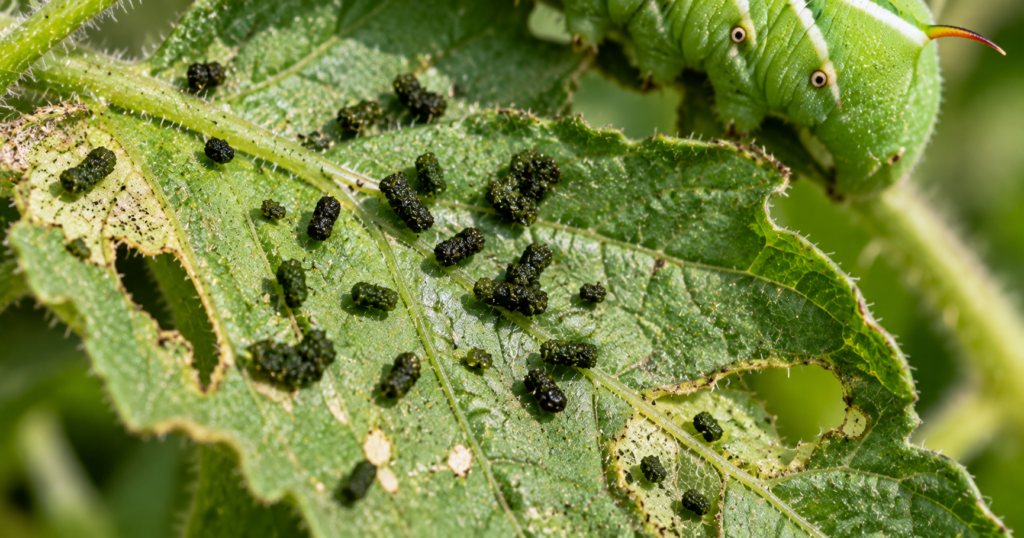
- Large sections of stems stripped completely of leaves, sometimes overnight
- Dark green or black droppings (frass) on leaves and soil below the affected area, resembling small dark pellets — this is often the first and most reliable clue, since it’s easier to spot than the caterpillar itself
- Chewed or damaged fruit, though hornworms typically prioritize leaves first
How to Find Hornworms on the Plant
Hornworms are genuinely difficult to spot with a casual glance because their coloring is such effective camouflage. A few tricks make the search more effective:
- Look for frass first, then check the foliage directly above it — hornworms tend to sit above where their droppings have fallen
- Check in early morning or evening, when hornworms are most actively feeding and slightly more likely to be in a visible position
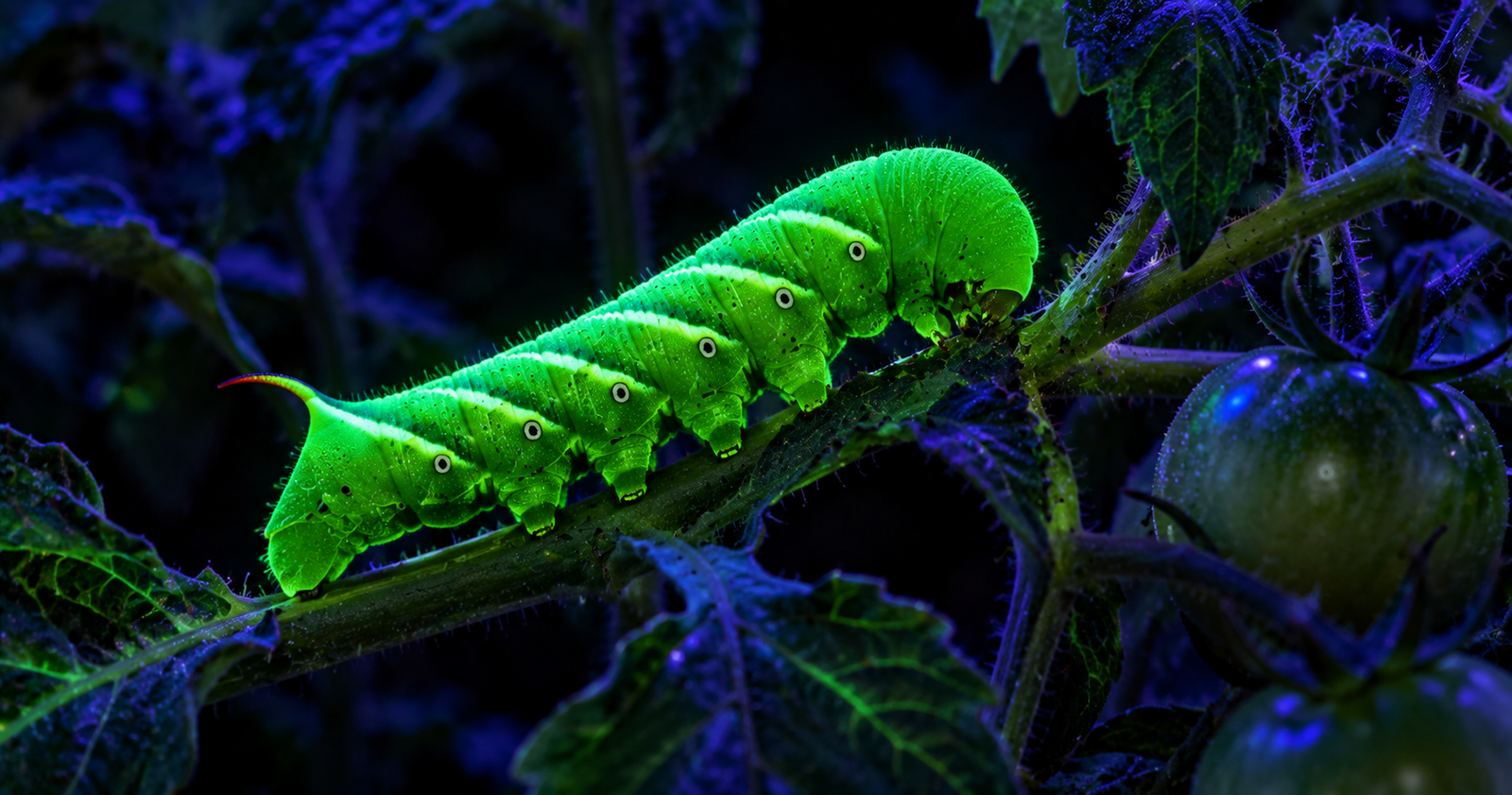
- Use a blacklight at night. This is a genuinely effective and popular trick among experienced gardeners — hornworms fluoresce a vivid greenish glow under UV light, making them dramatically easier to spot in the dark than during daylight search attempts.
- Run your hand lightly along stems, since the texture and shape of a hornworm often gives it away even when the color blends in.
How to Get Rid of Tomato Hornworms
1. Hand-pick and remove
For most home gardens, manually removing hornworms is the simplest and most effective control method, especially once you’ve gotten better at spotting them. Drop removed hornworms into soapy water, or relocate them far from your garden if you’d rather not kill them directly.
2. Check for parasitic wasp cocoons before removing
If you find a hornworm covered in small white, rice-grain-like structures standing upright on its body, leave it alone — these are cocoons of a parasitic braconid wasp that has already laid eggs inside the hornworm. The wasp larvae are actively killing the hornworm from within, and letting them complete their cycle releases more of these beneficial wasps into your garden, providing natural, ongoing hornworm control for the rest of the season.
3. Apply Bacillus thuringiensis (Bt)
Bt is a naturally occurring soil bacterium that’s specifically toxic to caterpillars when ingested, while being harmless to humans, pets, and most beneficial insects. Sprayed on foliage, it’s an effective, low-risk treatment for hornworm infestations too large or numerous for hand-picking alone, though it needs to be reapplied after rain and works best on younger, smaller larvae.
4. Till soil in fall or spring
Hornworms overwinter as pupae in the soil, several inches down. Tilling the soil in fall after harvest, or in early spring before planting, disrupts and exposes overwintering pupae to cold and predators, reducing the population that emerges as moths the following season.
5. Encourage natural predators
Beyond the parasitic wasps mentioned above, birds, ladybugs (which feed on hornworm eggs), and general garden biodiversity all help keep hornworm populations in check. Avoiding broad-spectrum insecticides that kill these beneficial insects indiscriminately helps maintain this natural control.
6. Companion planting
Some gardeners plant dill, basil, marigold, or borage near tomatoes, either to attract the parasitic wasps that prey on hornworms or to help mask the plant’s scent from egg-laying moths. Results vary and this shouldn’t be relied on as a sole control method, but it’s a reasonable complementary strategy alongside hand-picking and monitoring.
Preventing Hornworm Problems
- Inspect plants regularly through the growing season, especially in mid-to-late summer when hornworm activity peaks
- Check for frass as an early warning sign before damage becomes severe
- Till soil at the end of the season to disrupt overwintering pupae
- Avoid broad insecticides that would also kill the parasitic wasps that provide natural control
- Rotate tomato-family crops to different garden locations each year where practical, since this can reduce the buildup of overwintering pupae in one concentrated area
The Bottom Line
Tomato hornworms are large, dramatic-looking, and capable of real damage, but they’re also one of the more manageable pests once you know what to look for — check for frass, use a blacklight if daytime searching isn’t working, and hand-pick what you find, leaving any hornworm covered in white wasp cocoons in place to help control future generations naturally.
For tomato harvest timing and another garden pest, see When to Harvest Tomatoes: Signs They’re Ready and How to Get Rid of Slugs Organically.
Last modified: October 5, 2026