
Leaf curling is one of those symptoms that shows up for almost opposite reasons depending on the plant and situation — sometimes it’s too much water, sometimes too little; sometimes it’s heat stress, sometimes cold. Figuring out which requires paying attention to a few additional clues beyond the curl itself.
Start by Noting the Curl Direction and Context
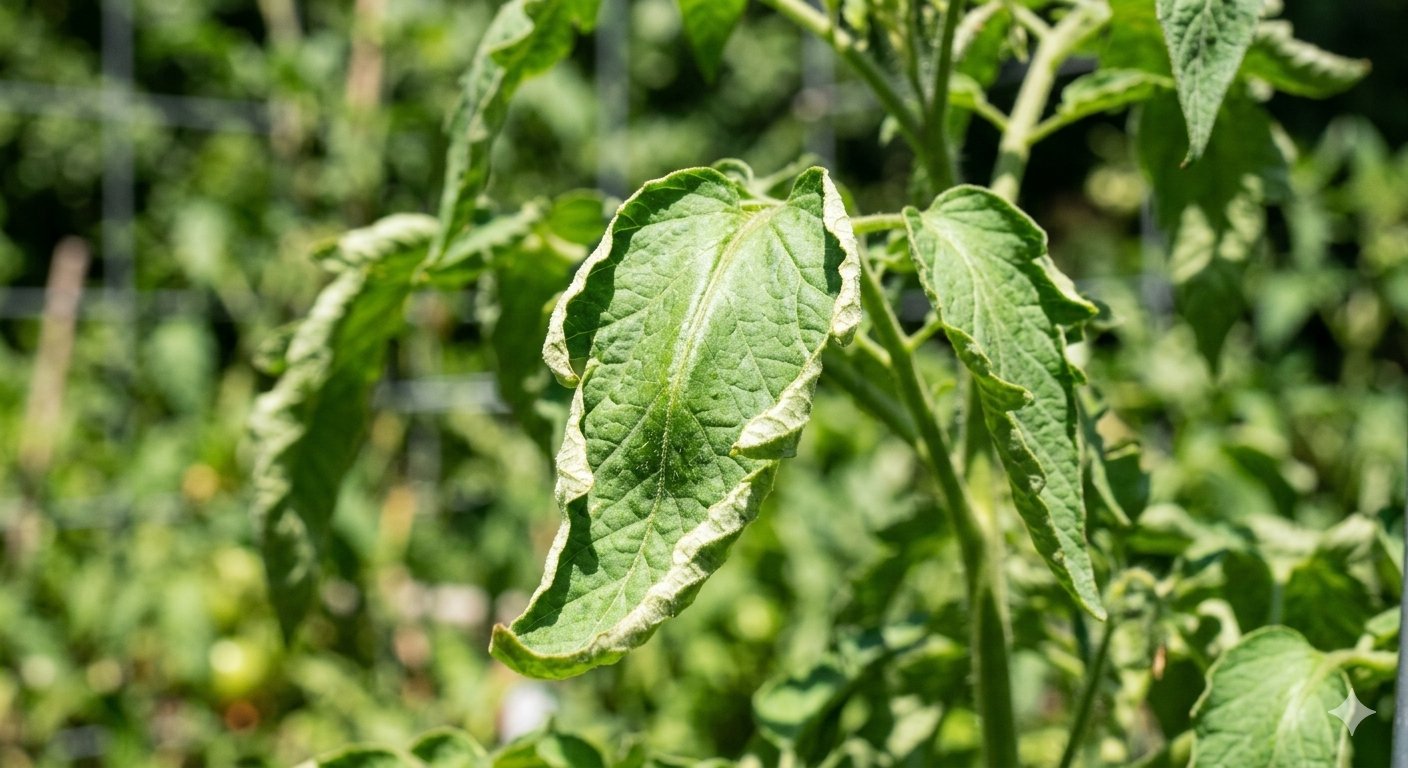
Curling upward (leaf edges curl toward the top surface) is most commonly associated with heat stress, underwatering, or certain viral infections.
Curling downward (edges curl toward the underside) often points to overwatering, root problems, or cold stress.
Curling alongside other symptoms — spots, yellowing, sticky residue, or visible insects — usually points to pests or disease rather than a purely environmental cause.
Curling on new growth only vs. curling across the whole plant also matters: new-growth-only curling often points to pests (which target tender new tissue) or a nutrient issue, while whole-plant curling more often points to a watering or temperature problem.
1. Underwatering
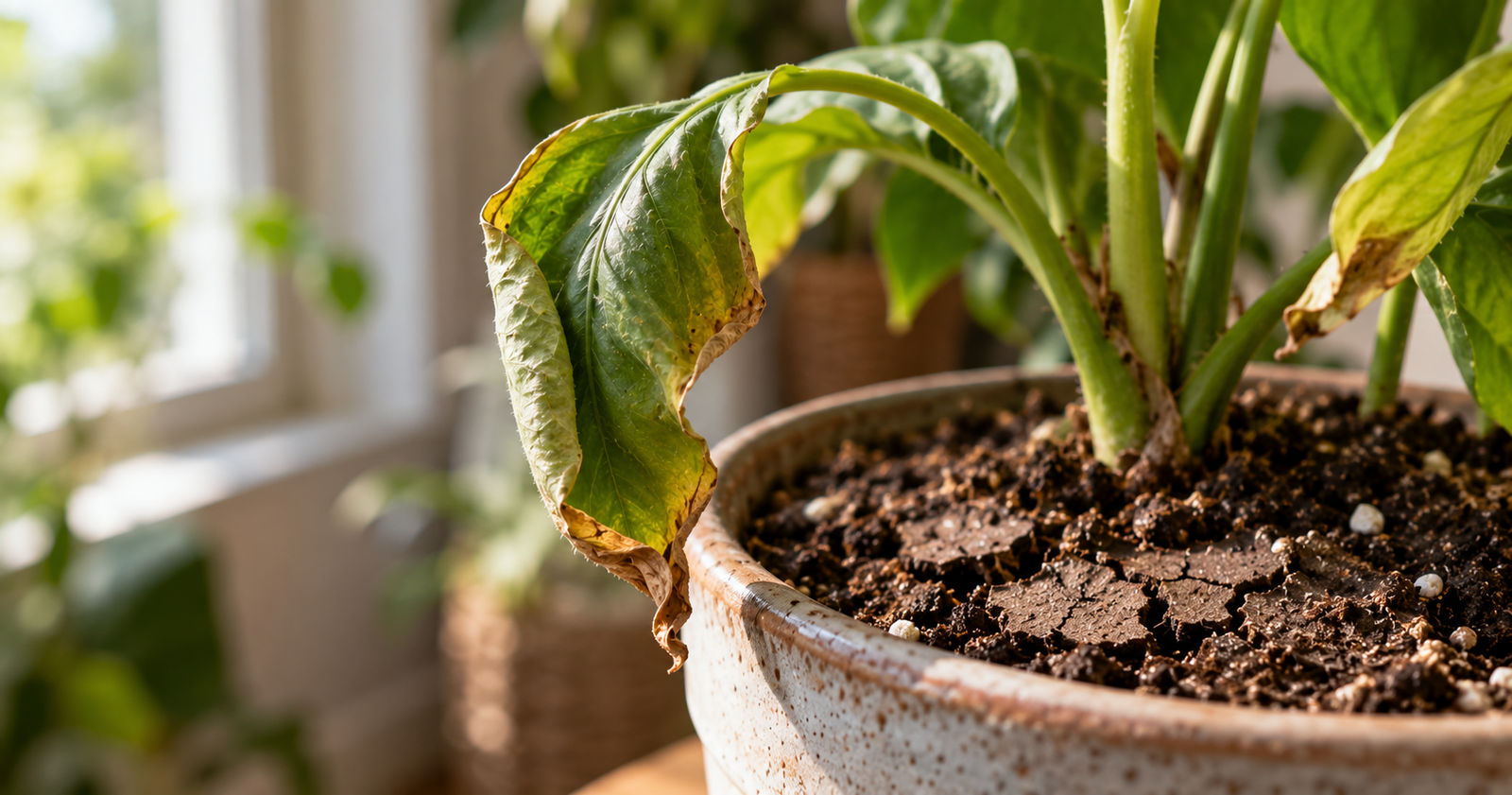
This is one of the most common causes, especially in houseplants and container gardens. When a plant doesn’t have enough water, leaves curl inward and upward as a defense mechanism, reducing the leaf surface area exposed to air and cutting down on moisture loss through transpiration. This is often accompanied by dry, crispy edges and an overall wilted appearance.
Fix: Check soil moisture and water thoroughly if dry. Leaves typically uncurl within a day or two of proper watering, assuming the underwatering hasn’t gone on long enough to cause lasting damage.
2. Overwatering or Root Problems
Somewhat counterintuitively, overwatering can also cause curling, typically downward, as damaged or rotting roots fail to support the plant’s water and nutrient needs properly, causing stress responses similar to those seen in underwatered plants. This is usually accompanied by yellowing, a musty soil smell, or soft stems, distinguishing it from simple underwatering.
Fix: Check the soil — if it’s wet or waterlogged despite the curling, address overwatering and root health rather than adding more water. See root rot symptoms and treatment for a fuller diagnostic process if you suspect this is the cause.
3. Heat Stress
High temperatures, especially combined with direct, intense sun, cause many plants to curl their leaves upward and inward as a protective response, reducing the surface area exposed to intense light and heat. This is common in outdoor vegetable gardens during summer heat waves, particularly in tomatoes and peppers.
Fix: Provide afternoon shade during extreme heat, ensure adequate watering (heat stress and drought stress often compound each other), and consider shade cloth for particularly vulnerable plants during a heat wave.
4. Pest Damage
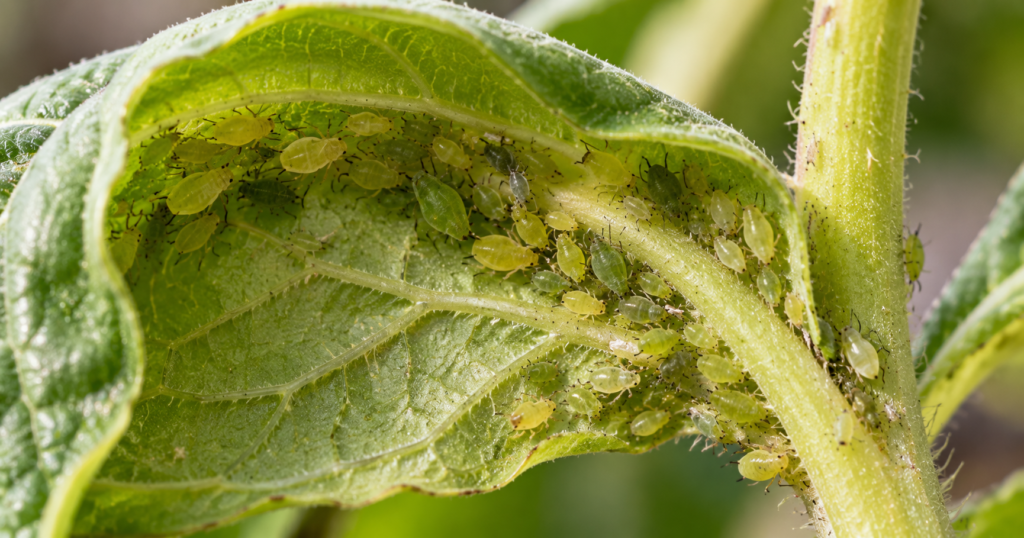
Several common pests cause leaf curling as a direct result of their feeding:
- Aphids clustering on new growth and the undersides of leaves cause curling and distortion as they feed, often leaving sticky honeydew residue behind.
- Spider mites cause fine stippling along with curling, especially in hot, dry conditions where mite populations explode.
- Thrips cause a distinctive silvery, distorted curling on affected leaves as they feed.
Fix: Check the undersides of curling leaves closely for insects, webbing, or sticky residue. Treat with insecticidal soap or neem oil once the specific pest is identified, reapplying over several weeks for a full life-cycle knockdown.
5. Viral Infections
Certain plant viruses, particularly in tomatoes and peppers, cause persistent leaf curling that doesn’t resolve with any watering or environmental adjustment. Tomato leaf curl virus and similar viruses are typically spread by whiteflies and cause a distinctive upward curling, often accompanied by stunted growth and yellowing that progresses regardless of care adjustments.
Fix: Unfortunately, there’s no cure for a viral infection once established — affected plants should be removed and destroyed (not composted) to prevent spread, and future prevention focuses on controlling the whitefly populations that transmit the virus.
6. Nutrient Imbalance
Calcium deficiency in particular can cause new growth to curl and distort, since calcium plays a structural role in cell wall development. Excess nitrogen can also cause overly lush, sometimes curling new growth in some plants as growth outpaces the plant’s structural development.
Fix: A balanced fertilizer generally corrects mild deficiencies; for calcium specifically, ensuring consistent watering matters too, since calcium uptake depends on steady water movement through the plant, and calcium deficiency is often actually a watering inconsistency problem in disguise rather than a true soil shortage.
7. Cold Stress or Drafts
Exposure to cold drafts, an unexpectedly chilly night, or being placed too close to an air conditioning vent can cause curling, typically downward, in cold-sensitive plants, often alongside dark or discolored patches on affected foliage.
Fix: Relocate away from drafts and cold windows, and protect outdoor plants from unexpected cold snaps with row cover.
How to Actually Diagnose Curling on Your Plant
- Check soil moisture first, since both over- and underwatering are common culprits
- Look closely at leaf undersides for pests, webbing, or sticky residue
- Note the curl direction (up vs. down) and whether it’s confined to new growth
- Consider recent environmental changes — a heat wave, a cold snap, a move to a new spot, or a draft source nearby
- If curling persists despite ruling out watering, pests, and environmental causes, and is accompanied by stunted, discolored growth, consider a viral cause, particularly in tomatoes and peppers
The Bottom Line
Most leaf curling traces back to a watering imbalance, heat or cold stress, or a pest problem — all fixable once correctly identified. Check the soil and the leaf undersides before assuming anything more serious, and reserve concern about viral infection for cases where curling persists and worsens despite addressing every more common, more fixable cause first.
For pests and indoor humidity checks, see How to Get Rid of Aphids on Plants and How to Increase Humidity for Indoor Plants.
Last modified: October 5, 2026



[…] your plant also shows leaf damage, compare Why Are My Plant Leaves Curling? Causes & Fixes and Brown Spots on Leaves: Causes & […]