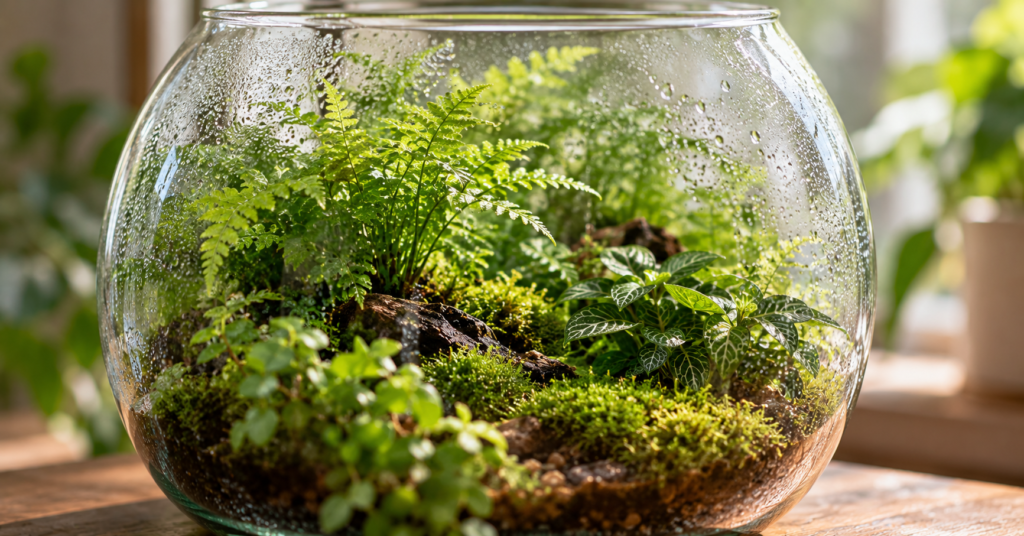
Many popular houseplants — calathea, ferns, alocasia, orchids, and fittonia among them — originate in humid tropical forests where relative humidity regularly sits at 60-80% or higher. Most homes, especially with heating or air conditioning running, sit closer to 30-40% humidity, and that gap is often the real reason a plant is struggling even when watering and light seem fine. Here’s how to close it.
How to Tell If Low Humidity Is the Problem
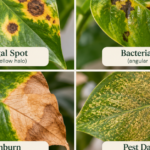
Low humidity symptoms are often mistaken for watering issues, which makes correct diagnosis important before you change your approach. Look for:
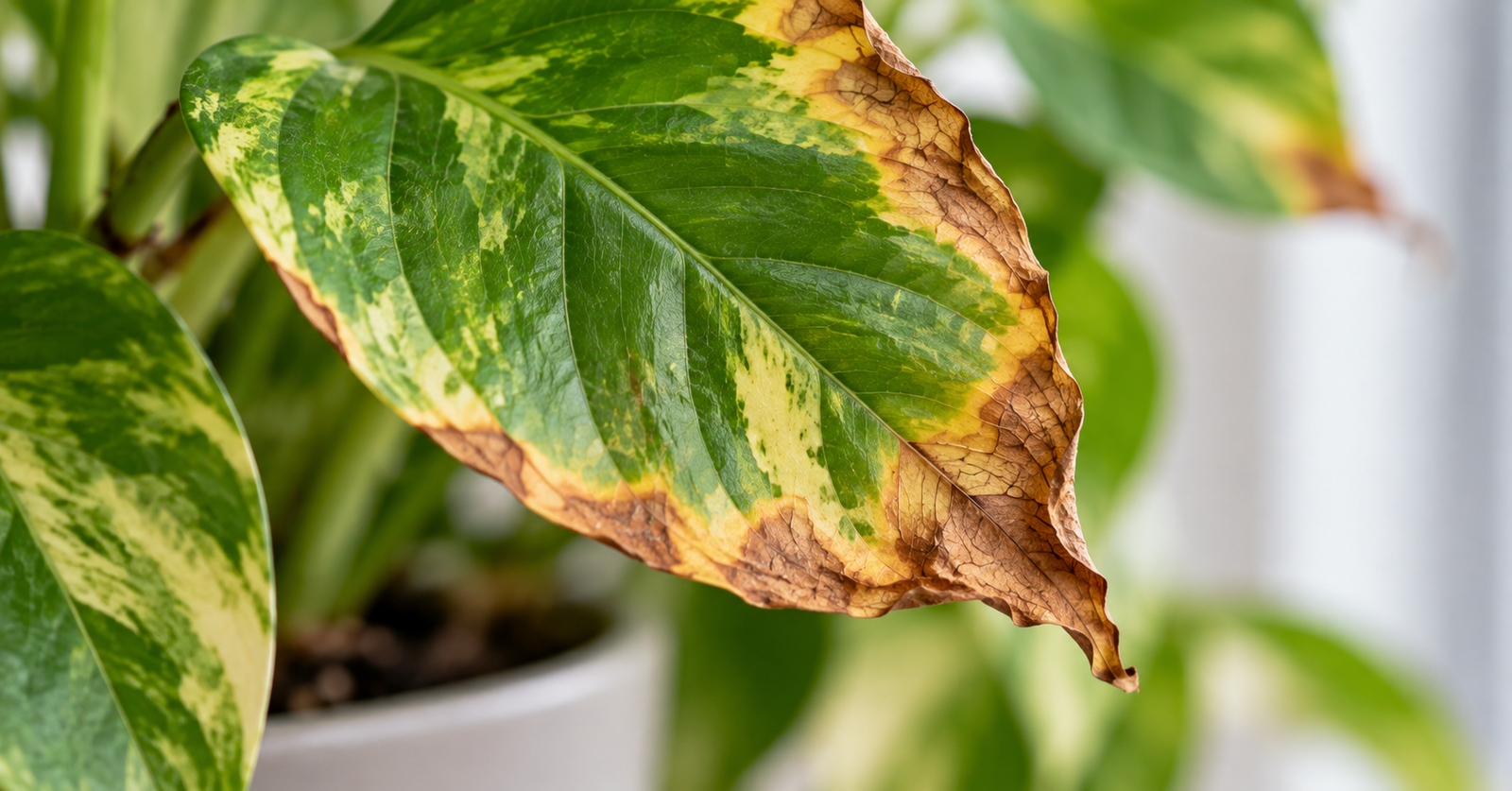
- Crispy, brown leaf edges or tips, particularly on plants known to be humidity-sensitive
- Curling leaves, especially on ferns and calathea, even when soil moisture seems adequate
- Slower growth or smaller new leaves than the plant is capable of producing
- Flower buds dropping before opening, common in humidity-sensitive flowering plants
If these symptoms persist despite consistent, appropriate watering, humidity is worth investigating as the actual cause.
1. Group Plants Together
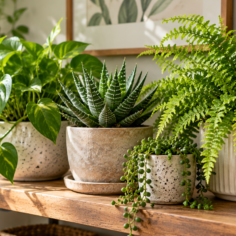
Plants naturally release moisture through their leaves in a process called transpiration, and clustering several plants together creates a localized zone of higher humidity than the room average, as each plant’s transpired moisture contributes to the shared microclimate around the group. This is one of the simplest, completely free methods available and works especially well combined with other techniques below.
2. Use a Pebble Tray
Fill a shallow tray with pebbles or gravel, add water until it just reaches below the top of the pebbles, and set the potted plant on top, making sure the pot’s base sits on the pebbles rather than directly in the water (to avoid waterlogging the roots through the drainage holes). As the water evaporates, it raises humidity in the immediate area around the plant’s leaves. This method has a modest, localized effect, but it’s cheap, low-maintenance, and works well as a supplementary method for a plant or two.
3. Run a Humidifier
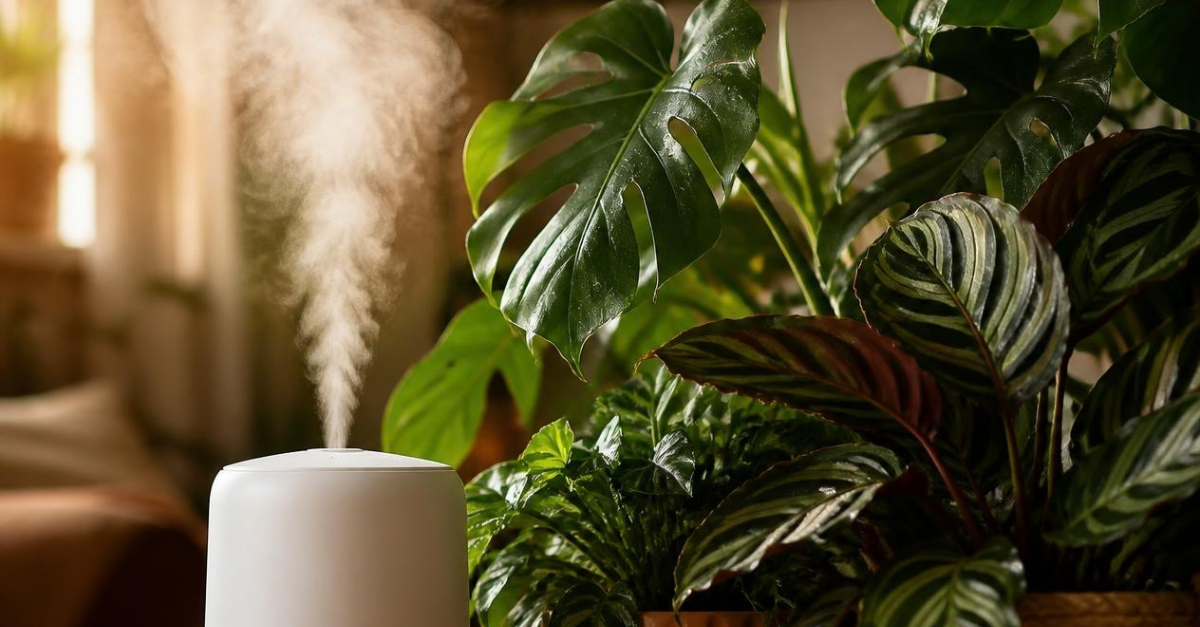
This is the most effective and reliable method, especially for a room with several humidity-loving plants or for climates with especially dry indoor air, like homes running forced-air heat through winter. A small cool-mist humidifier placed near a plant grouping can reliably raise the local humidity into the 50-60%+ range that many tropical plants prefer, and most models let you set and maintain a target humidity level rather than requiring constant adjustment.
4. Mist Occasionally (With Realistic Expectations)
Misting is popular advice, but it’s worth understanding its real limits: the humidity boost from misting is brief, often dissipating within 15-30 minutes, so it does very little for sustained humidity levels compared to a pebble tray or humidifier. Misting can still offer some minor benefit and most plants tolerate it fine, but it shouldn’t be relied on as a primary humidity strategy, and for fuzzy-leaved plants (like African violets) or those prone to fungal issues, misting the foliage directly can actually increase disease risk rather than help.
5. Move Plants to Naturally Humid Rooms
Bathrooms and kitchens tend to run more humid than the rest of the home due to showers, cooking steam, and dishwashing — as long as the room also gets adequate light, this can be a genuinely effective, zero-cost way to give humidity-loving plants a better environment without any equipment.
6. Use a Terrarium or Enclosed Case
For plants that need especially high, consistent humidity — many ferns, fittonia, and some orchids — a closed or mostly-closed glass terrarium or plant cabinet creates a self-contained humid environment that dramatically outperforms open-air methods. This is a bigger commitment in setup than the other methods here, but it’s the most effective option for genuinely humidity-demanding species that struggle in typical room conditions no matter what else you try.
7. Avoid Placing Plants Near Heat and AC Vents
This is more about avoiding humidity loss than adding humidity, but it matters just as much. Forced air from heating vents, air conditioning, and even drafty windows dries the surrounding air rapidly and can undo the effect of other humidity efforts if a plant sits directly in that airflow. Simply relocating a struggling plant away from a vent can meaningfully improve its situation without adding any equipment at all.
Which Plants Actually Need Extra Humidity
Not every houseplant benefits equally from these efforts, so it’s worth prioritizing:
High humidity needs: calathea, maranta (prayer plant), fittonia, ferns (especially Boston and maidenhair), many orchids, alocasia, and most true tropical understory plants
Moderate humidity preference, but adaptable: monstera, philodendron, peace lily, most palms
Low humidity needs, thrive in typical dry indoor air: succulents, cacti, snake plant, ZZ plant, pothos (tolerant of a wide humidity range)
If your home is on the drier side, focusing humidity efforts on the first group and choosing from the third group for rooms where raising humidity isn’t practical will save significant frustration.
Signs You’ve Successfully Raised Humidity
New leaf growth that unfurls fully without crisping at the edges, reduced leaf curling, and generally more vigorous growth are the clearest signs that humidity efforts are working. A hygrometer (an inexpensive humidity meter) placed near your plant grouping takes the guesswork out entirely and lets you track whether you’re actually hitting the target range for your specific plants.
The Bottom Line
Grouping plants, a pebble tray, and avoiding heat and AC vents are the easiest free or low-cost steps to try first. For humidity-demanding plants or a genuinely dry home, a small humidifier is the most reliable single investment, and an enclosed terrarium setup is worth considering for the most humidity-sensitive species that continue to struggle despite everything else.
For a balanced indoor care routine, see How Often to Water Indoor Plants and Best Grow Lights for Indoor Plants: Buying Guide.
Last modified: October 5, 2026