Few things are more disappointing than cutting into a watermelon you’ve been waiting weeks to harvest, only to find it pale, hard, and flavorless inside. Unlike some fruits, watermelons don’t continue ripening much after being picked, which makes getting the timing right at harvest genuinely important — and it takes checking several signs together rather than relying on any single trick.
Why Watermelon Ripeness Is Tricky to Judge
Unlike tomatoes or bananas, watermelons don’t produce significant ethylene gas after harvest and don’t meaningfully continue to ripen once picked. A watermelon harvested too early will stay underripe — pale, watery, and lacking sweetness — no matter how long you leave it on the counter afterward. This makes accurate on-the-vine assessment far more important than with many other fruits.
The Most Reliable Signs of Ripeness
1. The field spot (ground spot)
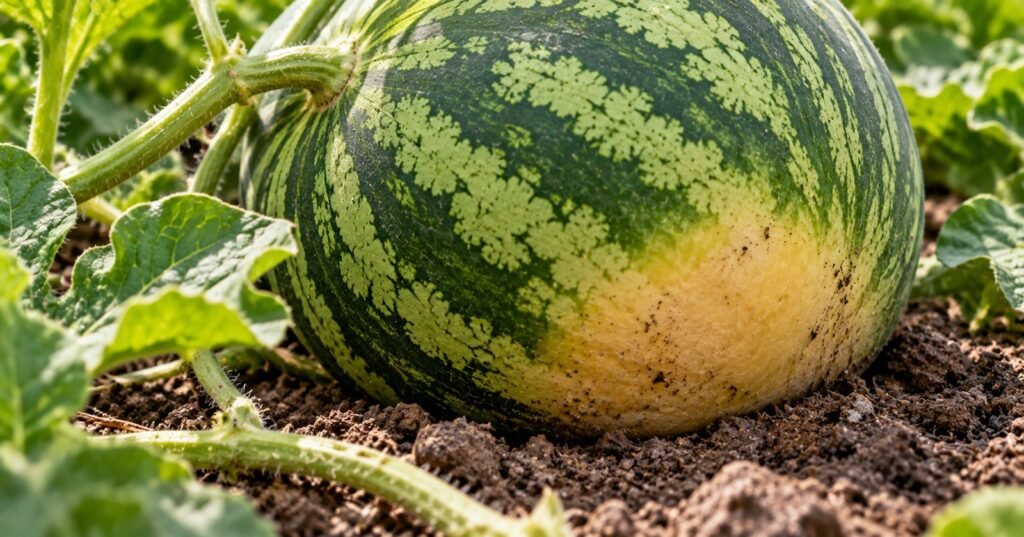
This is widely considered one of the single most reliable indicators. The field spot is the area where the melon rests on the ground, and it should transition from white or pale green when unripe to a creamy yellow or gold color as the melon ripens. A field spot that’s still white or very pale green is one of the clearest signs a watermelon isn’t ready yet.
2. The tendril near the stem
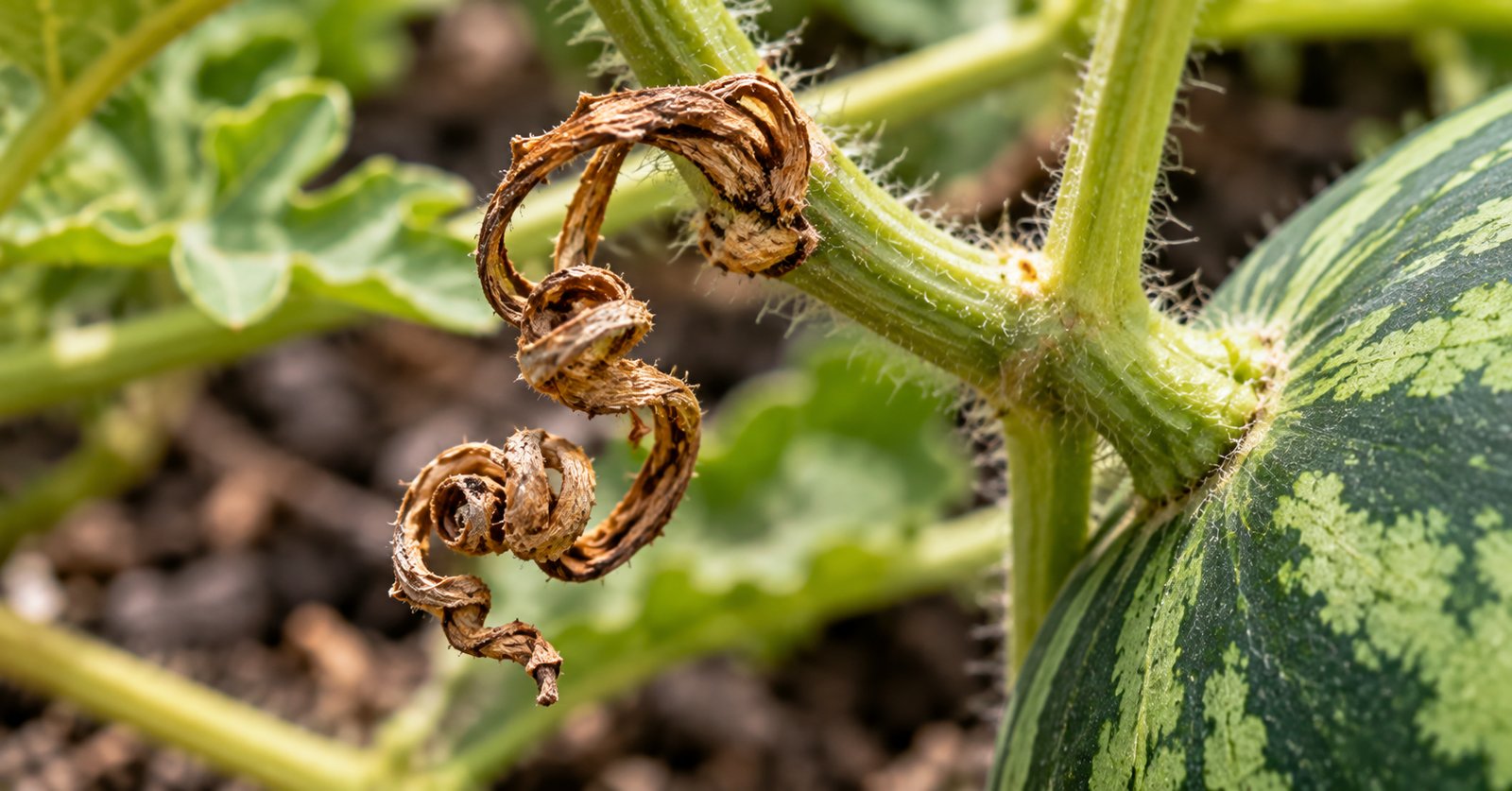
Check the small curly tendril growing from the vine closest to where the melon’s stem attaches. As the melon ripens, this tendril dries out and turns brown, eventually withering completely. A tendril that’s still green and pliable usually means the melon needs more time; a fully dried, brown tendril is a strong sign of ripeness. This works especially well when the tendril closest to the fruit (not one further down the vine) is checked specifically.
3. The thump test (with realistic expectations)
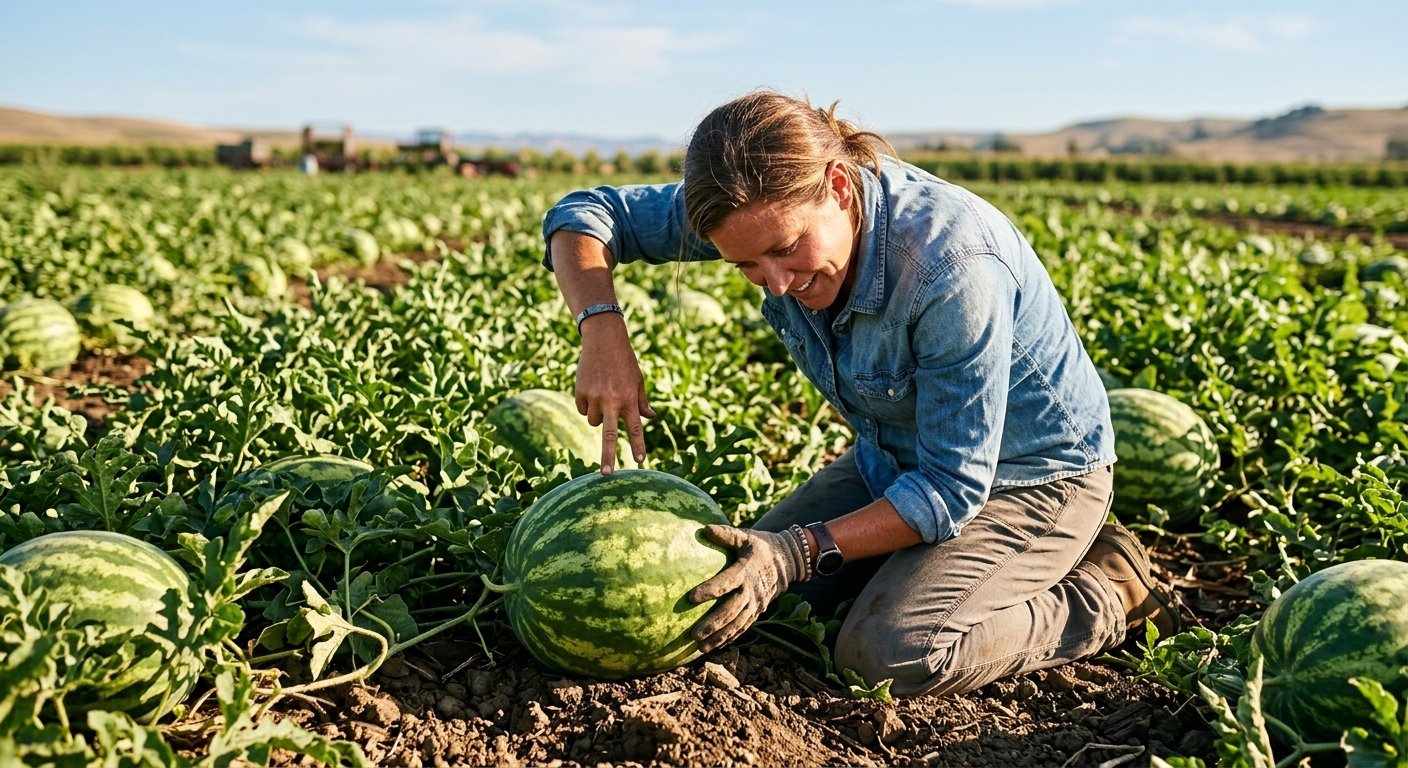
Thumping a watermelon and listening for a hollow versus dull sound is the most commonly cited method, but it’s also the least reliable on its own — it takes practice to correctly interpret, and even experienced gardeners disagree on exactly what an ideal ripe sound should be. A ripe watermelon is generally described as producing a deep, hollow "thunk" rather than a higher-pitched, dense-sounding thud, but this test works far better as a supporting check alongside the field spot and tendril than as a standalone method.
4. Overall size and days to maturity
Check the seed packet or plant tag for expected days to maturity, and count from when the melon first formed (not from planting). Most watermelon varieties take 70–90 days from planting to harvest, or roughly 30–45 days from when the fruit first sets, depending on variety. A melon that’s noticeably smaller than the variety’s expected mature size likely needs more time, regardless of other signs.
5. Skin texture and dullness
Ripe watermelon skin typically develops a slightly dull, matte appearance rather than the glossy shine of an immature fruit, along with a somewhat rough or textured feel rather than perfectly smooth skin. This sign is subtler and more variety-dependent than the others, so it’s best used as a supporting clue rather than a definitive test.
Putting the Signs Together
The most reliable approach combines multiple signs rather than relying on any single one: check the field spot for a cream-to-yellow color, confirm the nearest tendril has dried and browned, note whether the size seems appropriate for the days elapsed since fruit set, and use the thump test as a final supporting check rather than the primary decision-maker. When most or all signs point toward ripeness together, you can be reasonably confident in harvesting.
How to Harvest a Ripe Watermelon
Use garden shears or a sharp knife to cut the stem about an inch or two above where it attaches to the fruit, rather than twisting or pulling, which can damage the melon or the surrounding vine. Handle harvested melons gently, since a hard impact can cause internal cracking or bruising even without visible external damage.
What Happens If You Pick a Watermelon Too Early
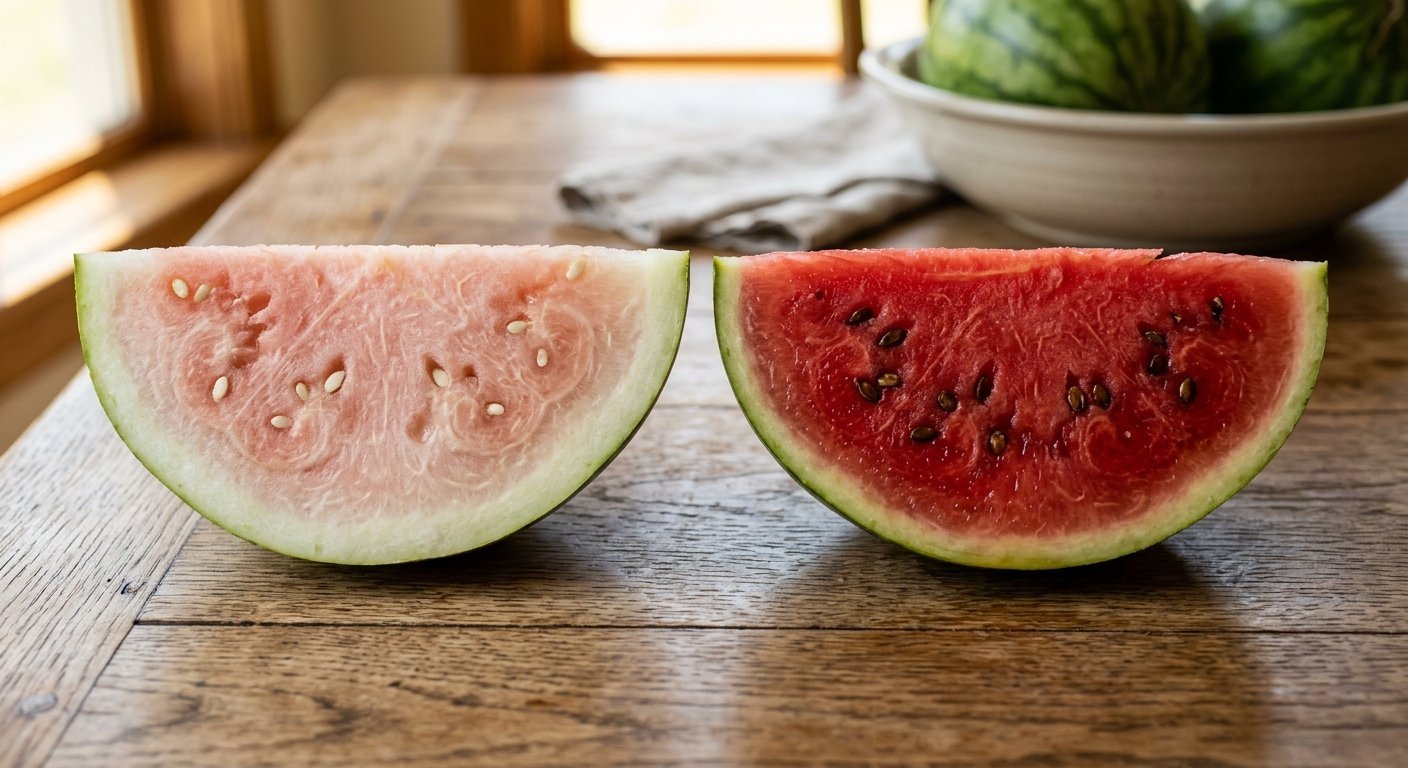
An underripe watermelon will typically be paler pink or even whitish inside rather than a deep red, noticeably less sweet, and the seeds (in seeded varieties) will often still be white or pale rather than the dark brown or black of a fully mature fruit. Unfortunately, since watermelons don’t ripen meaningfully after harvest, there’s no fix for this beyond eating it as-is or discarding it — which is exactly why getting the harvest timing right matters more for watermelon than for many other garden fruits.
What Happens If You Wait Too Long
Overripe watermelons can develop a mealy, overly soft texture, and in some cases the flesh becomes stringy or starts to break down internally. Extremely overripe melons may also split or crack on the vine, particularly after a heavy rain following a dry spell, as the fruit rapidly absorbs water it can no longer accommodate.
Growing Tips That Support Better Ripeness Judgment
Marking or noting the date each fruit sets (when the flower fades and the small fruit begins to form) makes tracking days-to-maturity considerably easier than trying to estimate after the fact. Consistent watering throughout fruit development also matters — inconsistent watering, particularly a dry spell followed by heavy watering right before harvest, can affect both flavor development and the fruit’s tendency to split.
The Bottom Line
No single test reliably confirms watermelon ripeness on its own — the field spot turning from white to creamy yellow and the nearest tendril drying to brown are the two most trustworthy signs, and combining them with the days-to-maturity count and a supporting thump test gives the most reliable read. Since watermelons won’t ripen further once picked, take the extra minute to check multiple signs before cutting the vine.
For more harvest timing and beginner crop ideas, see When to Harvest Tomatoes (And How to Tell They’re Actually Ready) and Best Vegetables to Grow for Beginners.
Last modified: October 5, 2026