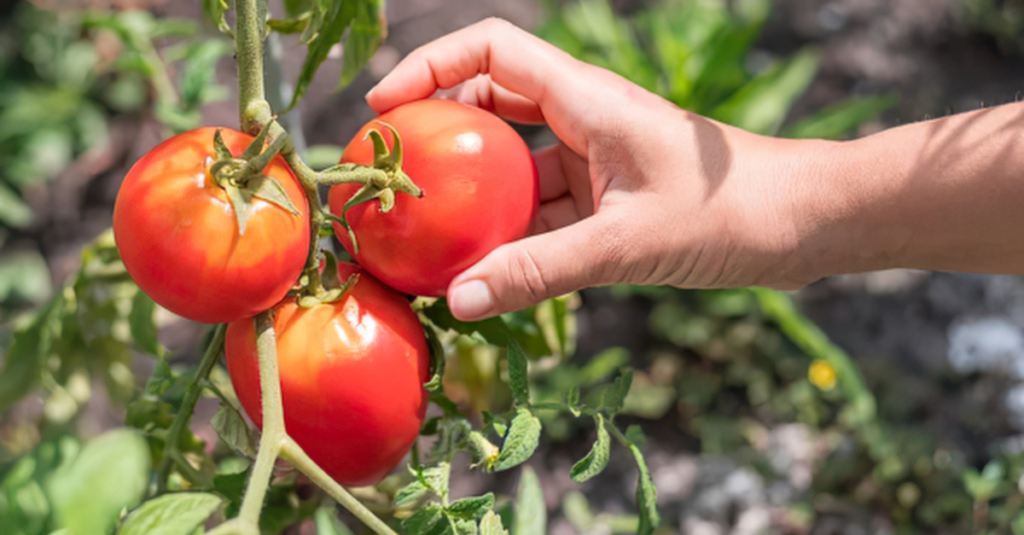
Tomatoes are one of the few garden vegetables where the "ready to pick" moment is genuinely a judgment call rather than a fixed rule, and getting it right has a real impact on flavor. Here’s how to read the signs correctly.
The Main Signs a Tomato Is Ready to Harvest
Color is the most obvious indicator, but it varies by variety — a red tomato variety should reach a deep, even red across the whole fruit, while yellow, orange, purple, and striped varieties reach their own characteristic full color. A tomato that’s still showing green shoulders or patches generally isn’t fully ripe yet.
Firmness with slight give is the better indicator once you know what you’re looking for. A ripe tomato yields gently to light pressure without feeling mushy or soft — think of the give in a ripe peach, not a rock-hard green tomato or an overripe, squishy one.
Easy separation from the vine — a ripe tomato typically comes off with a gentle twist or slight tug, rather than requiring you to fight the stem. If it resists significantly, it likely needs another day or two.
Aroma at the stem — many experienced gardeners rely on smell as much as sight. A ripe tomato has a distinctive, slightly sweet, earthy scent right at the stem end, while an unripe one smells more green and grassy.
Should You Pick Slightly Early?
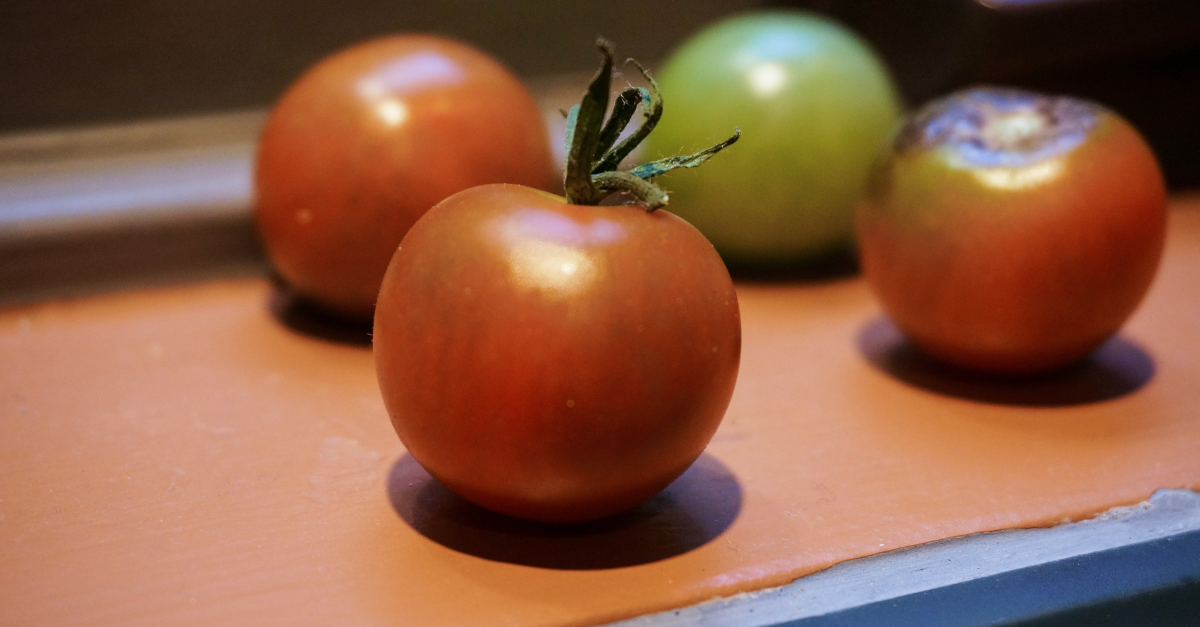
There’s a real case for picking tomatoes just before they’re fully vine-ripe, especially in a few common situations:
- If pests or wildlife are a problem. Birds, squirrels, and insects often target the ripest fruit first, so picking at the "breaker" stage (just starting to show color) and finishing the ripening indoors can save more of your harvest than waiting for full vine-ripeness.
- If rain is forecast. Heavy rain right before harvest can cause tomatoes to split as they absorb water faster than their skin can expand, especially in fruit that’s already close to ripe.
- Near the end of the season, when a frost is approaching and green tomatoes on the vine won’t have time to ripen naturally — these can be picked and ripened indoors, or used for fried green tomatoes and similar green-tomato recipes.
Tomatoes picked at the breaker stage (just starting to turn) and ripened at room temperature indoors develop nearly identical flavor to vine-ripened fruit, since most of a tomato’s sugar development happens in the days right around and after color change — contrary to the common belief that only vine-ripening produces good flavor.
How to Harvest Tomatoes Properly
Hold the fruit gently and either twist slightly or use garden snips to cut the stem just above the calyx (the small green cap where the fruit meets the vine), rather than pulling forcefully, which can damage the vine or nearby developing fruit. Handle ripe tomatoes gently once picked — they bruise more easily than their firm skin might suggest.
Ripening Tomatoes Indoors
If you’ve picked early or have green tomatoes left at season’s end, ripening indoors is straightforward: place them in a single layer, stem-side up, in a spot with indirect light and room temperature (around 65–75°F). Direct sunlight isn’t necessary and can actually cause uneven ripening or overheating. Adding a ripe banana or apple nearby speeds the process, since these fruits release ethylene gas that accelerates ripening. Check every day or two and remove any that show signs of rot.
Harvesting Herbs Without Killing the Plant
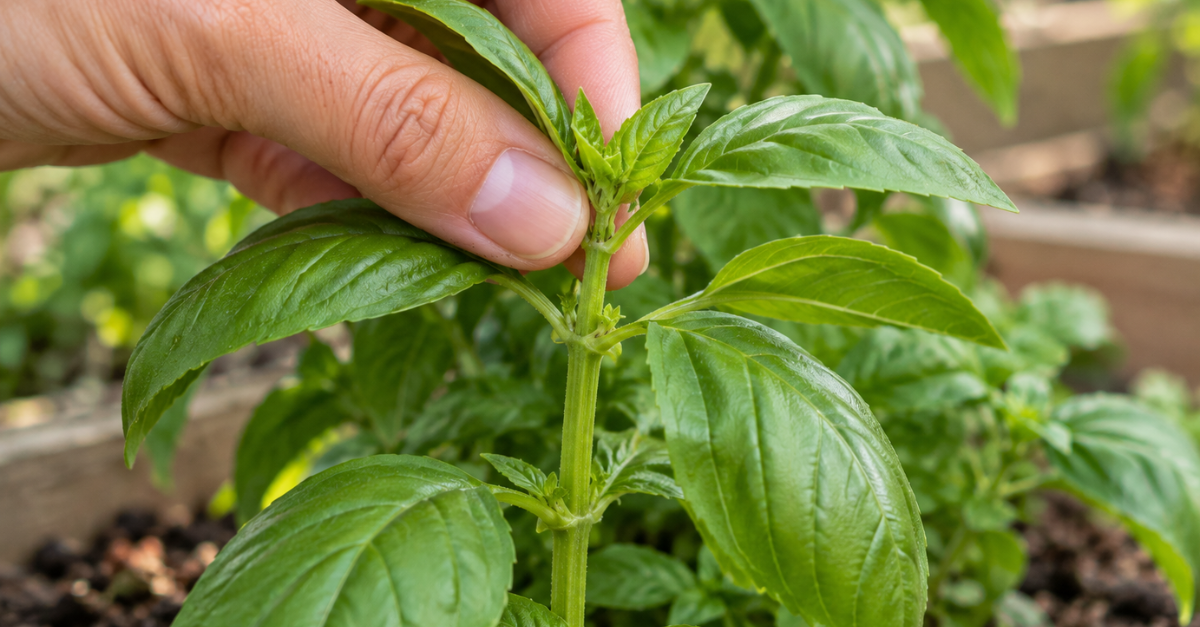
Since tomatoes are often grown alongside herbs like basil in the same garden, it’s worth knowing how to harvest herbs sustainably too, so the plants keep producing rather than declining after one cut.
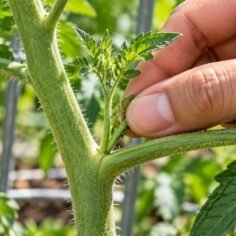
Basil: Harvest by pinching or cutting just above a leaf node (where a pair of leaves meets the stem), rather than stripping individual leaves from the top. This encourages the plant to branch out and produce twice as many stems from that point, dramatically increasing overall yield over the season. Never remove more than about a third of the plant at once.
Rosemary: Snip 2–3 inch sprigs from the tips of stems, avoiding cutting into old, woody growth, which regenerates slowly or not at all. Regular light harvesting through the growing season actually encourages bushier growth.
Mint: Mint is vigorous enough to handle aggressive harvesting — cutting stems back by up to half regularly actually keeps the plant fuller and prevents the leggy, sparse growth mint develops if left uncut for long stretches.
Chives: Cut leaves an inch or two above the soil line rather than pulling them, and they’ll regrow readily from that point — chives can typically be harvested this way repeatedly through the growing season.
When to Harvest Herbs for Drying
If you’re harvesting herbs specifically to dry and preserve rather than use fresh, timing matters for flavor concentration. The best time is generally mid-morning, after dew has dried but before the heat of the day, when essential oil content in the leaves tends to be highest. For most herbs, harvesting just before flowering — or as flower buds are just forming — captures the most concentrated flavor, since energy shifts toward flower and seed production once blooming begins in earnest.
The Bottom Line
For tomatoes, trust color, gentle firmness, and easy separation from the vine over any single rule, and don’t hesitate to pick slightly early when weather or pests are a concern — indoor ripening produces nearly the same flavor. And while you’re out there, harvest companion herbs by cutting above a node rather than stripping leaves, which keeps the whole garden producing longer through the season.
For tomato care before harvest and pest checks, see When to Plant Tomatoes: Seeds & Transplants and Tomato Hornworm Identification & Removal.
Last modified: October 5, 2026