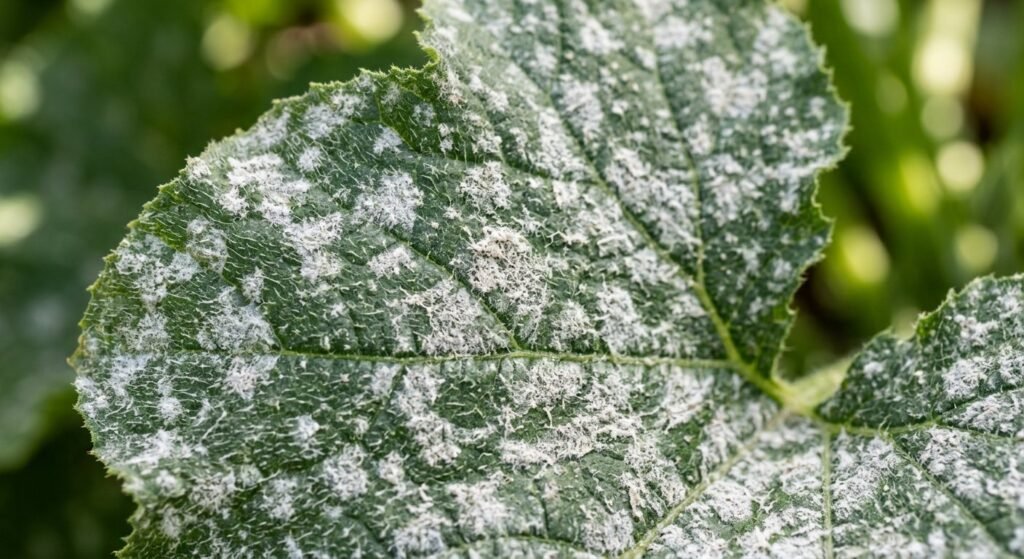
Powdery mildew is instantly recognizable once you’ve seen it — a white, powdery coating dusted across leaves and stems — and it’s one of the most common fungal diseases affecting garden plants, from squash and cucumbers to roses and lilacs. The good news is that it’s also one of the more manageable diseases once caught early.
How to Identify Powdery Mildew
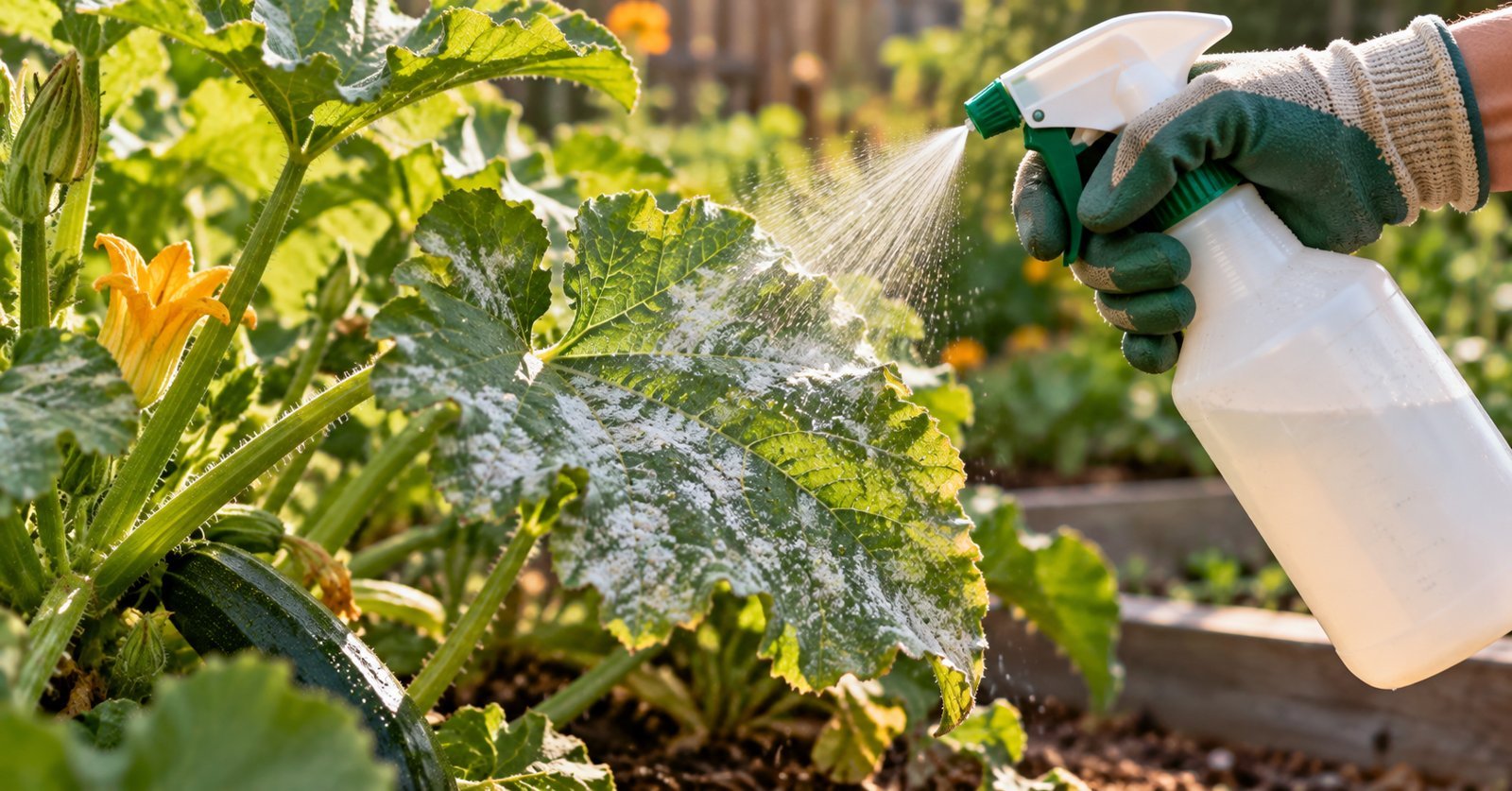
What it looks like: A white to grayish, powdery or dusty coating on the surface of leaves, stems, and sometimes flowers or fruit, often starting as small circular patches that expand and merge into larger areas covering most of the leaf surface. Affected leaves may yellow, curl, or become distorted as the infection progresses, and severely affected leaves eventually turn brown, dry out, and drop.
When it appears: Powdery mildew is most common in warm, dry conditions with high humidity — somewhat counterintuitively, it doesn’t need standing water on leaves to spread (unlike many other fungal diseases), thriving instead in humid air with dry leaf surfaces, which is why it’s often worse during warm days followed by cool, humid nights.
Powdery Mildew on Squash Specifically
Squash and other cucurbits (cucumbers, melons, pumpkins) are among the most commonly and severely affected plants. It typically appears first on older, lower leaves as small white spots that spread rapidly across the leaf surface, and can significantly reduce yield if left untreated, since heavily infected leaves lose much of their capacity for photosynthesis, weakening the whole plant’s fruit production. Squash plants under stress — from drought, overcrowding, or poor air circulation — tend to be hit harder and faster than well-maintained plants.
Downy Mildew vs. Powdery Mildew
These two diseases are commonly confused despite being caused by entirely different organisms and requiring somewhat different management:
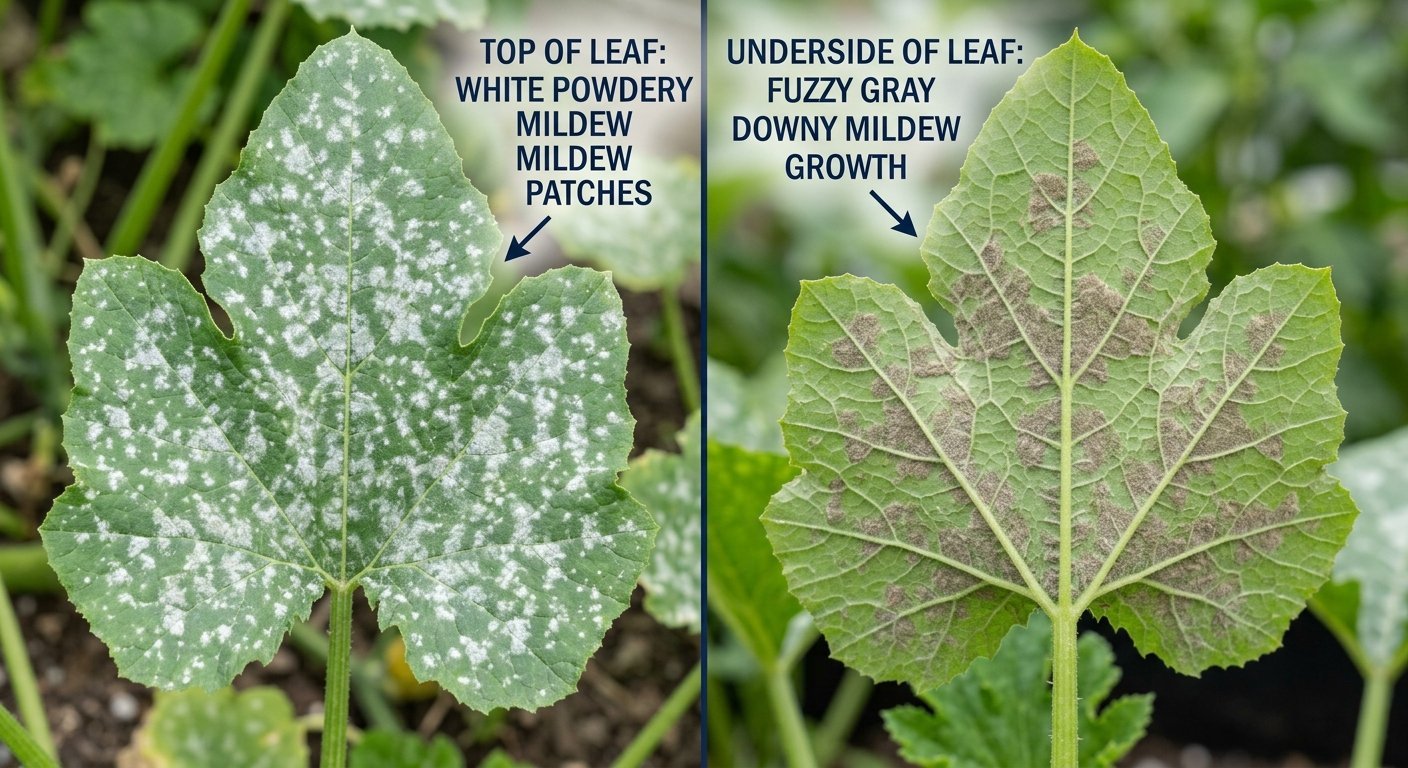
Powdery mildew appears as a white, powdery coating on the top surface of leaves, thrives in warm, dry conditions with high humidity, and doesn’t require leaf wetness to spread.
Downy mildew typically appears as yellow or pale patches on the leaf’s top surface with a corresponding fuzzy gray-to-purple growth on the underside directly beneath those patches, and generally requires actual leaf wetness (dew, rain, or overhead watering) and cooler temperatures to spread, making it more common in cool, wet spring or fall conditions rather than mid-summer heat.
The distinction matters for treatment: many powdery mildew treatments are less effective against downy mildew, and downy mildew management leans more heavily on reducing leaf wetness and improving airflow, since the pathogen specifically needs moisture on the leaf surface to spread and infect.
How to Treat Powdery Mildew
1. Remove affected leaves
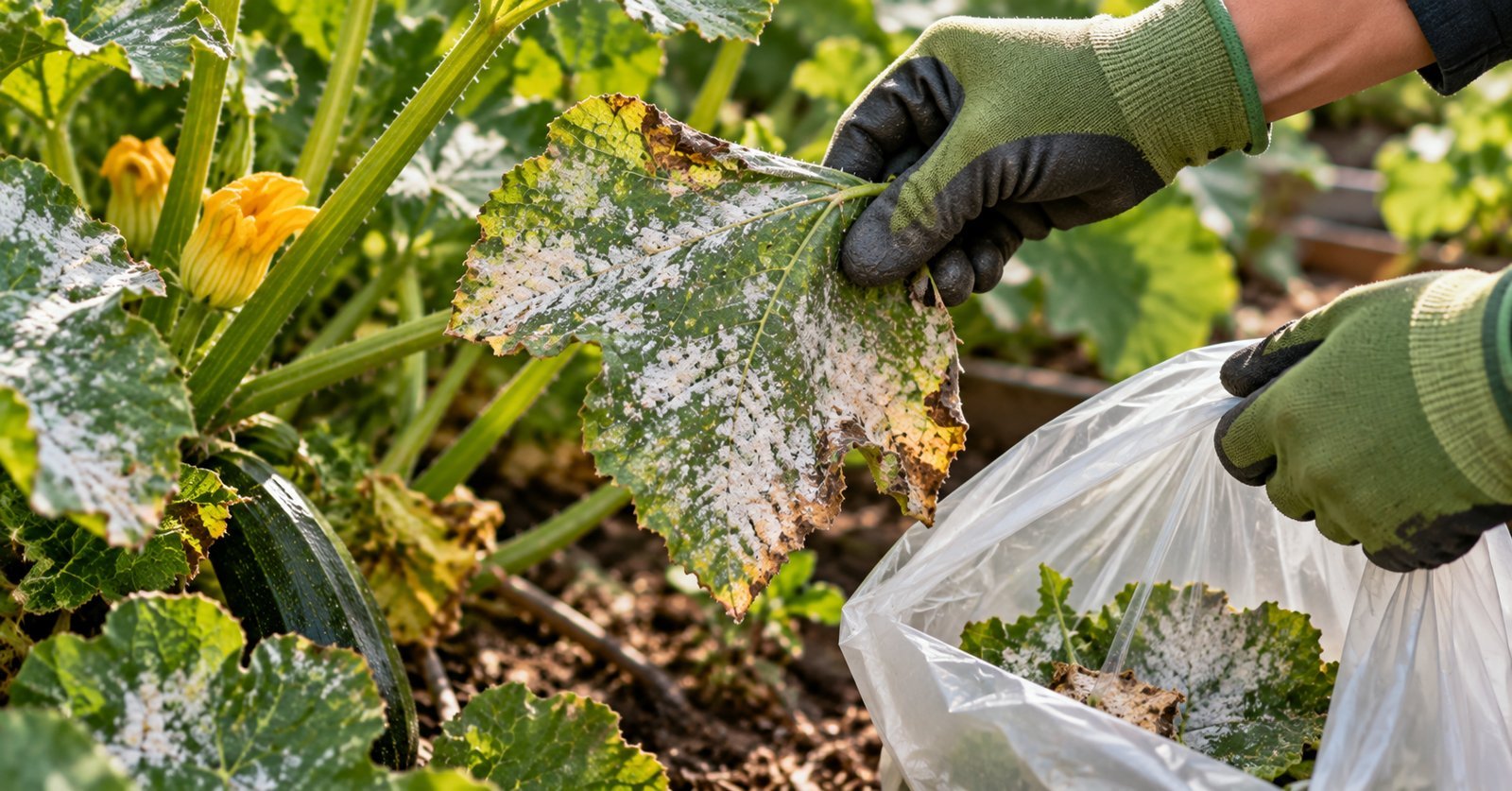
At the first sign of infection, remove and dispose of (don’t compost) affected leaves to reduce the amount of active fungal spore production on the plant. For light infections, this alone can meaningfully slow the spread.
2. Improve air circulation
Prune overcrowded growth and ensure adequate spacing between plants, since stagnant, humid air around densely packed foliage is exactly the condition powdery mildew favors.
3. Apply a fungicide
Several options work well against powdery mildew, ranging from home remedies to commercial products:
- Potassium bicarbonate sprays are effective and often preferred for edible gardens due to their low toxicity profile, working by disrupting the fungal cell structure on contact.
- Neem oil has both fungicidal and insecticidal properties, making it a useful dual-purpose treatment, though it works better as an early-stage or preventive treatment than against severe, established infections.
- Sulfur-based fungicides are a traditional, organic-approved option, though they shouldn’t be applied in combination with oil-based products or during very hot weather, since this combination can cause leaf burn.
- A diluted milk spray (roughly a 40% milk to 60% water solution) has research support as a genuinely effective treatment for powdery mildew on some crops, likely due to compounds in milk that have a mild antifungal and immune-boosting effect on the plant, though results vary by crop and conditions.
Apply any fungicide treatment early in the morning or evening, never in the heat of the day, and always test on a small area first if trying a new product, since some treatments can cause leaf burn under intense sun.
4. Water at the soil level
While powdery mildew doesn’t need leaf wetness to spread the way downy mildew does, overhead watering still increases humidity around the plant canopy generally, so switching to soil-level watering (drip irrigation or a soaker hose) reduces overall favorable conditions for fungal disease broadly.
Preventing Powdery Mildew Next Season
Choose resistant varieties. Many seed catalogs specifically note powdery mildew resistance for susceptible crops like squash and cucumbers, and starting with a resistant variety meaningfully reduces the odds of a severe infection.
Space plants properly from the start, rather than trying to correct overcrowding after the fact.
Water at the soil level consistently, rather than overhead watering that increases humidity around foliage.
Apply a preventive fungicide spray (potassium bicarbonate, neem oil, or a milk spray) on susceptible crops before symptoms appear, particularly if your garden has a history of powdery mildew issues, since prevention is considerably easier than treating an established infection.
Rotate crops where practical, since some fungal spores can overwinter in plant debris and soil near where infected plants grew.
Clean up plant debris at the end of the season rather than leaving infected material in the garden over winter, where it can serve as a source of spores for the following year.
When Powdery Mildew Isn’t Worth Fighting
For crops nearing the natural end of their productive life anyway — squash plants late in the season that have already produced a substantial harvest, for instance — an aggressive treatment regimen may not be worth the effort compared to simply accepting the decline and cleaning up debris thoroughly for next season’s prevention.
The Bottom Line
Powdery mildew’s distinctive white, dusty coating makes it one of the easier fungal diseases to identify early, and catching it quickly — removing affected leaves, improving airflow, and applying an appropriate fungicide — usually keeps it manageable. Distinguish it from downy mildew by checking leaf undersides for fuzzy growth, and focus prevention efforts on resistant varieties, proper spacing, and soil-level watering to reduce the odds of a serious infection taking hold next season.
For help identifying other leaf problems, see Brown Spots on Leaves: What Causes Them and How to Fix Each One and Why Are My Plant Leaves Curling? 7 Causes and Fixes.
Last modified: October 5, 2026