Brown spots are one of those symptoms that can point to almost anything, which makes them frustrating to diagnose from a single glance. The shape, pattern, and location of the spots — along with a few other clues — usually narrow it down quickly. Here’s how to work through it.
Start With the Shape and Pattern
Before diving into causes, look closely at a few characteristics:
- Are the spots circular with defined edges, or irregular and spreading? Circular, well-defined spots often point to fungal or bacterial disease; irregular, spreading patches more often point to environmental stress.
- Do the spots have rings or a "target" pattern? Concentric rings within a spot are a classic sign of certain fungal diseases.
- Is there a yellow halo around the spot? A yellow ring around a brown center is common with bacterial and some fungal infections.
- Are spots random across the plant, or concentrated in one area? Sun-facing sides, lower leaves, or leaves near the soil often point to different causes than spots scattered evenly.
1. Fungal Leaf Spot Diseases
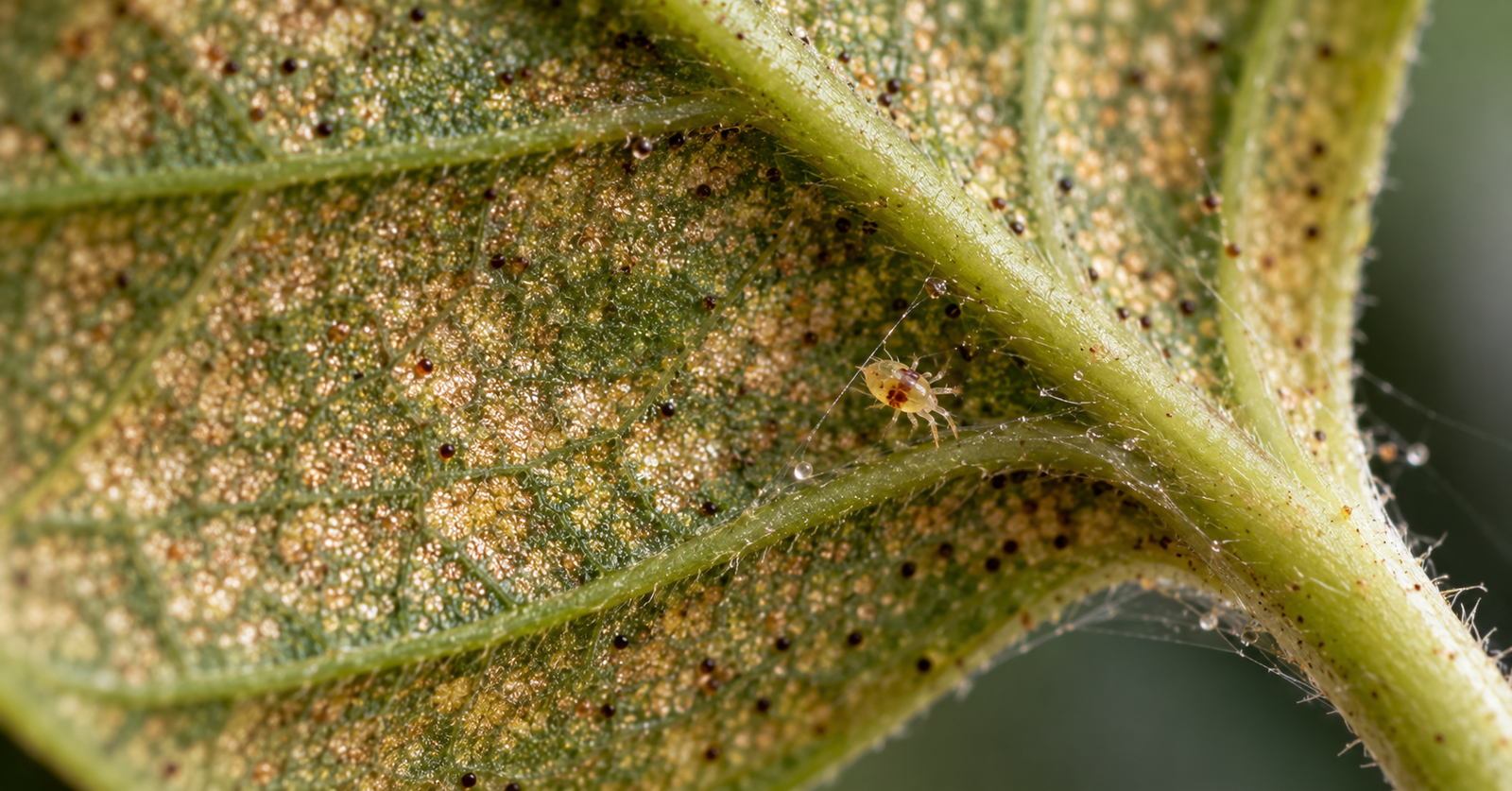
Fungal diseases are among the most common causes of brown leaf spots, especially in humid or overly wet conditions. Common types include septoria leaf spot, anthracnose, and various leaf spot fungi that affect specific plant families.
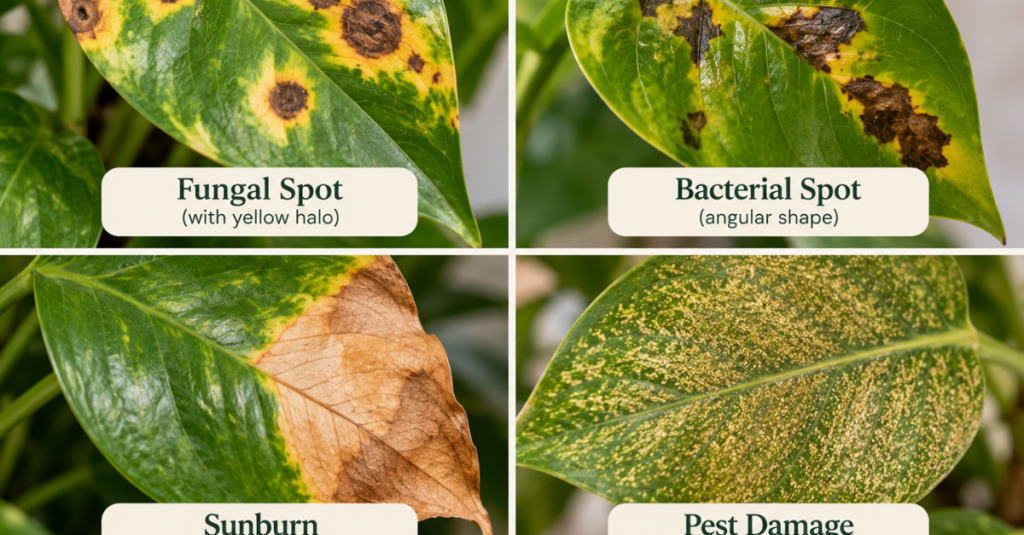
What it looks like: Circular to irregular brown or black spots, sometimes with a yellow halo, sometimes with visible concentric rings. Spots often start on lower, older leaves and progress upward, and may eventually merge into larger dead patches as the infection spreads.
Fix: Remove and dispose of affected leaves (don’t compost them, since spores can survive and spread). Improve air circulation by spacing plants further apart or thinning dense growth. Water at the soil level rather than overhead, since wet foliage promotes fungal spread. A copper-based or sulfur-based fungicide can help on edible plants, applied according to label directions, particularly as a preventive measure once conditions favor disease (warm, humid, wet weather).
2. Bacterial Leaf Spot
What it looks like: Similar to fungal spots but often smaller, more angular (sometimes constrained by leaf veins, giving spots straight edges), and frequently surrounded by a distinct yellow halo. Spots may look water-soaked initially before drying and browning.
Fix: Bacterial infections are harder to treat directly than fungal ones — there’s no effective home bactericide equivalent to a fungicide. Remove affected foliage promptly, avoid overhead watering and working around wet plants (which spreads bacteria on hands and tools), and focus on prevention next season through resistant varieties and better spacing.
3. Sunscald or Sunburn
What it looks like: Pale tan, white, or brown patches, usually on the side of the leaf that faces direct sun, often with a papery, dried texture rather than the water-soaked look of disease. This is especially common after a plant is suddenly moved from shade or indoors into strong direct sun without a gradual transition.
Fix: Move the plant to filtered light or provide afternoon shade, and going forward, acclimate plants gradually to increased sun exposure over one to two weeks rather than a sudden move.
4. Inconsistent Watering
What it looks like: Irregular brown patches or edges, sometimes crispy, often following a pattern of general plant stress rather than the discrete circular spots typical of disease. This is common in plants that alternate between very dry and then heavily watered soil, rather than a consistent routine.
Fix: Establish a more consistent watering routine based on checking actual soil moisture, and mulch outdoor plants to buffer soil moisture swings between waterings.
5. Nutrient Deficiency or Excess
What it looks like: Potassium deficiency in particular often shows as brown, scorched-looking edges and spots, sometimes called "leaf scorch," typically starting on older leaves. Excess fertilizer salt buildup can cause similar browning, often starting at leaf tips and margins.
Fix: For deficiency, a balanced fertilizer addresses the shortfall; for excess fertilizer or salt buildup, flush the soil thoroughly with water (for potted plants, run water through the pot several times to leach out accumulated salts) and reduce fertilizing frequency going forward.
6. Pest Damage
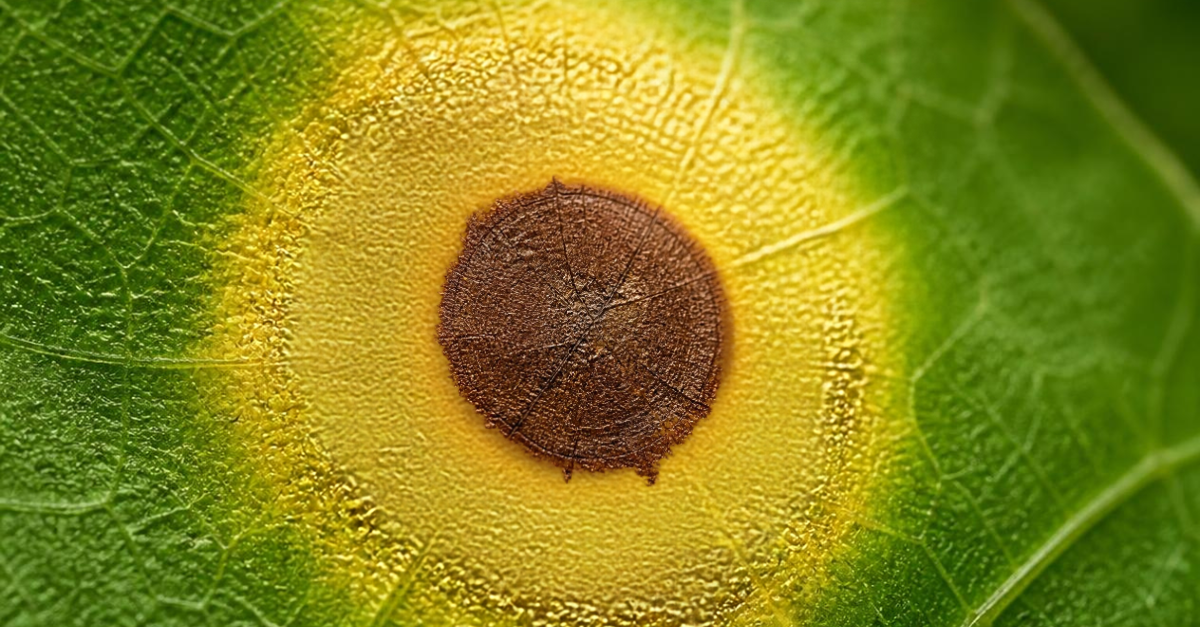
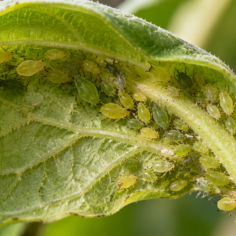
What it looks like: Spots from pest feeding often look different from disease spots on close inspection — spider mite damage shows as fine, stippled bronze-to-brown speckling rather than discrete round spots; thrips leave silvery, scarred patches; and some caterpillars leave irregular, chewed-edge brown patches rather than the smooth-edged spots typical of disease. Check leaf undersides closely for the pests themselves or their webbing and residue.
Fix: Identify and treat the specific pest — insecticidal soap or horticultural oil for most soft-bodied pests, with treatment repeated over several weeks for a full life-cycle knockdown.
7. Chemical or Fertilizer Burn
What it looks like: Sudden, sharply defined brown patches appearing shortly after fertilizing, applying a pesticide, or exposure to a chemical (even something like a cleaning product drifting nearby). Often affects whichever leaves had direct contact.
Fix: Rinse affected foliage promptly if you catch it happening, remove severely damaged leaves, and going forward, always follow label dilution rates and avoid applying fertilizer or chemicals during the heat of the day, when leaves are more vulnerable to burn.
Quick Diagnostic Checklist
- Check leaf undersides for pests before assuming disease
- Note whether spots have a yellow halo (common with disease) or a dry, papery texture (common with sun or chemical damage)
- Consider recent changes — a move to more sun, a new fertilizer application, or a stretch of erratic watering
- Check whether spots are spreading to new leaves over days (suggesting active disease) or static on already-affected leaves (suggesting a one-time environmental cause)
The Bottom Line
Brown spots have enough overlapping causes that context matters as much as appearance — what changed recently, where on the plant the spots appear, and whether they’re spreading. Rule out pests and recent environmental changes first, since those are the easiest to confirm, before assuming a fungal or bacterial disease that requires more sustained treatment.
To compare related leaf symptoms, see Why Are My Plant Leaves Turning Yellow? and Why Are My Plant Leaves Curling? Causes & Fixes.
Last modified: October 17, 2026