Root rot is often the underlying cause behind a plant that seems to be dying for no obvious reason: it’s watered, it’s in decent light, and yet it keeps declining. Because the actual damage happens underground, out of sight, root rot often isn’t diagnosed until it’s fairly advanced — which makes knowing the early above-ground signs especially valuable.
What Root Rot Actually Is
Root rot isn’t a single disease but a description of what happens when plant roots die and decay, usually due to a combination of excess moisture and a lack of oxygen in the soil, often compounded by fungal pathogens like Pythium, Phytophthora, or Fusarium that thrive specifically in waterlogged, low-oxygen conditions. Roots need oxygen from air pockets in the soil just as much as they need water; when soil stays saturated, those pockets fill with water, roots suffocate, and the resulting weakened, dying tissue becomes an easy target for rot-causing fungi already present in most soil.
Above-Ground Symptoms of Root Rot
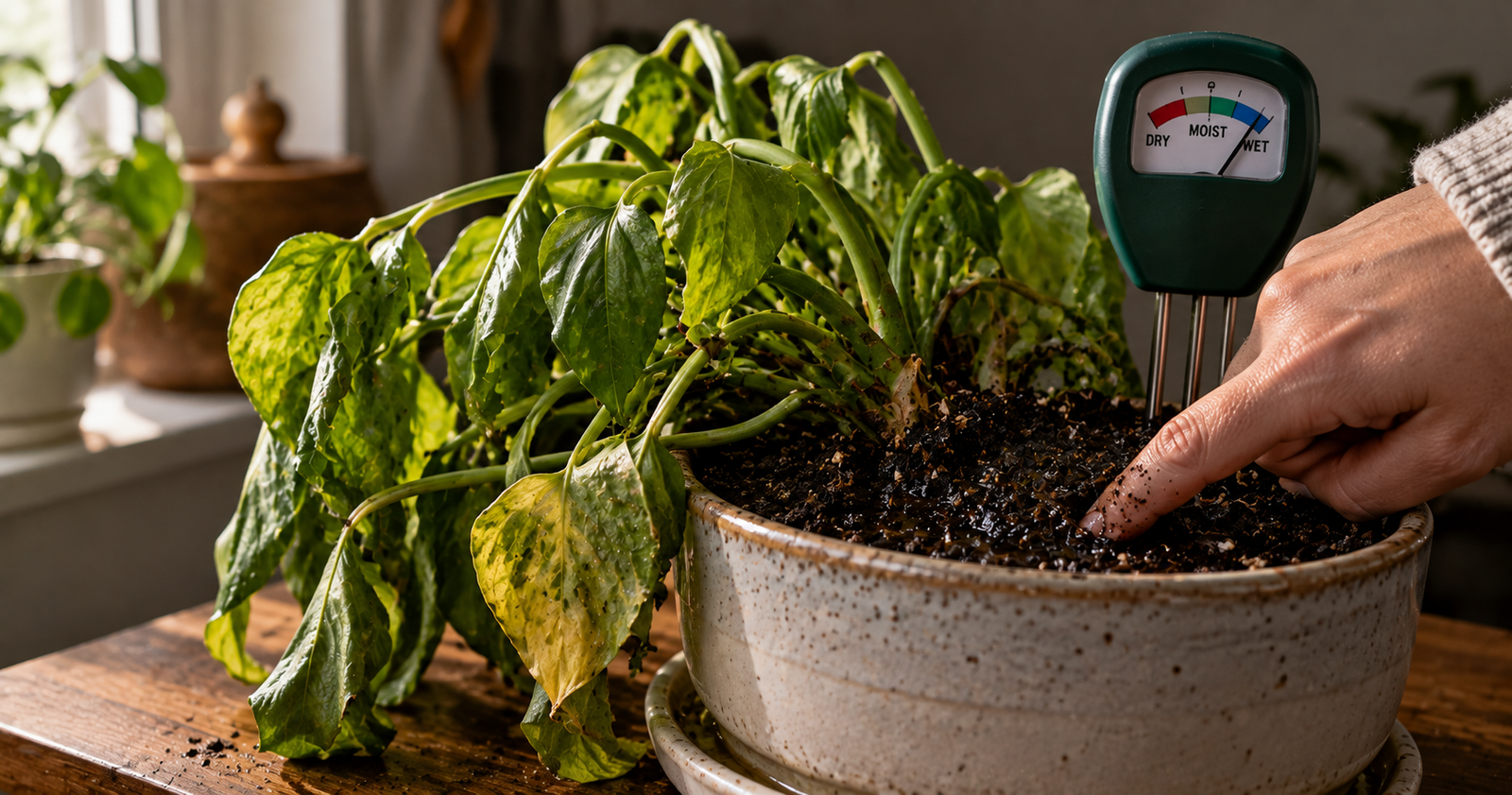
Wilting despite moist soil is one of the most telling and most commonly misread symptoms. A plant with rotted roots can’t actually take up the water sitting right there in the pot, so it wilts as if thirsty even though the soil is clearly wet — the opposite of what most people’s instinct tells them to do (water more).
Yellowing leaves, often starting with older or lower leaves, as the compromised root system struggles to support the plant’s nutrient needs.
Stunted or halted growth, since a damaged root system simply can’t support the same level of new growth as a healthy one.
Leaf drop, sometimes sudden, as the plant sheds foliage it no longer has the root capacity to sustain.
A sour, musty, or rotten smell from the soil — healthy soil smells earthy, not sour or swampy, and a bad smell is a strong indicator that anaerobic decay is happening below the surface.
Soft, dark, or blackened stem tissue near the soil line in more advanced cases, indicating the rot has progressed up into the plant’s base.
Visible mold or fungus gnats, since consistently wet, decaying organic material supports both.
Confirming Root Rot: Check the Roots Directly
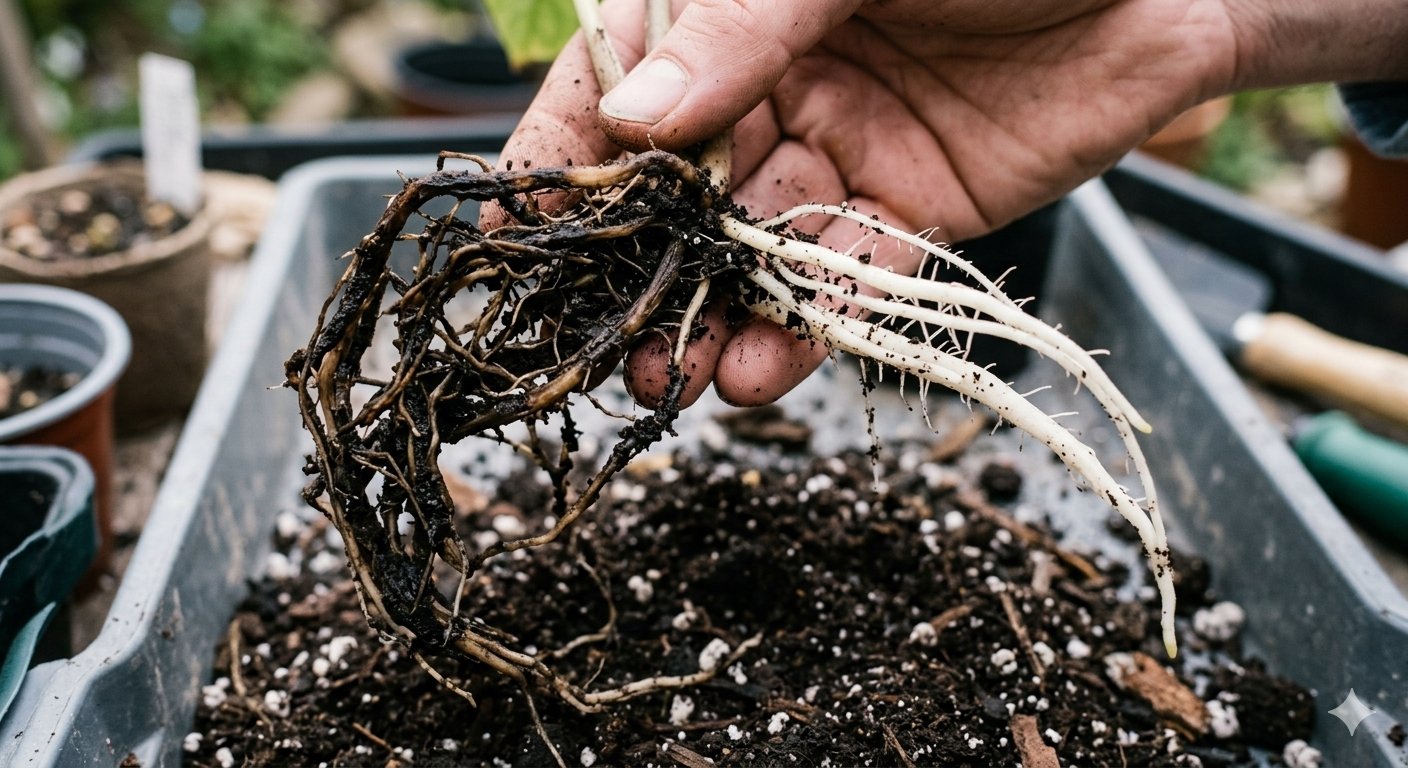
If you suspect root rot, the only way to confirm it definitively is to gently remove the plant from its pot and examine the roots. Healthy roots are firm, and typically white, tan, or light brown, sometimes with fine root hairs visible. Rotted roots are dark brown to black, mushy, and often slip apart or fall away in your fingers rather than holding together — a stark contrast that’s usually unmistakable once you see it side by side with healthy tissue.
What Causes Root Rot
Overwatering is by far the leading cause, especially watering on a fixed schedule rather than checking actual soil moisture first.
Poor drainage, whether from a pot with no drainage holes, a decorative outer pot without an inner draining pot, or a potting mix that’s too dense and retains too much water.
Overly large pots, where excess soil around a relatively small root system holds more moisture than the plant can use, staying wet far longer than necessary.
Compacted soil, which restricts the air pockets roots depend on even without excess watering, essentially creating rot-friendly conditions independent of how much water is actually applied.
Contaminated soil or tools, since rot-causing fungi can spread through reused, unsterilized soil or garden tools moving between plants.
How to Treat Root Rot
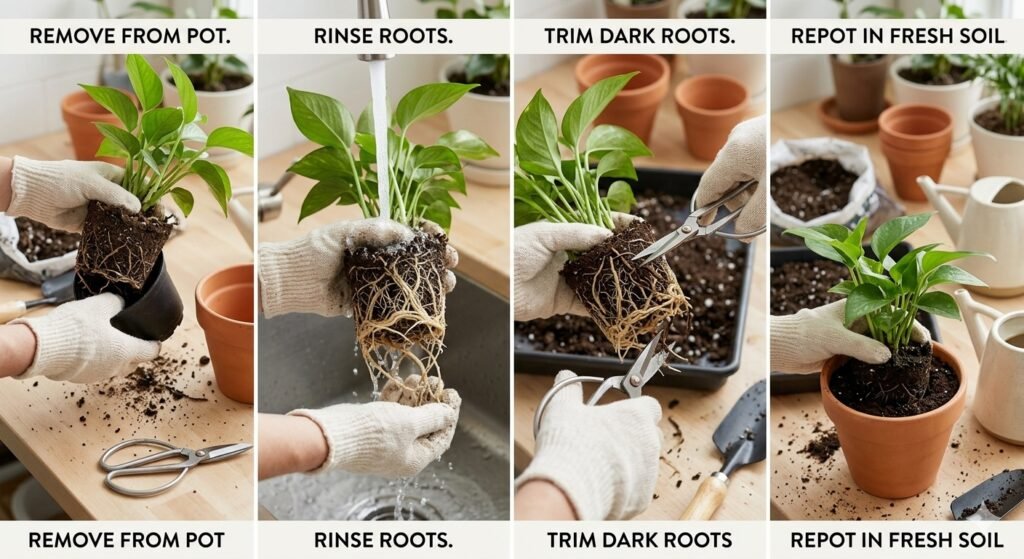
1. Remove the plant and assess the damage
Gently ease the plant out of its pot and rinse excess soil from the roots so you can see clearly what you’re working with.
2. Trim away all rotted tissue
Using clean, sharp scissors or pruners (sterilized with rubbing alcohol between cuts if rot is severe, to avoid spreading pathogens to healthy tissue), cut away every dark, mushy, or foul-smelling root, leaving only firm, healthy tissue. Don’t hesitate to remove a significant portion if rot is extensive — a smaller, genuinely healthy root system recovers far better than a larger one that still harbors rot.
3. Discard the old soil
Never reuse soil that hosted a rotted root system; it likely still carries the pathogens responsible. Dispose of it away from other garden beds or potted plants.
4. Clean the pot (or use a new one)
If reusing the same pot, wash it thoroughly and disinfect with a diluted bleach solution (about 1 part bleach to 9 parts water), rinsing well afterward, to eliminate any lingering pathogens.
5. Repot into fresh, well-draining soil
Choose a potting mix appropriate for the plant, and consider sizing down to a smaller pot than before if the previous size seems disproportionate to what’s left of the root system — this reduces the amount of soil around the roots that can hold excess moisture while the plant recovers.
6. Adjust future watering
Let soil dry out appropriately between waterings going forward, checking actual moisture with a finger before watering rather than following a fixed schedule, and make sure the pot has genuine drainage.
7. Consider a fungicide for severe or recurring cases
For persistent or valuable plants, a fungicide labeled for root rot pathogens (often containing a copper or specific anti-fungal compound) applied as a soil drench can help address active fungal presence, though it’s not a substitute for fixing the underlying moisture and drainage problem.
When Recovery Isn’t Possible
If the majority of the root system is rotted, or the stem base is soft and blackened extensively, the plant may not have enough healthy tissue left to recover. In some cases, taking a healthy-looking stem cutting from unaffected upper growth (if the rot hasn’t reached that far) and propagating a new plant is a more realistic path forward than trying to save an extensively rotted root system.
Preventing Root Rot Going Forward
- Always check soil moisture before watering, rather than watering on a fixed schedule
- Use pots with drainage holes, and empty saucers after every watering
- Choose a soil mix suited to the plant — free-draining for succulents and cacti, standard potting mix (not garden soil) for most others
- Avoid oversized pots relative to the current root system
- Sterilize tools and avoid reusing old, potentially contaminated soil
The Bottom Line
Root rot is dangerous mainly because it’s invisible until it’s advanced, but the above-ground signs — wilting despite wet soil, yellowing, and a musty smell — are catchable early if you know to look for them. Act quickly: pull the plant, trim away rot, repot into fresh soil, and correct the watering habit that likely caused it, and most plants caught before rot reaches the stem base have a real chance at full recovery.
To address the watering conditions that can contribute to root problems, see Overwatered Plant Symptoms & How to Save Your Plant and How Often to Water Indoor Plants.
Last modified: October 5, 2026