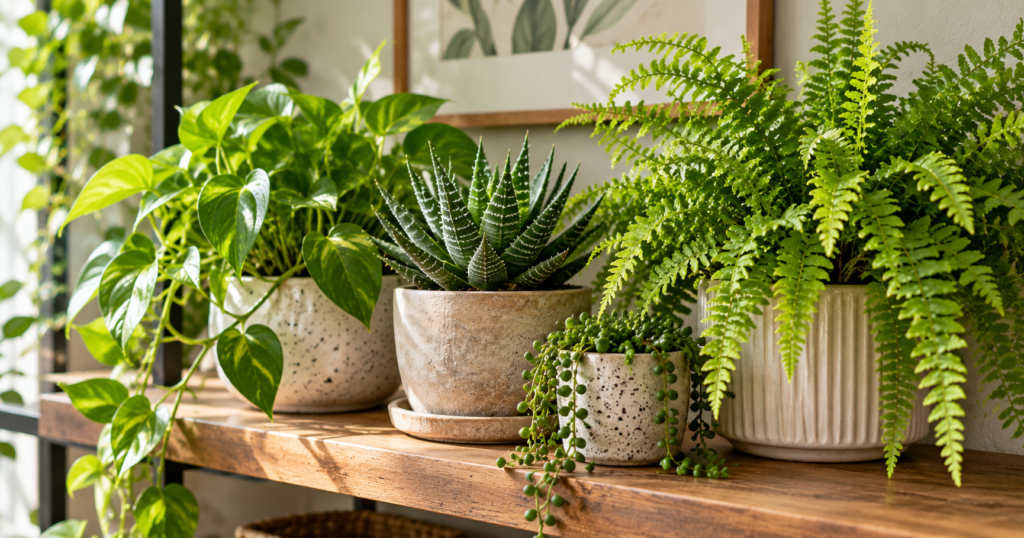
If there’s one question that trips up more new plant owners than any other, it’s this one — and the honest answer is that a fixed schedule is almost never the right approach. How often a plant needs water depends on the plant itself, its pot, its soil, the season, and the room it’s in. Here’s how to actually get it right.
Why "Water Once a Week" Doesn’t Work
A watering schedule based purely on days ignores the variables that actually determine how fast soil dries out: light levels, humidity, pot size and material, soil composition, and how actively the plant is growing at that moment. The same pothos might need water every five days on a bright windowsill in summer and every two to three weeks in a dim corner during winter. A fixed schedule is a reasonable starting guess, but it’s not a substitute for actually checking.
The Finger Test: The Simplest Reliable Method
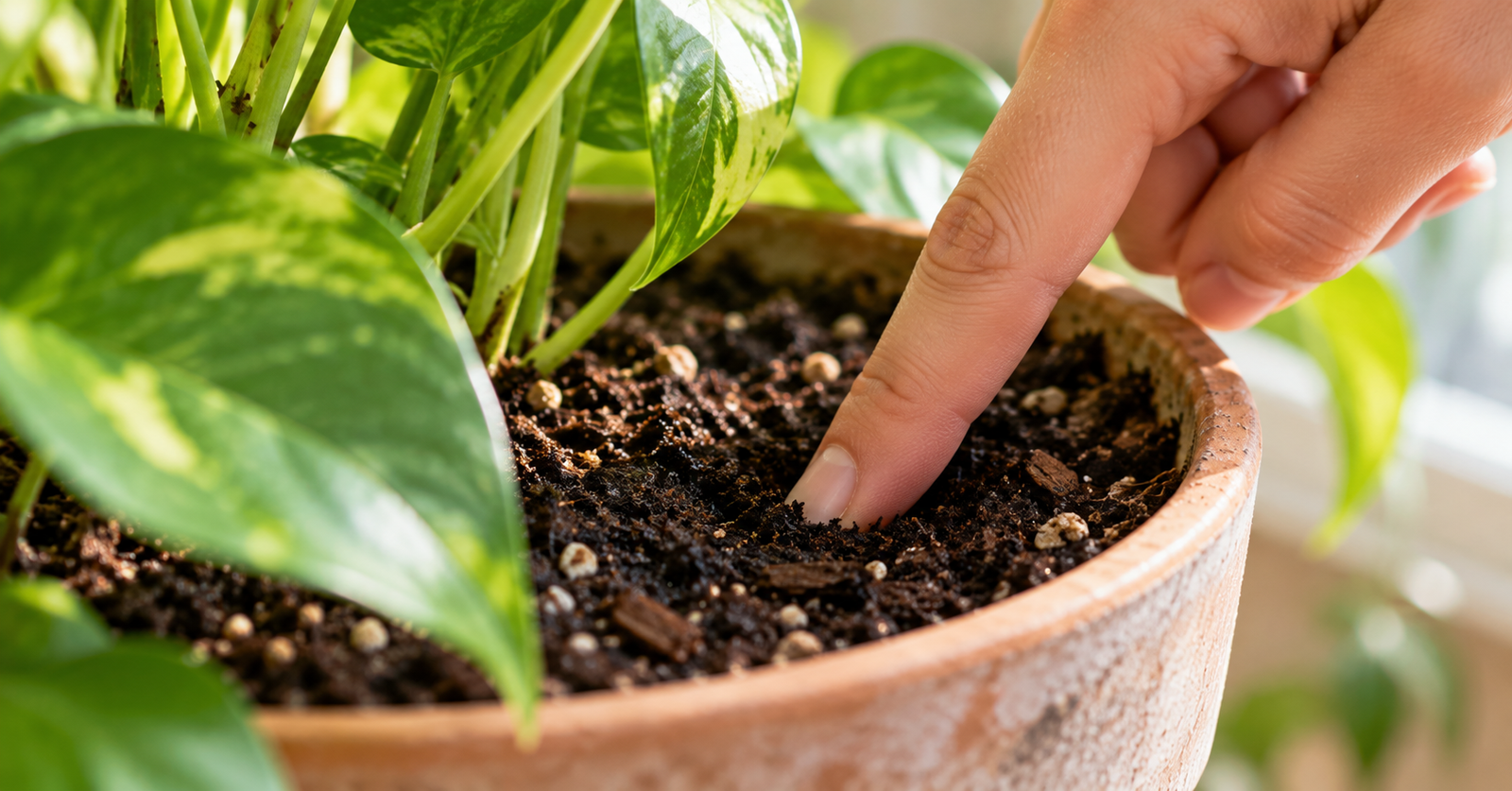
Stick your finger into the soil up to the first or second knuckle. For most common houseplants, water when the top 1–2 inches feel dry. For plants that prefer to dry out more thoroughly between waterings (succulents, cacti, snake plants), wait until the soil is dry several inches down, or the pot feels noticeably lighter than when freshly watered.
This single habit, done consistently before every watering decision, prevents the vast majority of both overwatering and underwatering problems.
Watering Needs by Plant Type
Succulents and cacti want to dry out completely between waterings, often needing water only every 2–3 weeks, less in winter. Their thick, water-storing leaves and roots are adapted to drought and are highly vulnerable to rot in consistently moist soil.
Tropical foliage plants (pothos, philodendron, monstera, peace lily) generally prefer soil that’s allowed to dry out at the top 1–2 inches between waterings, typically every 7–10 days depending on conditions, though some like peace lily signal thirst clearly by drooping.
Ferns and moisture-loving plants (Boston fern, calathea, maidenhair fern) prefer more consistently moist soil and often need watering every 4–7 days, along with attention to humidity, since dry air stresses these plants as much as dry soil does.
Orchids have very specific needs depending on the growing medium — most common orchids grown in bark mix need watering roughly every 7–10 days, typically by soaking rather than a light sprinkle, since bark dries faster than potting soil but also needs a genuine soak to rehydrate properly.
Factors That Change How Often You Should Water
Season: Most houseplants slow their growth significantly in fall and winter as light levels drop, and need noticeably less frequent watering during this dormant-ish period — continuing a summer watering routine through winter is one of the most common causes of overwatering.
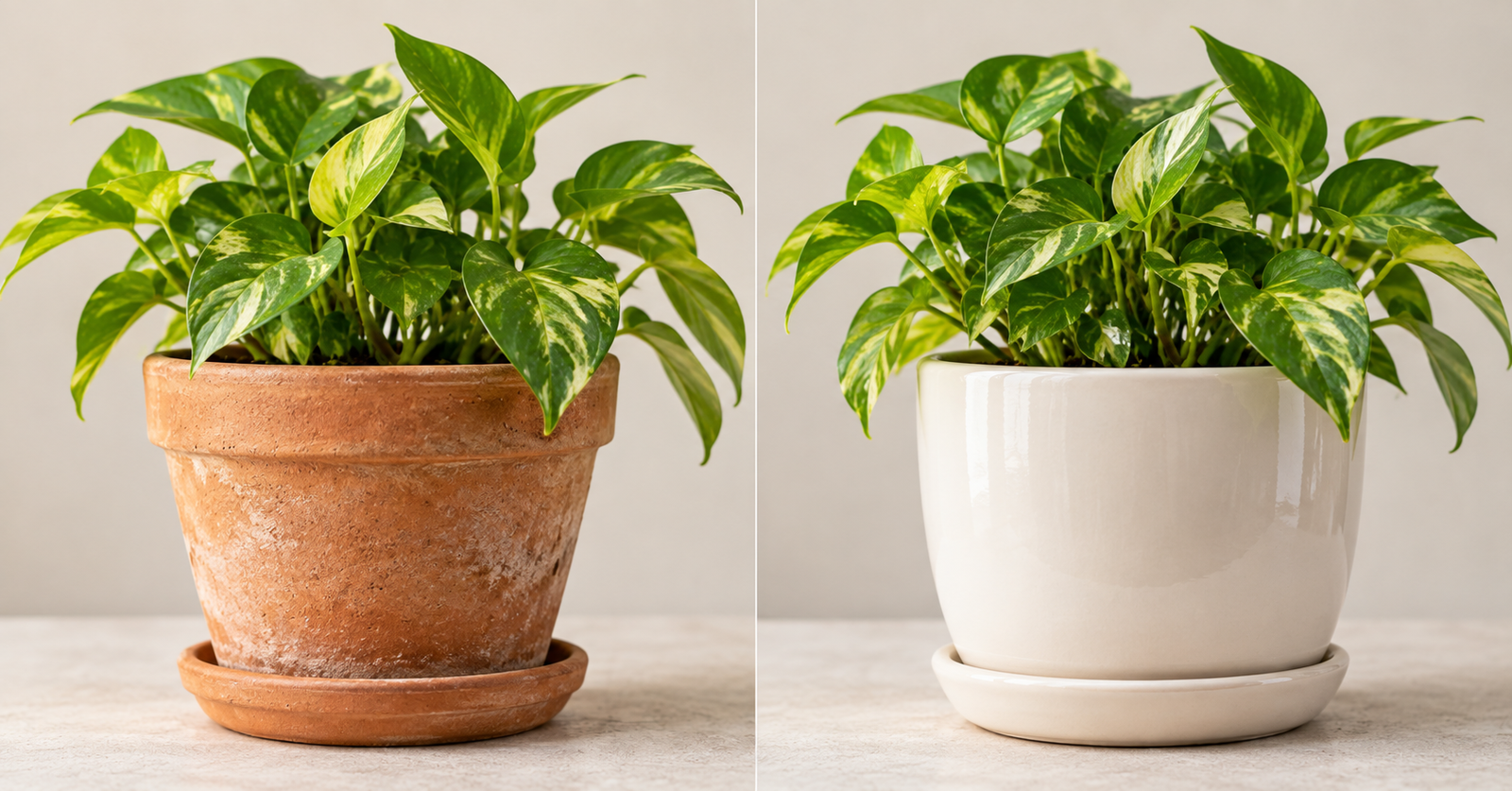
Pot material: Terracotta and unglazed clay pots are porous and let moisture evaporate through the pot walls, so plants in them dry out faster and need more frequent watering than the same plant in a glazed ceramic or plastic pot.
Pot size relative to the plant: A plant in a pot that’s too large for its root system holds excess moisture around roots that aren’t actively using it, extending drying time and increasing rot risk — this is part of why repotting into a dramatically larger pot "for growing room" often backfires.
Light levels: More light generally means more active growth and faster water use, so a plant moved to a brighter spot will typically need more frequent watering than it did in a dimmer location, and vice versa.
Humidity: Higher home humidity slows soil drying and reduces watering frequency needs; a dry, heated home in winter accelerates it, sometimes surprisingly, even though it’s also often the season when light-driven growth slows.
Signs You’re Watering Too Often
Yellowing leaves (especially lower ones), a musty smell from the soil, fungus gnats, mold on the soil surface, and wilting despite visibly moist soil are all signs of overwatering, discussed in more depth in guides specifically on overwatered plant symptoms.
Signs You’re Not Watering Often Enough
Dry, crispy brown leaf edges or tips, drooping or wilting with dry soil, slowed growth, and soil pulling away from the edges of the pot all point to underwatering. Many plants, especially tropical foliage varieties, recover quickly once watered thoroughly, though very prolonged drought stress can cause lasting leaf loss.
How to Water Properly (Not Just How Often)
Frequency matters, but so does technique. Water thoroughly until it runs out of the drainage holes, rather than giving small, frequent sips that only wet the top layer of soil and encourage roots to stay shallow. Empty any saucer that collects runoff within 15–30 minutes, rather than letting the pot sit in standing water.
Building a Personalized Watering Routine
- Group plants with similar watering needs together for easier tracking
- Check soil moisture with the finger test every few days rather than watering on a rigid calendar
- Note which plants consistently dry out fast or slow, and adjust your mental schedule accordingly over a few weeks of observation
- Reduce watering frequency across the board once fall arrives, and increase it again as spring growth picks up
- Pay attention to the specific plant’s own signals — drooping, leaf texture, and soil pull-away all communicate real information
The Bottom Line
There’s no universal watering schedule that works for every plant, room, and season — but there is a universal method: check the soil before you water, rather than watering by the calendar. Learn each plant’s general preference (dry-out lovers vs. consistent-moisture lovers), adjust for season and light, and you’ll develop an intuitive sense for your specific plants faster than any fixed schedule could give you.
If you notice watering stress or dry-air symptoms, see Overwatered Plant Symptoms & How to Save Your Plant and How to Increase Humidity for Indoor Plants.
Last modified: October 5, 2026