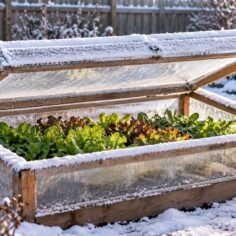
An unexpected frost, especially one that arrives earlier than usual in fall or lingers later than usual in spring, is one of the most frustrating things a gardener can face. The good news is that a handful of well-timed, low-cost techniques can protect most plants through all but the hardest freezes.
Understand What Frost Actually Does
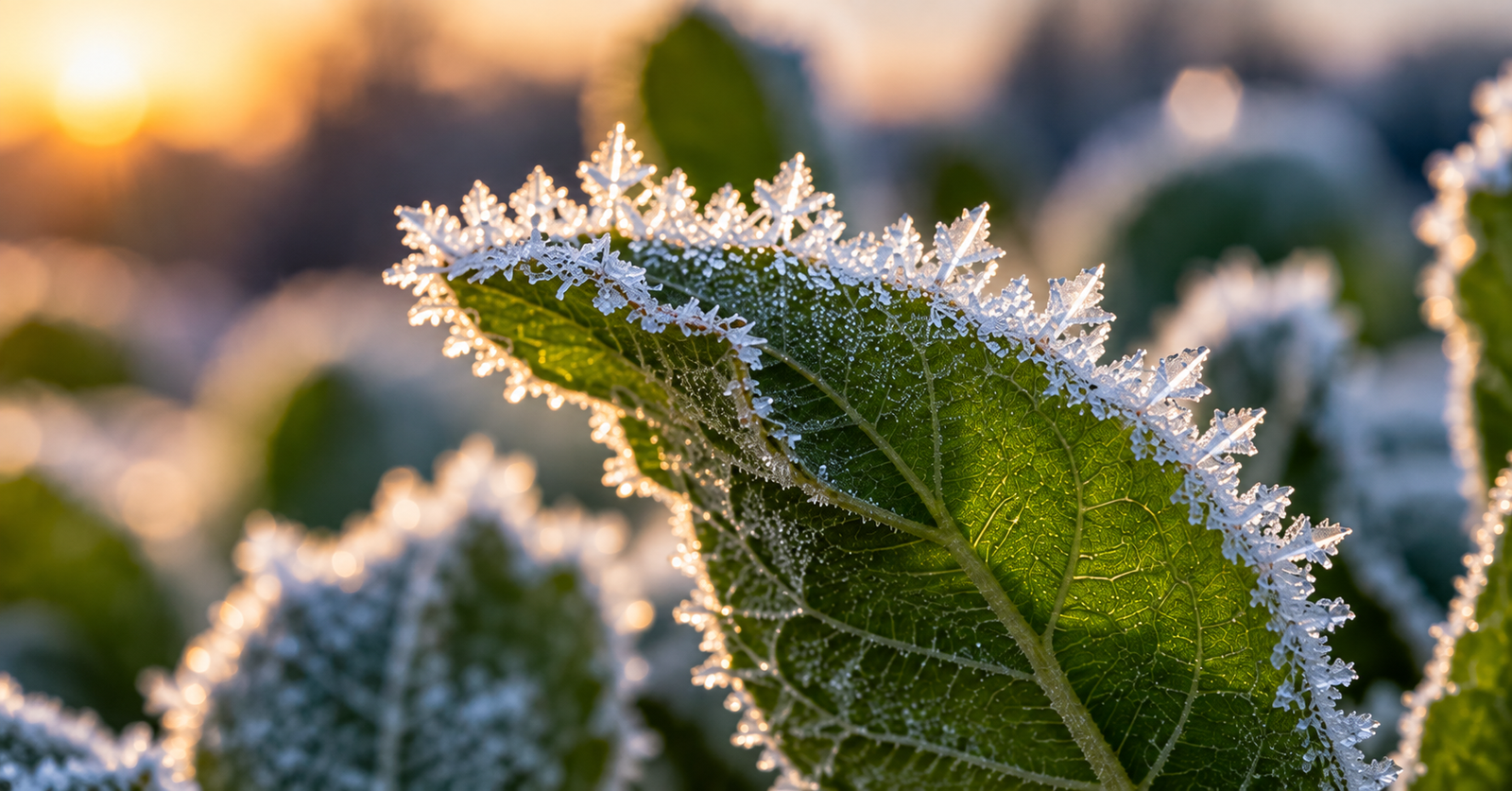
Frost forms when temperatures drop to 32°F or below and moisture in the air freezes on plant surfaces. The real damage happens as ice crystals form inside plant cells, rupturing cell walls — which is why frost-damaged leaves often look water-soaked and then turn black or mushy within a day or two of exposure, rather than showing damage immediately overnight.
A "light frost" (usually 29–32°F) damages tender plants but often spares hardier ones; a "hard freeze" (25°F or below) can kill even many cold-tolerant plants without protection. Knowing which is forecast helps you decide how much effort your protection strategy needs.
Watch the Right Conditions, Not Just the Temperature
Frost risk isn’t only about the forecast low temperature. Clear, calm nights are far more likely to produce frost than cloudy or windy ones, because clouds trap heat near the ground and wind keeps air mixing rather than letting cold air settle and pool near plants. A forecast low of 35°F on a clear, still night can still produce frost at plant level, since temperatures right at ground level often run several degrees colder than the official forecast, which is typically measured a few feet above ground.
Covering Plants: The Most Reliable Method
Physical coverings work by trapping the day’s residual ground heat around the plant overnight, and they’re effective against light-to-moderate frost for most garden plants.
What to use:
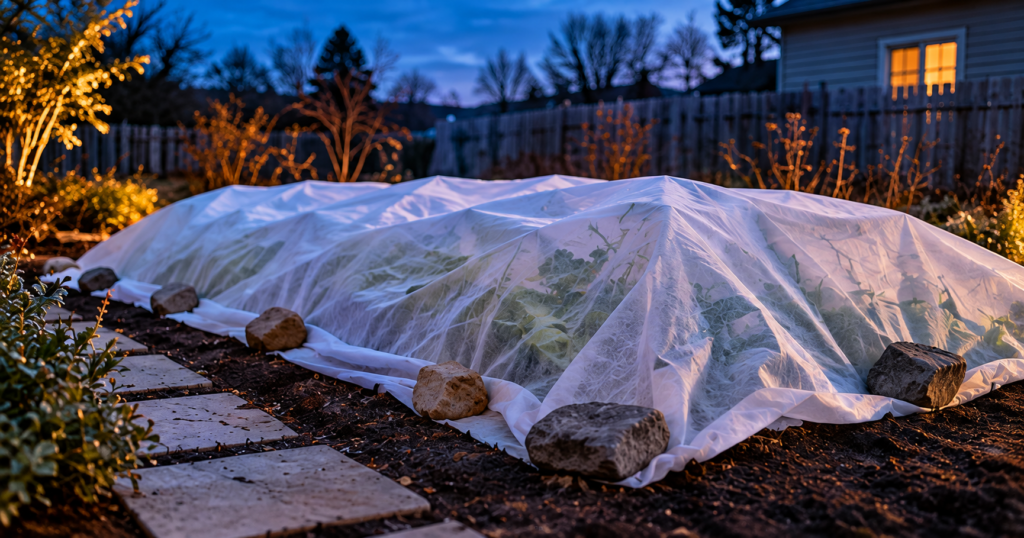
- Row cover (frost cloth) — purpose-made, breathable fabric that can be left on for extended periods and typically protects down to about 28°F depending on thickness, without needing to be removed daily
- Old bedsheets or lightweight blankets — effective and often already on hand, though heavier fabric can crush delicate plants if not supported
- Cardboard boxes or overturned buckets — good for individual plants, especially useful for a handful of vulnerable seedlings or transplants
- Cloches (individual plant covers), whether purpose-bought or improvised from cut plastic bottles, for smaller individual plants
How to do it right:
- Cover before evening, while some warmth is still trapped near the plant, rather than waiting until temperatures have already dropped
- Make sure covering extends to the ground and is anchored (with rocks, stakes, or soil) to trap heat effectively and prevent wind from blowing it off
- Use stakes or a frame to keep the material from directly touching foliage where possible, since contact points can still freeze through thin covering
- Remove coverings the next morning once temperatures rise above freezing, so plants get light and air circulation back and don’t overheat if the day turns sunny and warm
Watering Before a Frost
Moist soil holds significantly more heat than dry soil and releases it slowly overnight, creating a slightly warmer microclimate around plant roots. Watering the soil (not the foliage) the afternoon before an expected frost is a simple, low-effort step that provides real, measurable protection, particularly useful in combination with a physical covering.
Mulching for Root Protection
A thick layer of mulch — straw, shredded leaves, or bark — insulates the soil and root zone, which matters most for perennials, bulbs, and other plants where protecting the root system through winter matters more than protecting top growth that may naturally die back anyway. This won’t protect actively growing foliage from frost damage, but it’s essential for helping marginally hardy plants survive winter overall.
Moving Container Plants
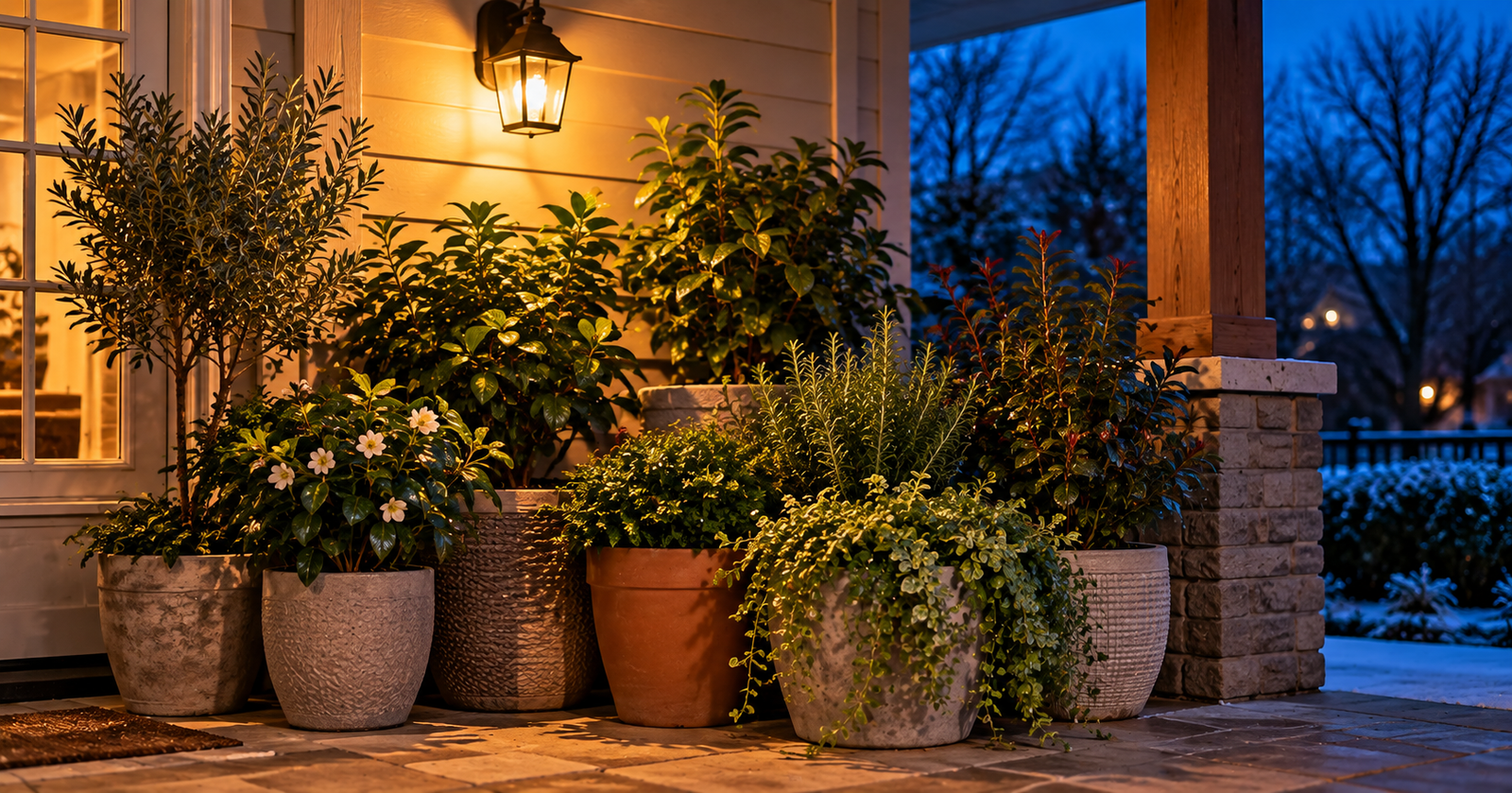
The simplest and most effective protection for anything in a pot: bring it indoors, into a garage, or under a covered porch for the night. Container roots are more exposed to cold than in-ground roots, since soil in a pot cools faster and more thoroughly than the ground, making container plants disproportionately vulnerable to frost and cold snaps compared to their in-ground counterparts.
Using Heat Sources for Serious Freeze Protection
For nights with a hard freeze forecast, or for particularly valuable plants, additional heat sources can extend protection further:
- Strings of old-style incandescent holiday lights (not LED, which don’t generate meaningful heat) placed under a row cover add a few degrees of warmth
- Water jugs filled with warm water, placed near plants under a covering, release stored heat slowly overnight
- Frost protection candles or heaters, more commonly used in orchards and larger plantings than home gardens, but effective for protecting a small, high-value planting through a hard freeze
What to Do If Frost Damage Already Happened
If you wake up to frost-damaged plants, don’t panic-prune immediately. Wait a day or two to see how much damage actually shows — it often takes that long for the full extent to become visible as damaged tissue blackens. Once it’s clear which parts are dead, prune away only the damaged growth; many plants, especially perennials and even some vegetables, can push new growth from undamaged lower stems or roots.
Prioritizing What to Protect
If time or materials are limited before a frost, focus on:
- Actively fruiting or flowering plants representing the most invested effort and potential harvest
- Young transplants and seedlings, which are more vulnerable than established plants
- Tender perennials and tropicals that would take a full season to replace if killed
- Container plants, which are more exposed than in-ground plants and easiest to move to safety
The Bottom Line
The most reliable frost protection combines a few simple, low-cost steps: water the soil the afternoon before, cover plants with row cover or sheets before evening (anchored and removed the next morning), and move anything in a container indoors or under cover. Layer in extra heat sources only for a genuinely hard freeze or particularly valuable plants — for most garden frosts, covering and watering alone will get the majority of your plants through safely.
For cold-weather planning beyond a single frost, see Last Frost Date by ZIP Code: Find Your Planting Date and What Vegetables to Plant in Winter.
Last modified: October 5, 2026