Overwatering kills more houseplants than any other single cause, and it’s often mistaken for the opposite problem — a wilting, droopy plant reads as thirsty to most people, prompting even more water and making things worse. Learning to recognize the real symptoms is the difference between catching the problem in time and losing the plant.
The Core Symptoms of Overwatering
Yellowing leaves, often starting with lower or older leaves. This is one of the earliest and most common signs, caused by roots that can’t take up nutrients properly once they’re sitting in saturated, oxygen-poor soil.
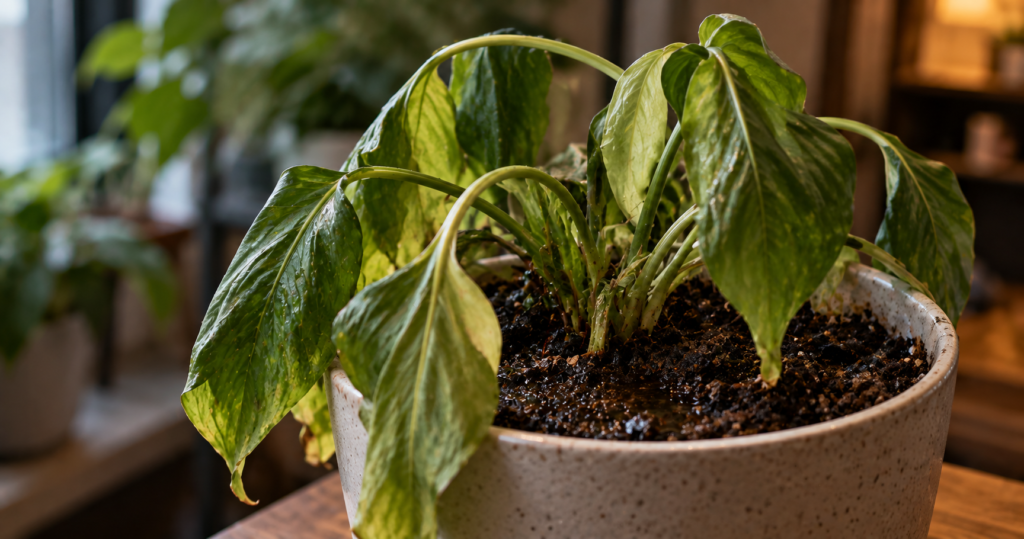
Wilting despite moist soil. This is the symptom that trips people up most. A plant with rotting roots can’t actually take up the water that’s right there in the pot, so it wilts exactly like an underwatered plant would — the key difference is that the soil is clearly wet, not dry, when you check it.
Soft, mushy stems, particularly near the soil line, sometimes with a dark or blackened appearance. This indicates rot has already progressed into the plant’s structural tissue, not just the roots.
A sour, musty, or rotten smell coming from the soil. Healthy soil has an earthy but not unpleasant smell; a swampy or sour odor is a strong sign of anaerobic conditions and root rot developing below the surface.
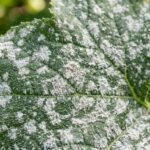
Mold or fungus gnats. Consistently damp soil surfaces support both surface mold growth (often a white, fuzzy or web-like film) and fungus gnat infestations, since gnat larvae thrive specifically in moist organic matter.
Edema — small, blister-like bumps on leaf undersides. Less commonly recognized, this happens when roots take up more water than the plant can process through transpiration, causing cells to swell and rupture, leaving corky, raised patches behind.
Leaf drop, sometimes sudden and significant, as the plant sheds leaves it can no longer support with a compromised root system.
How to Tell Overwatering Apart From Underwatering
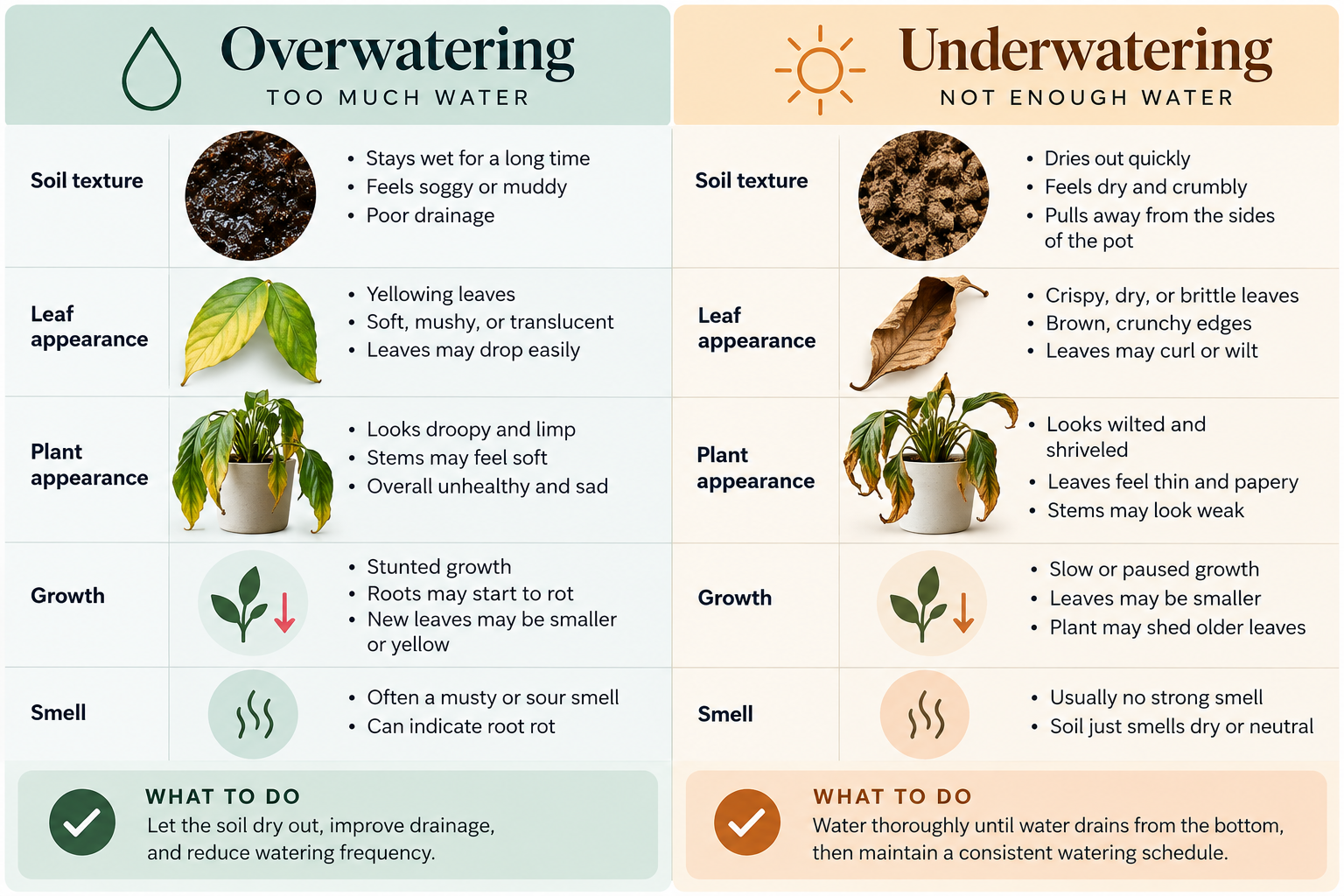
This is the most important diagnostic step, since the fixes are opposite:
| Symptom | Overwatering | Underwatering |
|---|---|---|
| Soil | Wet, possibly soggy | Dry, pulling from pot edges |
| Leaf texture | Soft, mushy, sometimes yellow | Crispy, dry, brown edges |
| Wilting | Yes, despite wet soil | Yes, with dry soil |
| Smell | Musty, sour, or rotten | None |
| Stem | Soft or mushy at base | Firm but may be slightly shriveled |
| Leaf drop | Often yellow leaves first | Often brown, crispy leaves first |
The single fastest way to tell them apart: stick a finger into the soil. Wet soil with wilting points to overwatering; dry soil with wilting points to underwatering. This one check resolves most confusion immediately.
Why Overwatering Actually Damages Plants
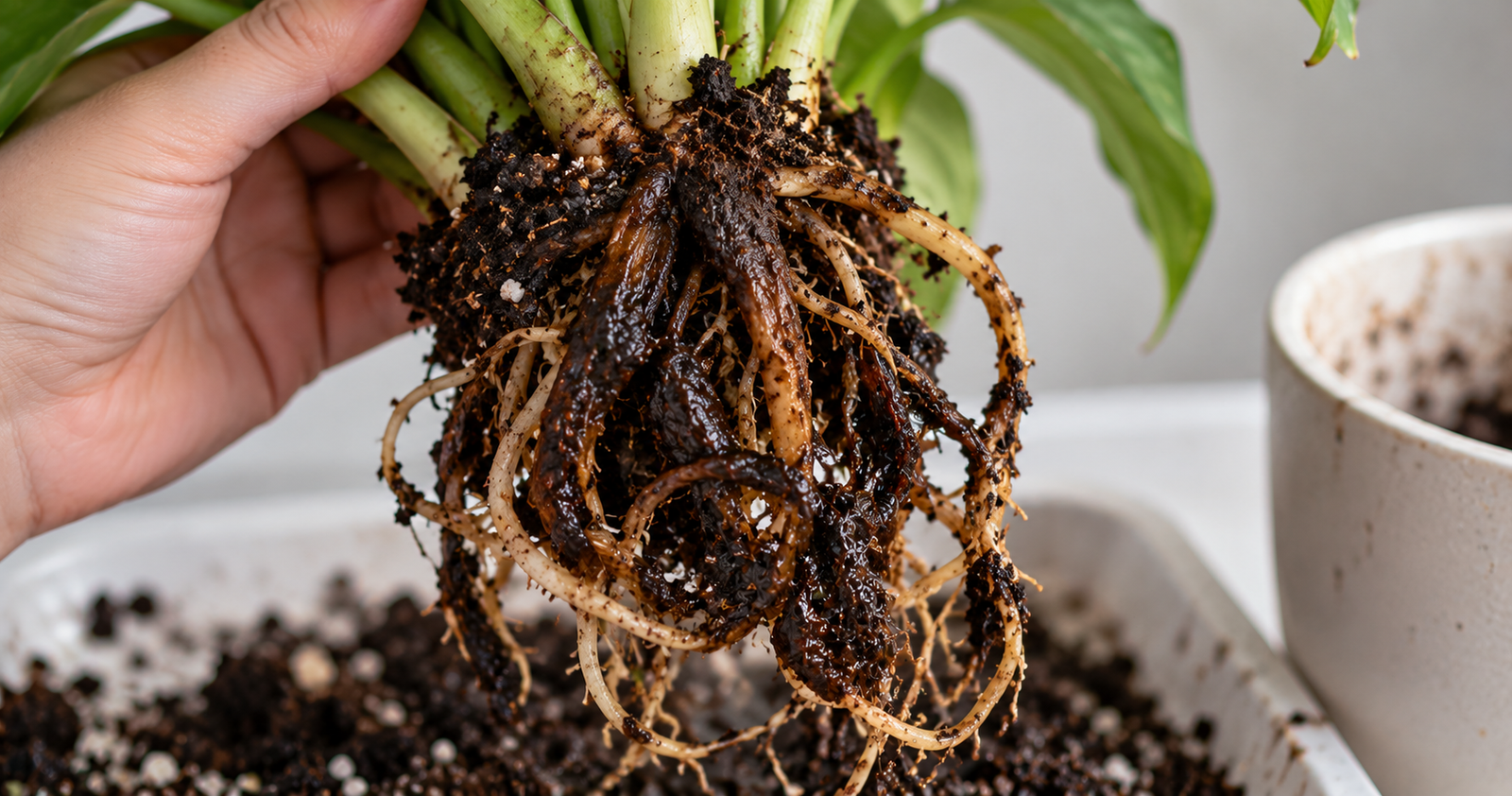
Roots need oxygen just as much as they need water, drawing it from air pockets in well-draining soil. When soil stays saturated, those air pockets fill with water instead, and roots effectively suffocate. This weakened, oxygen-starved root tissue also becomes highly vulnerable to root rot pathogens — fungi like Pythium and Phytophthora that thrive specifically in waterlogged, low-oxygen conditions and can spread quickly through an already-compromised root system.
How to Save an Overwatered Plant
1. Stop watering immediately
Let the soil dry out significantly before adding any more water. For a badly waterlogged plant, this alone can be enough to recover it if root damage hasn’t progressed too far.
2. Check the roots
Gently remove the plant from its pot and examine the roots. Healthy roots are firm and typically white, tan, or light brown. Rotted roots are dark brown to black, mushy, and may have a foul smell, often slipping off in your fingers rather than staying intact.
3. Trim away rotted roots
Using clean, sharp scissors or pruners, cut away any dark, mushy roots, leaving only firm, healthy tissue behind. Don’t worry about removing a significant portion if rot is extensive — a smaller but healthy root system recovers better than a larger one with rot still present.
4. Repot into fresh, well-draining soil
Never reuse the old, waterlogged soil, which may still harbor rot-causing pathogens. Choose a fresh potting mix appropriate for the plant, and consider adding perlite for extra drainage if the original mix seemed to retain too much moisture.
5. Check the pot itself
Make sure the pot has adequate drainage holes, and if it’s been sitting in a saucer, empty that saucer after every watering going forward rather than letting water pool beneath the roots.
6. Reduce watering frequency going forward
Adjust your watering routine based on how quickly that specific plant’s soil actually dries out, rather than a fixed schedule. Checking soil moisture with a finger before every watering prevents the majority of future overwatering incidents.
Preventing Overwatering
- Always check soil moisture before watering rather than watering on autopilot
- Choose pots with drainage holes, and avoid decorative pots without them unless used only as an outer cover for a properly draining inner pot
- Match soil to the plant — succulents and cacti need fast-draining mixes with added perlite or sand, while some tropical plants tolerate more consistent moisture
- Empty saucers after each watering
- Consider your plant’s dormant season — many houseplants need significantly less water in winter when growth slows, and continuing a summer watering schedule year-round is a common cause of overwatering
The Bottom Line
Overwatering symptoms can look confusingly similar to underwatering at first glance, but checking the actual soil moisture resolves the confusion immediately. Catch it early — before rot has spread extensively through the root system — and most plants recover fully once you cut back watering, trim damaged roots, and refresh the soil.
To prevent repeat problems and check damaged roots, see How Often to Water Indoor Plants and Root Rot Symptoms and Treatment.
Last modified: October 5, 2026