Potatoes have a reputation for being one of the easier vegetables to store long-term, but that reputation depends entirely on getting a few conditions right. Store them wrong and you’ll be fighting sprouts, soft spots, and green skins within a couple of weeks; store them right and they can last four to six months or more.
Cure Potatoes Before Long-Term Storage
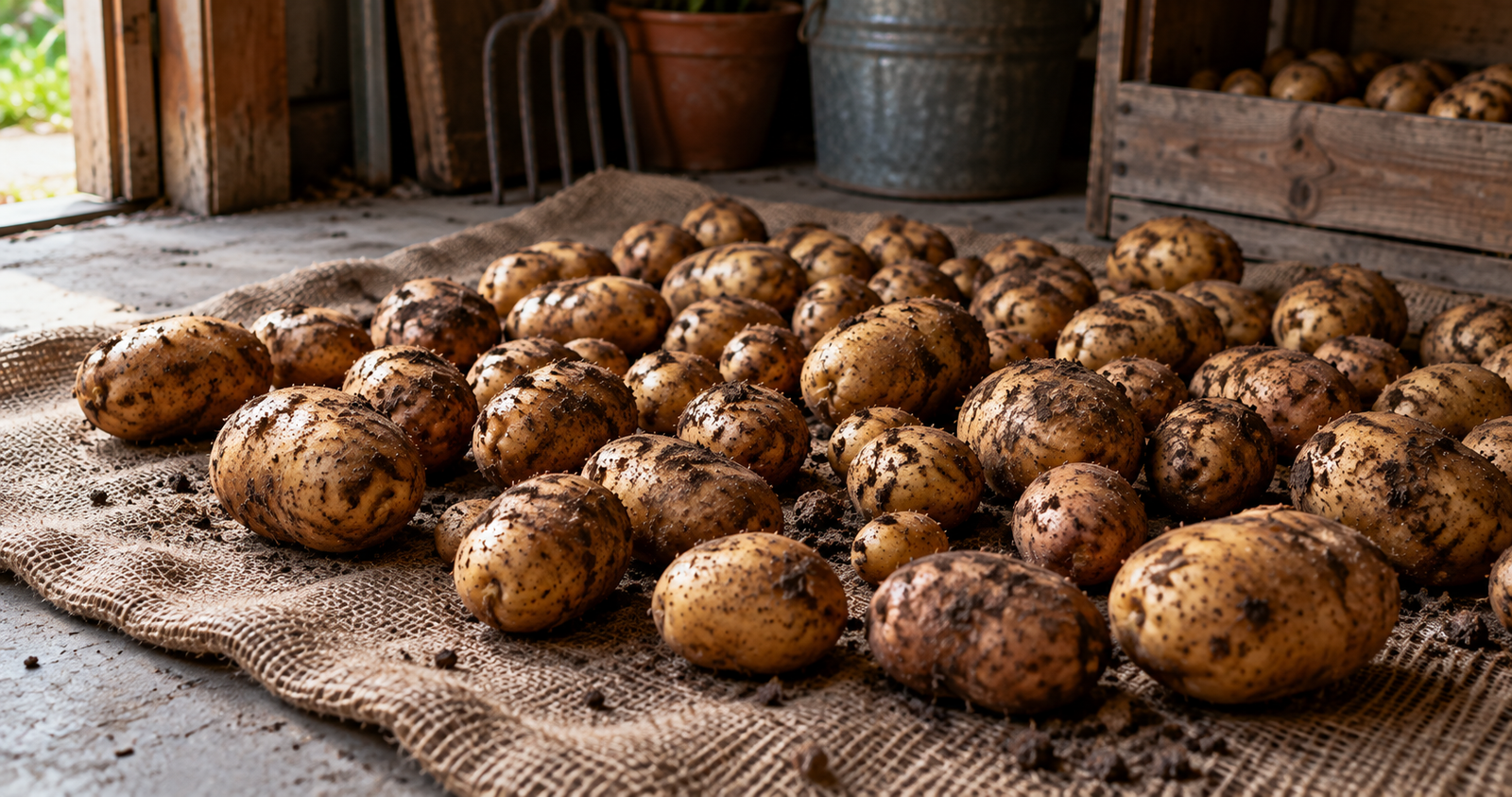
If you’ve just harvested your own potatoes, curing is the single most important step and one that’s easy to skip by accident. Fresh-dug potatoes have thin, easily damaged skin, and curing lets that skin thicken and toughen, along with healing over any small nicks from harvesting, dramatically improving how well they store.
To cure, keep potatoes in a dark space at 45–60°F with high humidity (85-90%) for 10–14 days, ideally with some airflow. A basement, garage, or root cellar works well for this. Store-bought potatoes are already cured by the time you buy them, so you can skip straight to storage.
The Ideal Storage Conditions
Temperature: 45–50°F is the sweet spot for long-term storage. This is cooler than typical room temperature but warmer than a refrigerator, which is why potatoes are one of the few common vegetables that don’t belong in the fridge for long-term storage (more on that below).
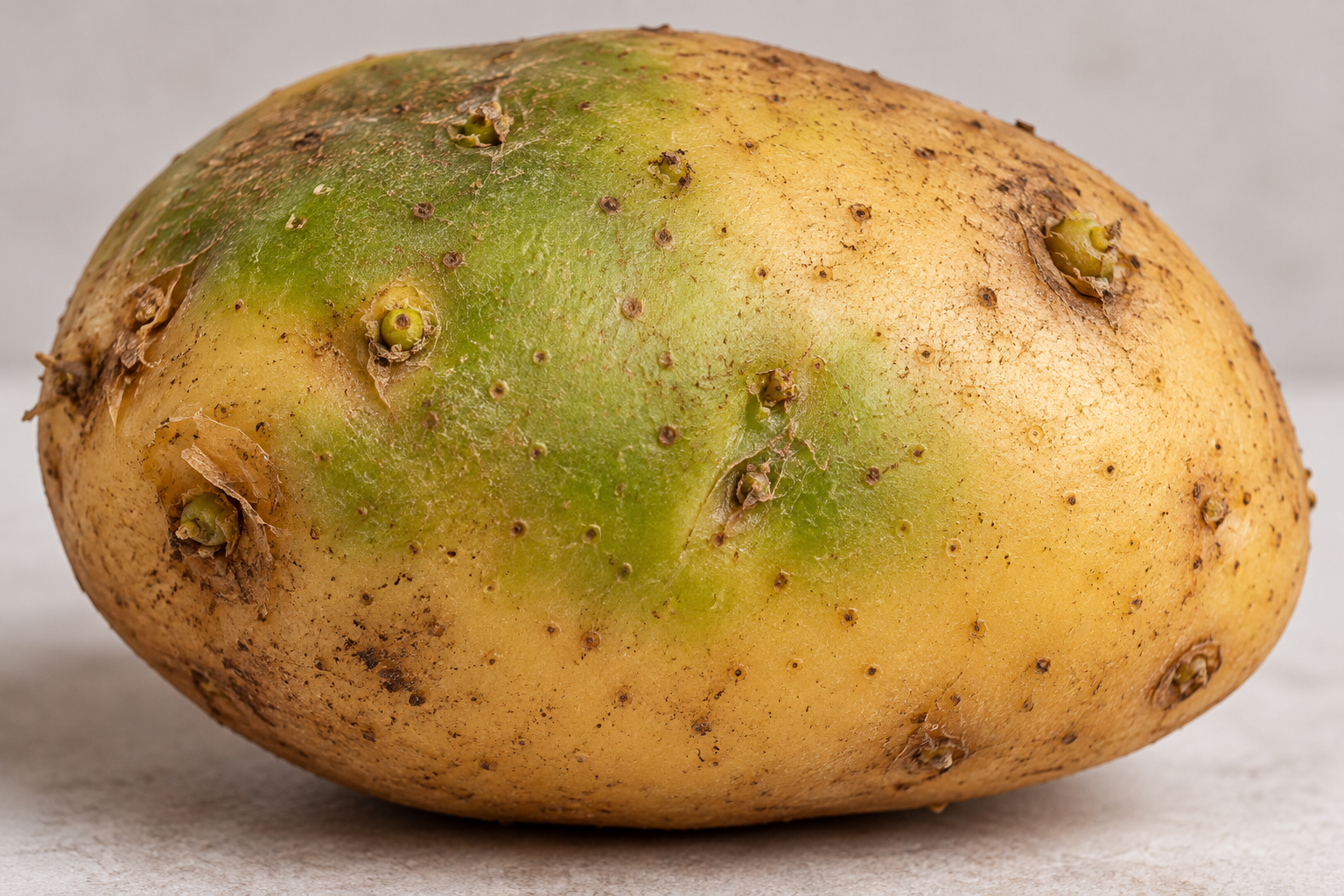
Darkness: Light — even ambient light from a window — triggers potatoes to produce chlorophyll and solanine, causing green skin patches and a bitter, mildly toxic compound that should be cut away before eating, or the potato discarded if greening is extensive. Store in a dark cupboard, drawer, paper bag, cardboard box, or basement.
Humidity: Moderately high humidity (80-90%) prevents potatoes from shriveling and losing moisture, but too much moisture promotes rot. A perforated paper bag or a container that allows some airflow strikes this balance better than an airtight container.
Ventilation: Potatoes need airflow, not a sealed environment. Trapped moisture and gas from stored potatoes accelerate spoilage, which is why an airtight plastic bag or container is one of the most common storage mistakes.
Why Potatoes Shouldn’t Go in the Refrigerator
Standard refrigerator temperatures (typically 35–38°F) are colder than potatoes prefer, and that cold triggers a process called cold-induced sweetening, where the potato’s starches convert to sugars faster than normal. This doesn’t spoil the potato, but it does change its cooking behavior — high-sugar potatoes brown and even scorch much faster when fried or roasted at high heat, and can develop an off, overly sweet flavor. For short-term storage of a week or two, the fridge won’t do noticeable harm, but it’s not the right choice for long-term storage.
Best Containers for Storing Potatoes
- Paper bags — breathable, block light, and are the simplest option for most home kitchens
- Cardboard boxes with ventilation holes — good for larger quantities
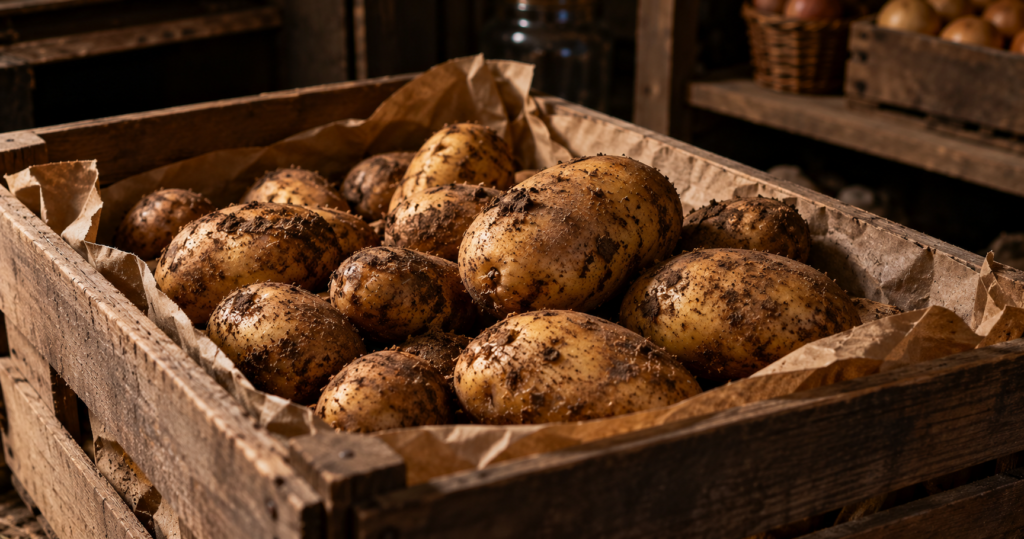
- Wooden crates or bins — traditional root cellar storage, excellent airflow
- Mesh or burlap bags — good airflow, though they don’t block light as well, so they need to be kept in an already-dark space
Avoid plastic bags and airtight containers, which trap moisture and accelerate rot.
Where to Store Potatoes at Home
Not everyone has a root cellar, but a few common spots come close to ideal conditions:
- Basement — often naturally cool and dark, among the best options in most homes
- Garage — works in moderate climates, but watch for freezing temperatures in winter and excessive heat in summer
- A dark, cool closet or cupboard away from the stove, oven, or any heat-generating appliance
- An unheated pantry or mudroom, if your climate keeps it consistently cool without freezing
Keep Potatoes Away From Onions
This is a commonly overlooked detail: onions release gases as they age that accelerate sprouting in nearby potatoes, so store them separately even if both are kept in a similar cool, dark environment.
Checking on Stored Potatoes
Check stored potatoes every few weeks and remove any that are sprouting, soft, or showing signs of rot — a single spoiling potato can accelerate decay in others nearby through ethylene gas and moisture. Small sprouts can simply be rubbed off and the potato used normally if it’s otherwise still firm; extensive sprouting or significant softness means it’s past its prime.
How Long Properly Stored Potatoes Last
Under ideal conditions — cured, cool, dark, humid, and well-ventilated — potatoes can store for four to six months or longer, depending on variety. Thinner-skinned varieties tend to store for a shorter window than thick-skinned storage varieties like russets, which are specifically bred with long-term storage in mind.
The Bottom Line
The core of good potato storage comes down to four conditions: cool (not cold) temperatures around 45–50°F, complete darkness, moderate humidity with real airflow, and separation from onions. Get those right, cure homegrown potatoes before storing them, and check periodically for any that need to be pulled — and you can reasonably expect a harvest or a bulk purchase to last through most of a winter.
For more harvest and storage planning, see How to Grow Garlic: Planting to Harvest and When to Harvest Tomatoes: Signs They’re Ready.
Last modified: October 5, 2026