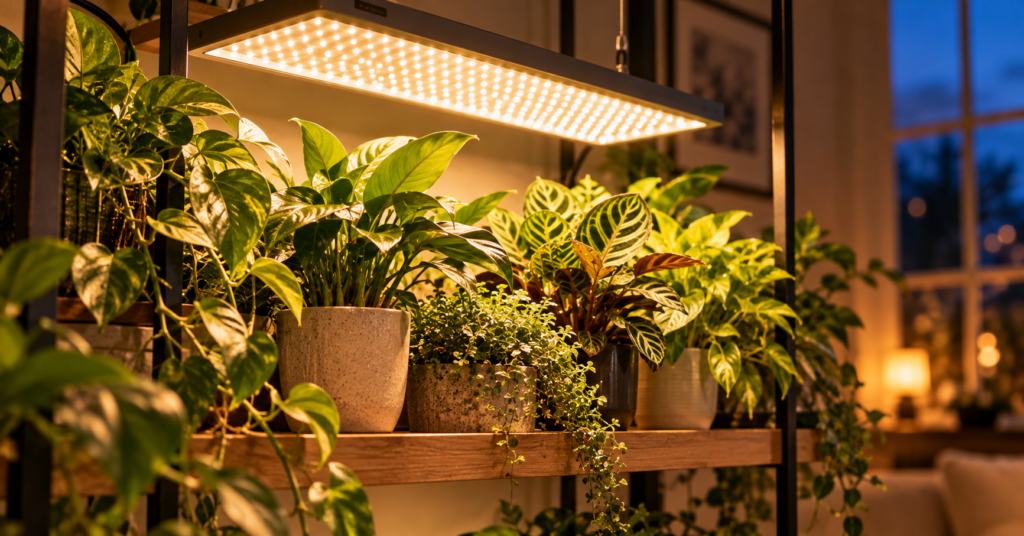
Most windows, even bright ones, provide only a fraction of the light intensity plants get outdoors, and that gap grows dramatically in winter or in rooms facing away from direct sun. A grow light closes that gap — but with dozens of options and confusing spec sheets, picking the right one comes down to a few things that actually matter, and plenty that don’t.
Full-Spectrum vs. Red/Blue Grow Lights
This is one of the most common points of confusion for new buyers, and the short answer is: full-spectrum is the better choice for almost everyone.
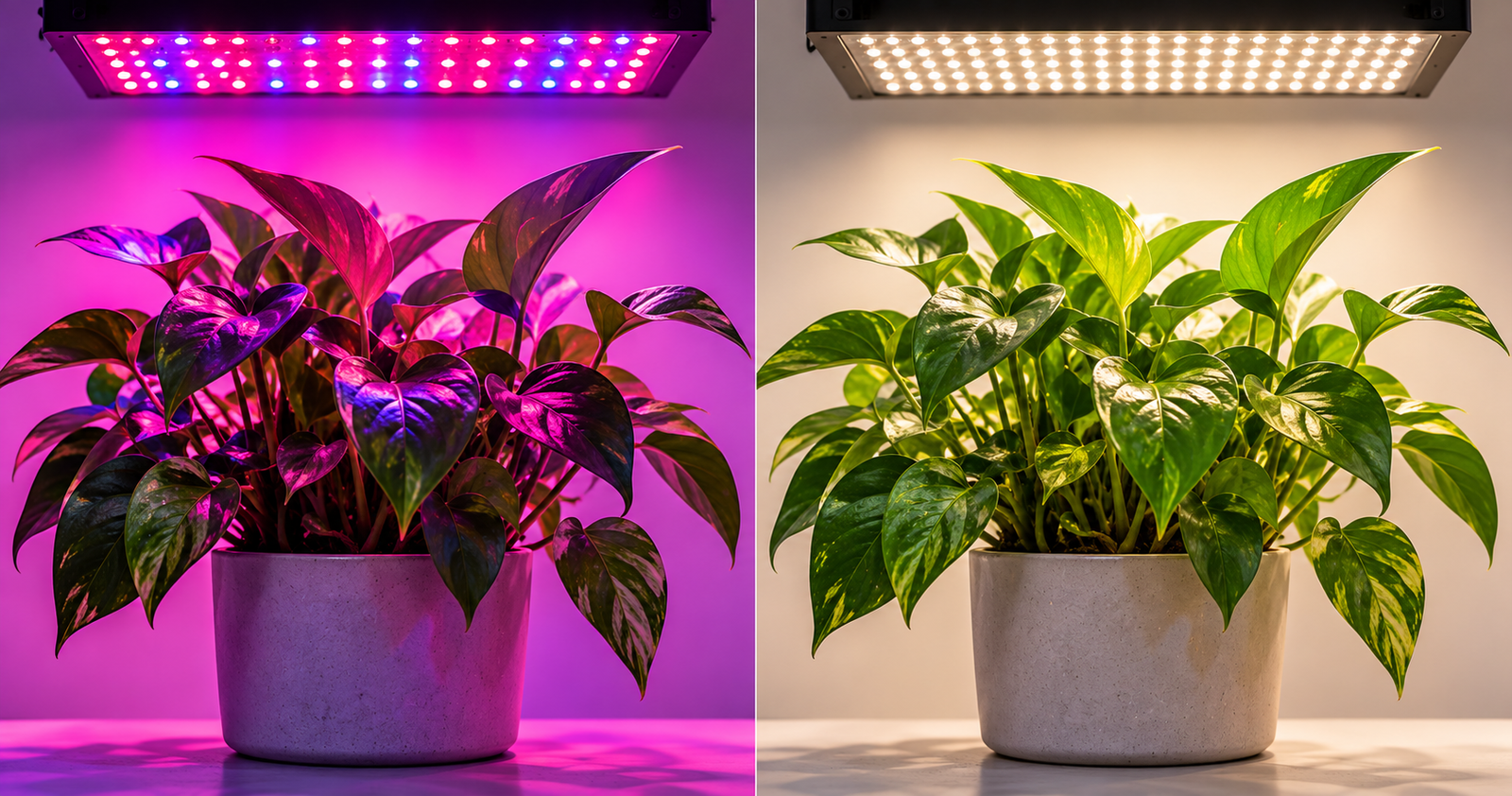
Red and blue light are the two wavelengths plants use most heavily for photosynthesis — blue drives compact, leafy vegetative growth, while red promotes flowering and fruiting. Older grow lights, and some budget options today, use only red and blue LEDs, producing that distinctive pink-purple glow. These can be effective for pure photosynthesis, but they render everything under them a strange color, making it hard to spot early signs of pest problems or nutrient deficiency, and they provide none of the green and far-red wavelengths that research increasingly shows play a real role in plant growth and canopy penetration.
Full-spectrum LED grow lights, by contrast, produce a more natural white light that includes red and blue along with the rest of the visible spectrum. They’re now the standard choice for most home growers because they support strong growth while still letting you see your plants clearly — a meaningful practical advantage that red/blue lights don’t offer.
Grow Lights for Seed Starting and Seedlings
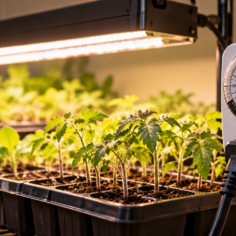
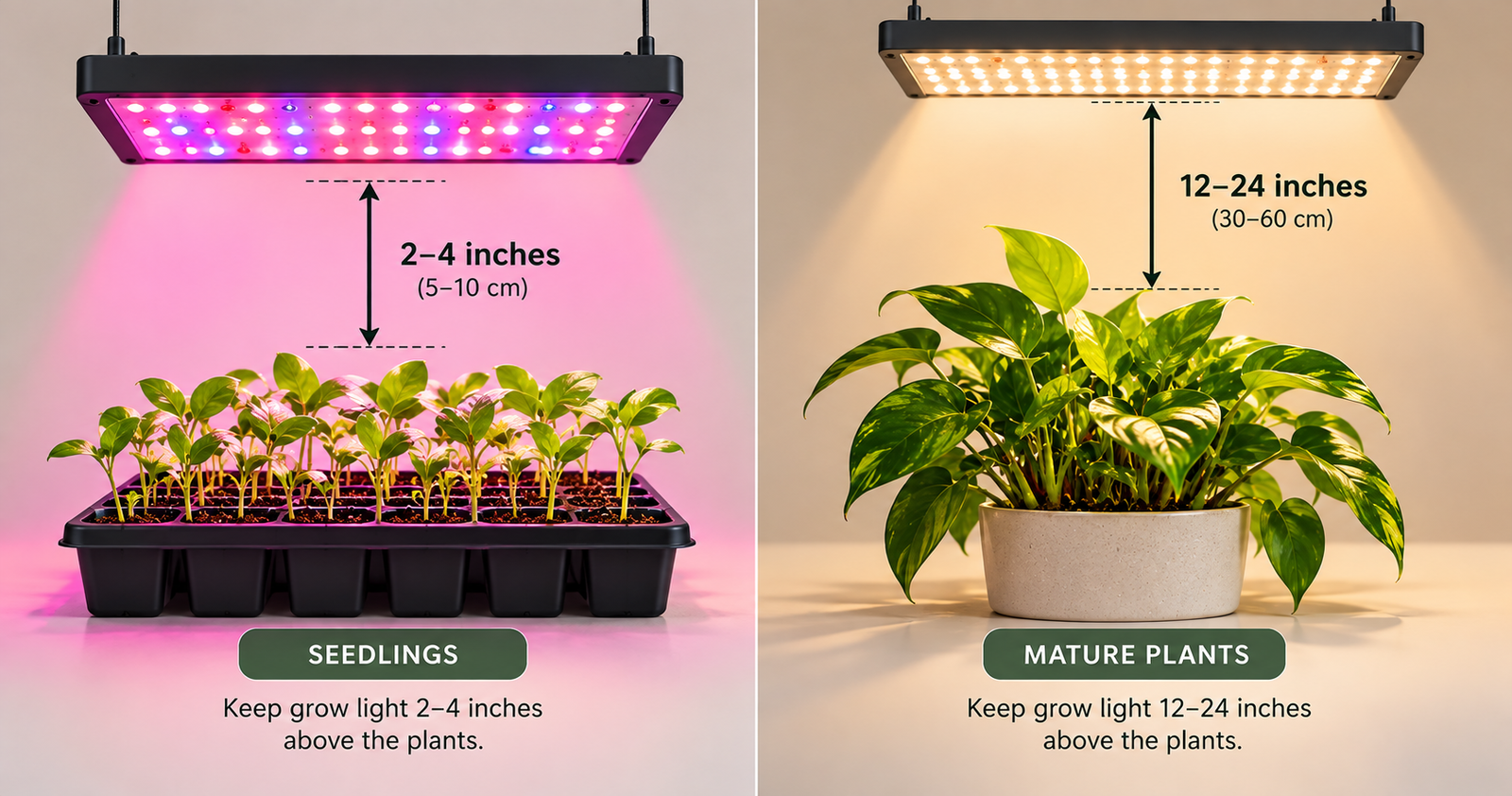
Seedlings have relatively modest light demands compared to fruiting, mature plants, but they need that light close and consistent to avoid becoming leggy. A basic full-spectrum LED shop light or dedicated seedling light panel, positioned just 2–4 inches above the seedlings and raised as they grow, works well for most home seed-starting setups. Seedlings generally need 14–16 hours of light per day, which is most easily managed with an inexpensive outlet timer rather than manually switching lights on and off.
Grow Lights for Microgreens
Microgreens are harvested so young — often within 7–14 days of germination — that light intensity matters less than for longer-lived plants, but consistent light still produces sturdier, more upright growth and better color than a dim windowsill. A basic full-spectrum LED panel positioned 6–12 inches above the trays for 12–16 hours a day is sufficient; microgreens don’t need the intensity that fruiting plants require, making them one of the easiest indoor growing projects to light properly on a small budget.
Grow Lights for Mature Houseplants
For established foliage houseplants — pothos, snake plants, philodendrons, and similar low-to-medium light lovers — a full-spectrum LED bulb in a regular lamp fixture, or a small clip-on grow light, is often enough to supplement a dim room and keep growth healthy. For light-hungry plants like succulents, citrus, or flowering tropicals, a more powerful panel light positioned closer and run for a longer daily duration produces noticeably better results than a standard bulb.
Do Succulents Need Grow Lights?
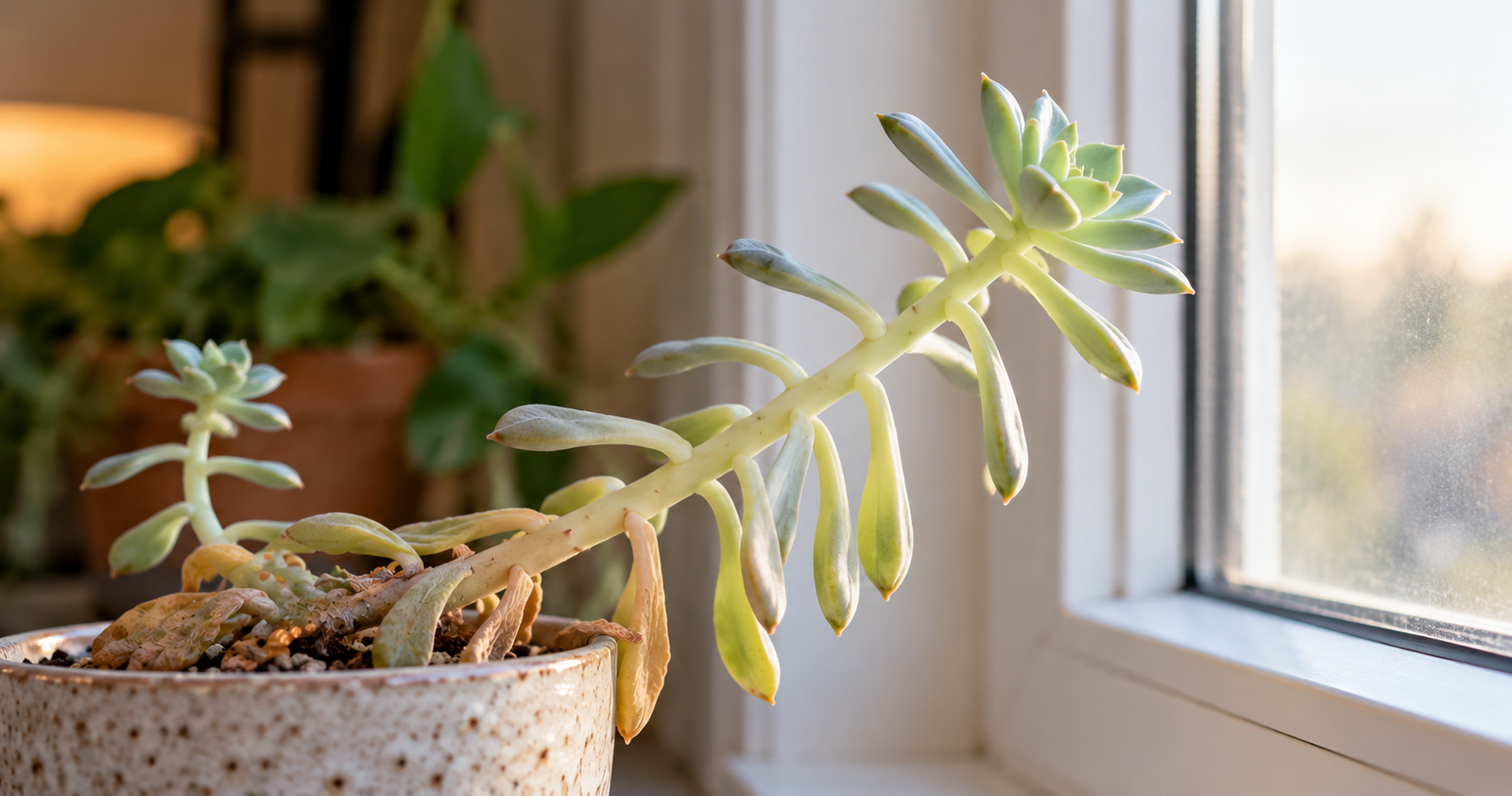
Succulents are genuinely among the most light-demanding common houseplants, needing significantly more direct light than most people provide indoors. Signs a succulent isn’t getting enough light include stretching (etiolation) — where the plant grows unusually tall and spaced-out reaching toward a light source — and fading, washed-out coloring compared to its normal vibrant hues.
If a south-facing windowsill isn’t producing compact, colorful growth, a dedicated grow light is genuinely worth adding rather than optional. Look for a light in the higher intensity range and keep it relatively close, since succulents tolerate — and often need — more light exposure than typical foliage houseplants.
How Far Should Grow Lights Be From Plants?
This depends heavily on the specific light’s intensity, but general starting guidelines by light type:
- Standard LED panels for seedlings and leafy greens: 2–4 inches above the canopy for seedlings, extending to 6–12 inches for more mature leafy plants
- Higher-intensity panels for fruiting or flowering plants: typically 12–24 inches, per the manufacturer’s specific guidance, since these lights can actually scorch foliage if placed too close
- Clip-on or bulb-style lights for general houseplant supplementation: 6–12 inches, adjusted based on whether the plant shows stretching (too far) or bleached, scorched leaf tips (too close)
Always check the manufacturer’s recommended distance for your specific light, since intensity varies enormously between models even at similar wattages.
Understanding Wattage and PPFD
Raw wattage is a poor way to compare grow lights, since efficiency varies significantly between products — two lights of the same wattage can produce very different actual light output. If you want a more meaningful comparison, look for a light’s PPFD rating (photosynthetic photon flux density), which measures the actual usable light reaching the plant canopy. For casual houseplant and seedling use, this level of detail usually isn’t necessary; for anyone growing more demanding, light-hungry crops, it’s worth comparing.
Practical Buying Advice
- Choose full-spectrum over red/blue for almost any home growing situation
- Match light intensity to your plants’ needs — leafy greens and seedlings need less than fruiting or flowering plants
- Use a timer to keep light duration consistent without daily manual effort
- Start further away and move closer if you see stretching, rather than starting too close and risking leaf scorch
- Don’t assume a bright-looking light is a strong one — brightness to the human eye and usable plant light aren’t the same measurement
The Bottom Line
For the vast majority of home growers — seedlings, microgreens, and houseplants alike — a full-spectrum LED grow light beats red/blue options on nearly every practical measure, including the simple fact that you can actually see your plants clearly under it. Match the light’s intensity and distance to what you’re growing, keep it on a timer, and adjust based on how your plants actually respond.
For putting your lighting setup to work, see How to Start an Indoor Garden: Beginner’s Guide.
Last modified: October 17, 2026