Starting a vegetable garden is exciting, but choosing overly demanding crops for a first attempt is one of the most common reasons beginners get discouraged. The good news: several vegetables are genuinely forgiving of minor mistakes while still producing a satisfying, real harvest.
What Makes a Vegetable "Beginner-Friendly"
The best beginner vegetables share a few traits: tolerance for imperfect watering and soil conditions, relatively fast time to harvest (so mistakes are discovered and correctable within weeks rather than months), and reasonable resistance to common pests and diseases. Crops that fail these tests — finicky about exact conditions, slow-growing, or highly pest-prone — are worth attempting later once you’ve built confidence and experience.
The Best Vegetables for Beginners
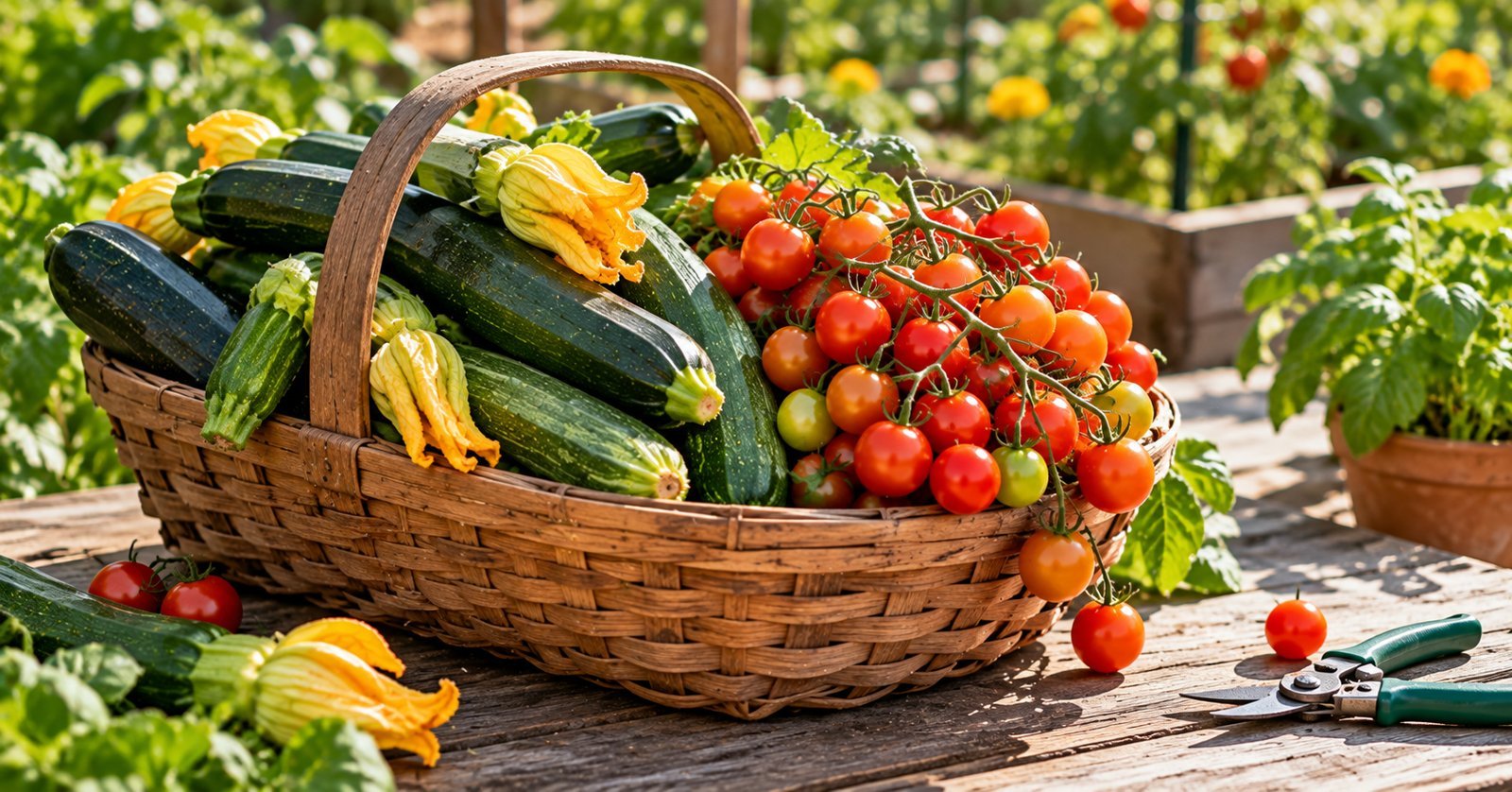
Zucchini and summer squash are famous for being almost aggressively productive — a single healthy plant can produce more zucchini than most households can use, and the plants tolerate a wide range of soil and watering conditions while growing quickly enough to show results within about two months.
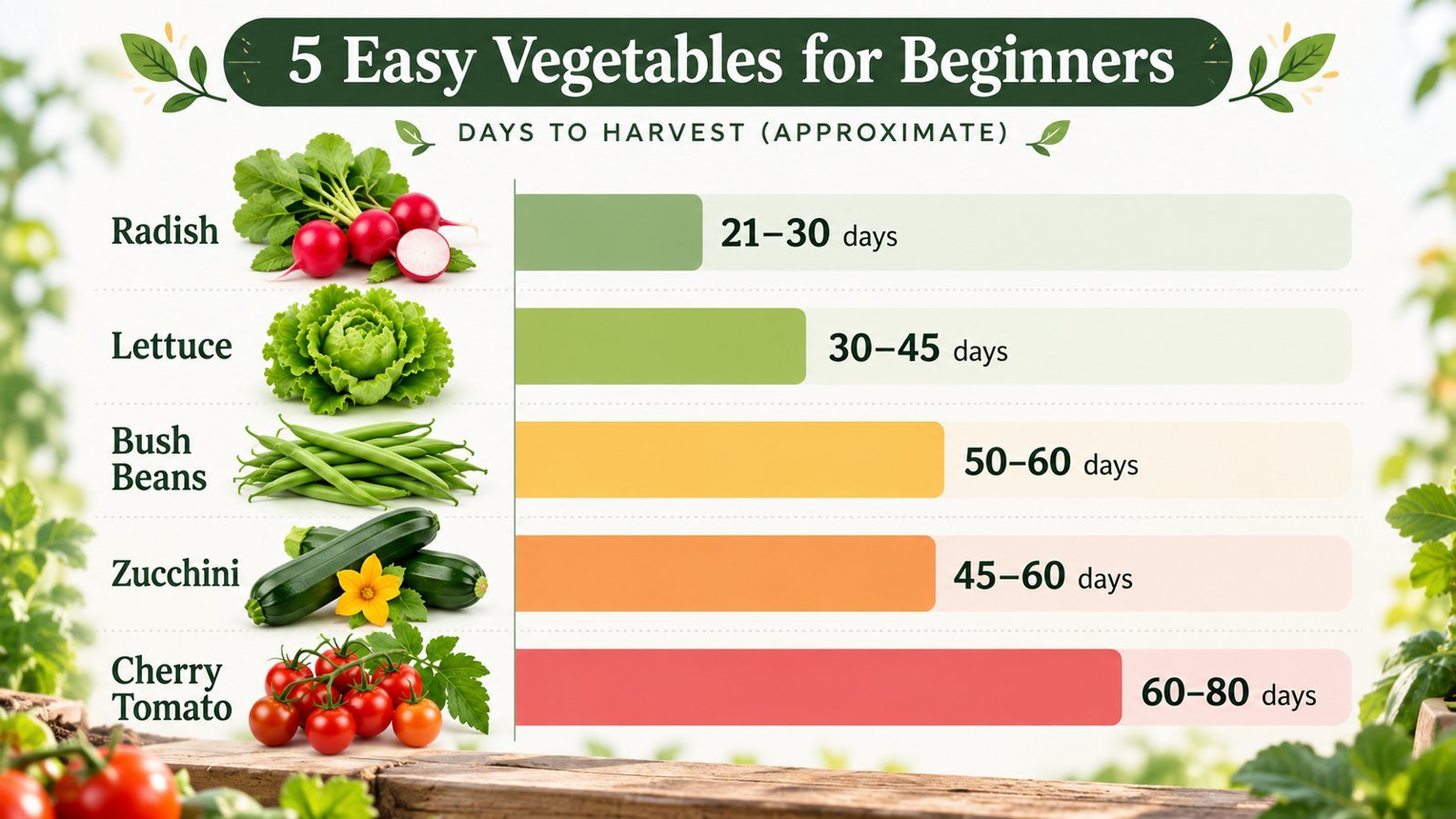
Bush beans germinate reliably, need no staking or support (unlike pole beans), tolerate average soil, and produce a genuine harvest within 50–60 days of planting, making them one of the fastest, most forgiving vegetables available.
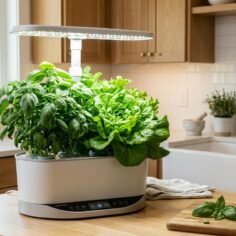
Lettuce and leafy greens grow quickly, tolerate a range of light conditions, and can be harvested continuously (cutting outer leaves as needed) rather than requiring a single all-or-nothing harvest, which makes them very forgiving of imperfect timing.
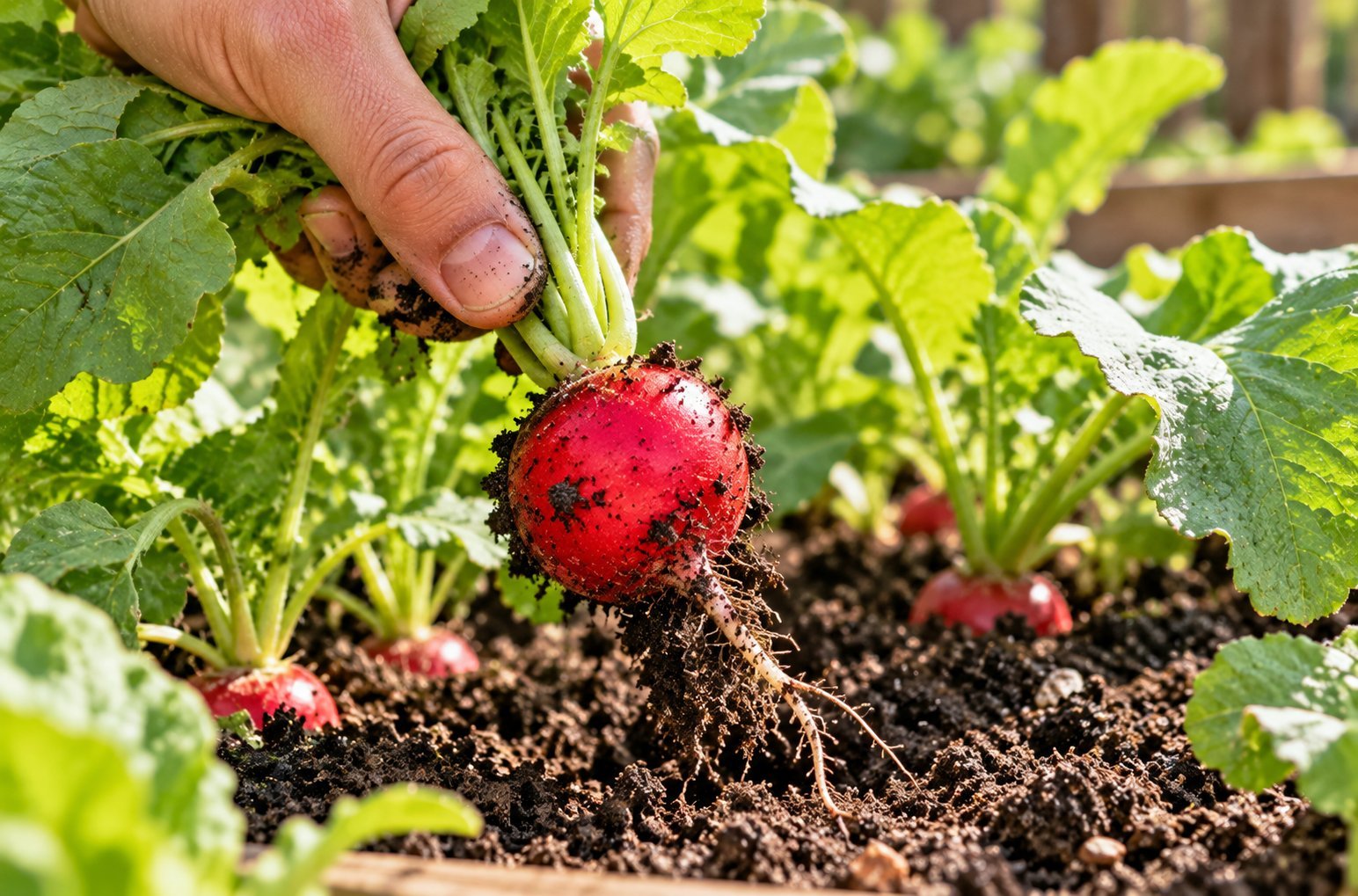
Radishes are about as close to instant gratification as vegetable gardening gets, often ready to harvest in just 3–4 weeks, and tolerant of a wide range of soil conditions.
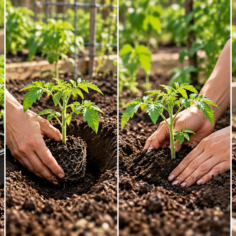
Tomatoes, particularly determinate or cherry tomato varieties, are more forgiving than their reputation suggests once past the seedling stage, and the reward of homegrown tomato flavor makes them one of the most commonly grown vegetables for exactly this reason. Cherry tomatoes in particular tend to be more disease-resistant and productive than larger slicing varieties for a first attempt.
Peppers are relatively low-maintenance once established, tolerate a range of soil conditions, and both sweet and hot varieties perform reliably for beginners, especially in warmer climates or a long growing season.
Green beans (bush variety) — see bush beans above; worth calling out specifically as one of the single best "first vegetable" choices due to reliability and speed.
Cucumbers grow vigorously and quickly, tolerate a range of conditions, and bush varieties in particular work well in smaller spaces or containers without the trellising that vining types need.
Swiss chard is remarkably tolerant of both heat and cold compared to many leafy greens, continues producing over a long season with repeated harvesting, and rarely suffers serious pest or disease problems.
Garlic, while requiring patience (planted in fall for a summer harvest), is otherwise nearly foolproof and one of the lowest-maintenance crops available, needing little beyond initial planting and mulching.
Vegetables Better Saved for Later
A few popular vegetables are worth approaching with more caution as a beginner, not because they’re impossible, but because they’re more demanding or more failure-prone than the options above:
Celery requires consistent moisture and a long growing season, and is genuinely one of the more finicky common vegetables to grow well.
Cauliflower is notoriously particular about consistent, moderate temperatures, and heads can fail to form properly or "button" (form small, premature heads) if conditions aren’t quite right.
Melons and winter squash need considerable space, a long warm season, and reliable pollination, making them a bigger commitment with more variables that can go wrong.
Corn needs a larger planting area than most beginners have available for proper pollination (planted in blocks rather than single rows) and is a favorite target for several common pests.
Tips for Beginner Success Beyond Plant Choice
Start smaller than you think you should. A manageable handful of plants that get proper attention beats an ambitious garden that becomes overwhelming to maintain.
Choose a spot with adequate sun. Most vegetables need at least 6 hours of direct sun daily; insufficient light undermines even the most forgiving crop choices.
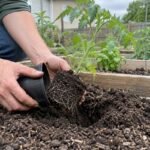
Prepare the soil before planting, working in compost to improve structure and provide a nutrient foundation, rather than planting directly into poor, unamended soil and trying to compensate later with fertilizer alone.
Water consistently, checking actual soil moisture rather than watering on a fixed schedule, since inconsistent watering causes problems (blossom end rot, bolting, splitting) across nearly every vegetable type.
Don’t be afraid to start with transplants rather than seeds for a first attempt at slower or more finicky crops like tomatoes and peppers, letting a nursery handle the more failure-prone early seedling stage while you focus on garden care.
Building a Simple First-Year Garden Plan
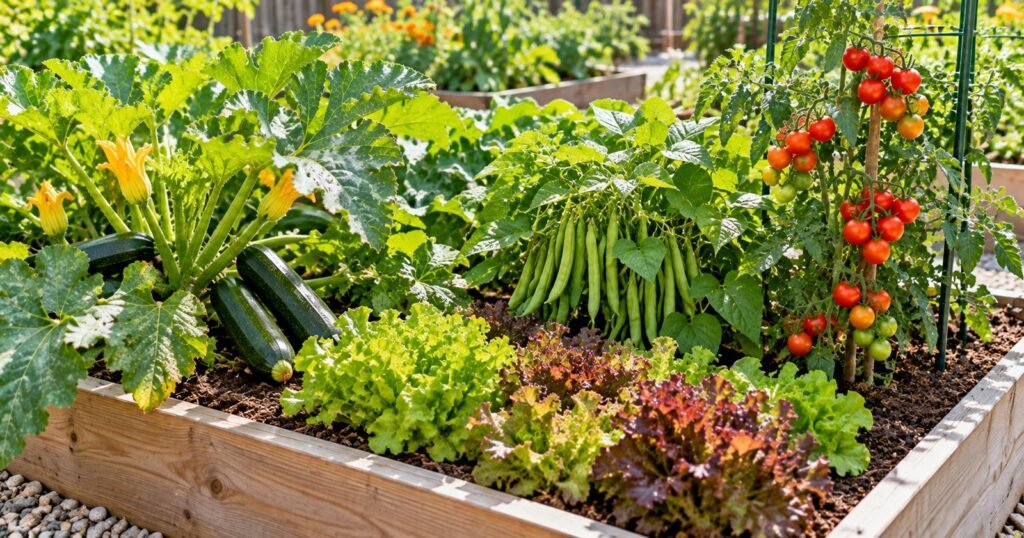
A reasonable beginner garden might include: a couple of tomato plants (cherry variety for extra forgiveness), a zucchini or summer squash plant, a short row of bush beans, a patch of lettuce or leafy greens, and a handful of radishes tucked in wherever there’s spare space, since they mature so quickly they can often be harvested before slower crops need the room. This combination offers a genuine harvest across most of the growing season while staying well within beginner-friendly territory.
The Bottom Line
Zucchini, bush beans, lettuce, radishes, and cherry tomatoes offer the best combination of forgiving care requirements and satisfying results for a first vegetable garden. Start smaller than feels ambitious, prepare the soil properly before planting, and save the more demanding crops — celery, cauliflower, melons, corn — for a season or two once you’ve built some hands-on experience and confidence.
For practical next steps in your first garden, see How to Start Seeds Indoors: A Complete Beginner’s Guide and How to Grow Garlic: A Complete Guide From Planting to Harvest.
Last modified: October 5, 2026