
Garlic rewards patience more than almost any other vegetable. You plant it in fall, it sits quietly through winter, and by the following summer you’re pulling up heads far more flavorful than anything from a grocery store. It’s also nearly foolproof once you understand the basics, making it one of the best crops for beginners to build confidence with.
Softneck vs. Hardneck Garlic
Before planting, it’s worth understanding the two main garlic types, since they behave differently and suit different climates.
Hardneck garlic produces a rigid central flower stalk (called a scape), typically has fewer but larger cloves per head, and tends to have more complex, robust flavor. It’s better suited to colder climates, since it generally needs a period of cold to develop properly. Hardneck garlic also produces edible scapes in early summer — a bonus harvest before the bulbs themselves are ready.
Softneck garlic doesn’t produce a flower stalk, has more, smaller cloves packed in layers, and stores significantly longer than hardneck varieties — often six months to a year versus hardneck’s typical three to five months. It’s the type most commonly found in grocery stores and tends to perform better in milder climates, though many gardeners in colder zones grow it successfully too.
When to Plant Garlic
Garlic is planted in fall, roughly 2–6 weeks before the ground freezes solid — in most of the U.S., this falls somewhere between mid-September and early November, depending on your zone. This timing allows roots to establish before winter without pushing significant top growth, which sets the plant up for vigorous growth once spring arrives.
Garlic needs a period of cold (generally below 40°F for several weeks) to trigger bulb formation, called vernalization. This is why fall planting works so well in most of the U.S. — the natural winter cold does the vernalizing for you. Gardeners in very mild, frost-free climates sometimes need to refrigerate seed garlic for several weeks before planting to simulate this cold period.
How to Plant Garlic
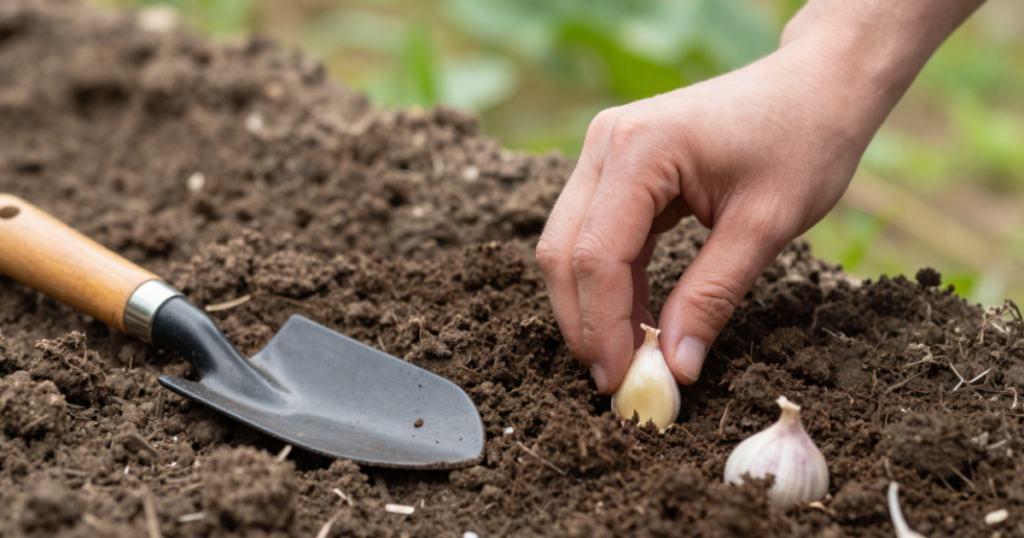
- Choose good seed garlic. Use garlic specifically sold for planting, not grocery store garlic, which is often treated to prevent sprouting or may carry disease. Break the head into individual cloves right before planting, keeping the papery skin on each clove intact.
- Prepare well-draining, fertile soil. Garlic dislikes wet feet and performs best in loose, well-amended soil with good drainage. Work in compost before planting.
- Plant cloves pointy-side up, about 2 inches deep and 4–6 inches apart, in rows spaced about 12 inches apart.
- Mulch heavily. A thick layer of straw or shredded leaves — 4-6 inches — insulates the soil through winter, suppresses weeds in spring, and helps retain moisture through summer.
Caring for Garlic Through the Growing Season
Spring: Green shoots emerge as the weather warms. Pull back mulch slightly if growth seems delayed, and begin feeding with a balanced or nitrogen-forward fertilizer to support vigorous leaf growth, since more leaf growth generally means bigger bulbs later.
Watering: Garlic needs consistent moisture during active spring growth but should be kept drier as harvest approaches in early summer — about two to three weeks before you plan to harvest, stop watering entirely to help the outer wrapper skins firm up properly for storage.
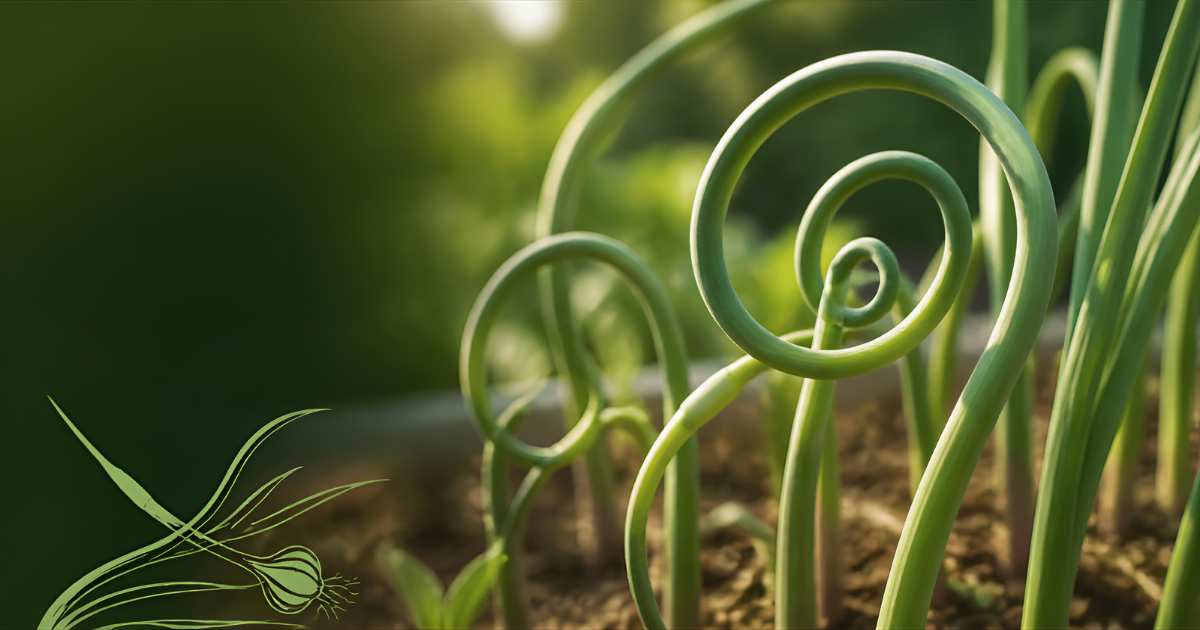
Scapes (hardneck only): Cut off the curling flower stalks when they appear in late spring or early summer, typically when they’ve curled through one full loop. Removing scapes redirects the plant’s energy into bulb development rather than flowering, and the scapes themselves are delicious sautéed or blended into pesto.
Weeding: Garlic doesn’t compete well with weeds, so keep the bed weeded through spring, though a good mulch layer significantly reduces this work.
When and How to Harvest Garlic
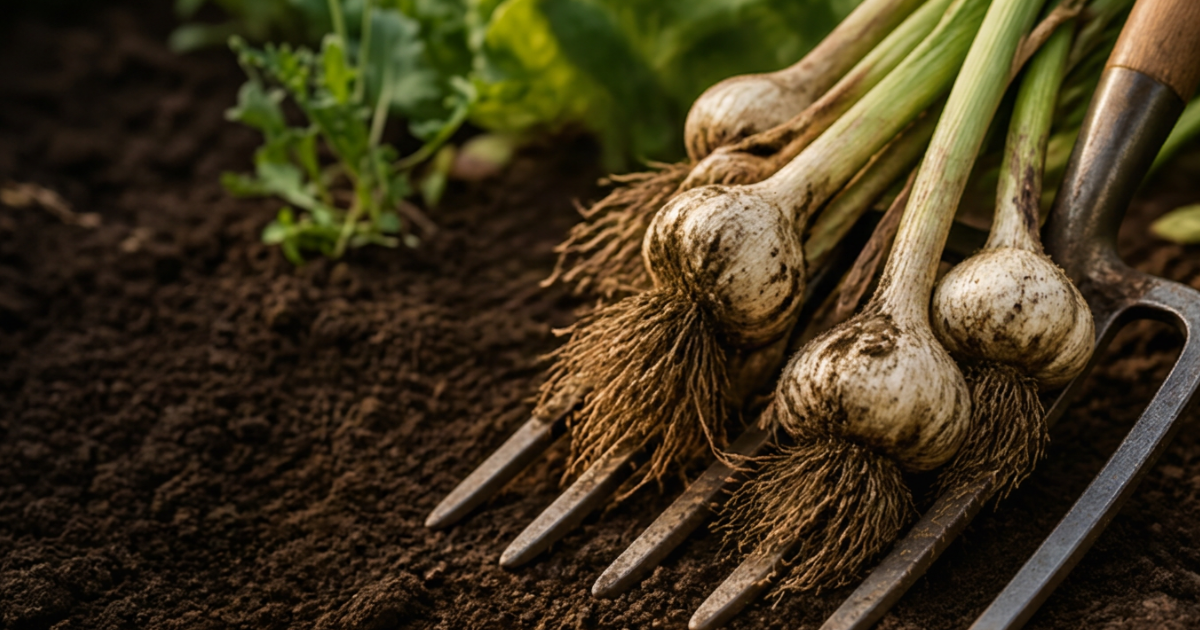
Garlic is ready to harvest when the lower third to half of the leaves have turned brown and dried while the upper leaves are still green — this usually happens in early to mid-summer, roughly 8-9 months after fall planting. Harvesting too early means smaller bulbs with underdeveloped cloves; too late means the wrapper skins can split or degrade, hurting storage life.
To harvest, loosen the soil gently with a garden fork a few inches away from the plant to avoid damaging bulbs, then lift by hand rather than pulling by the stalk, which can separate cloves from the base.
Curing and Storing Garlic
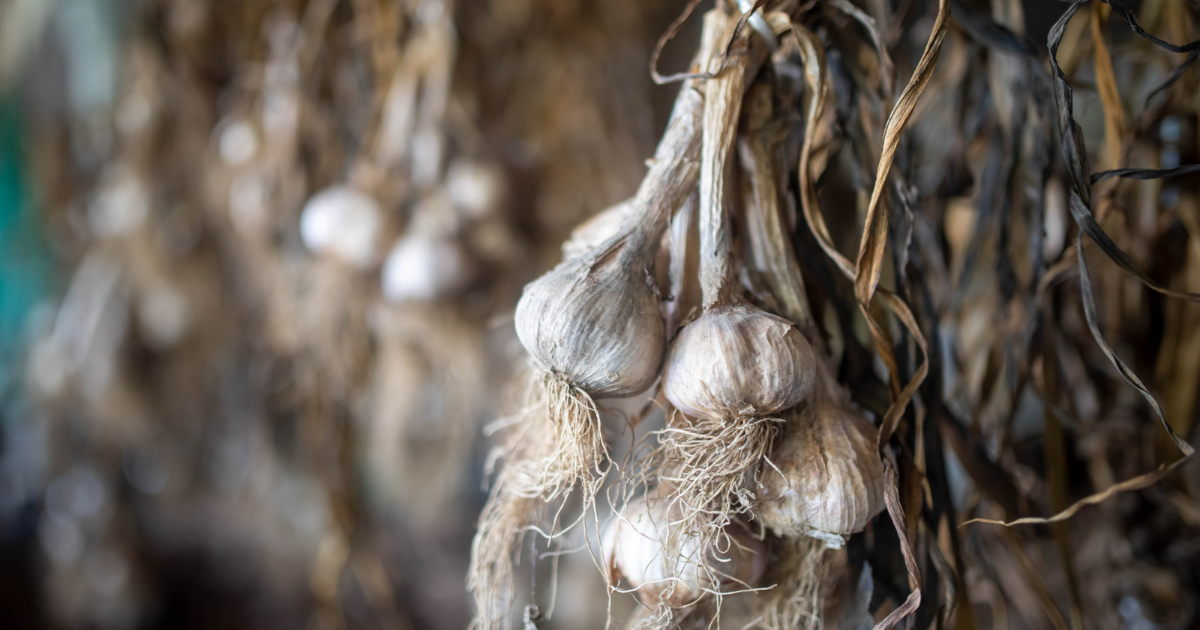
Freshly harvested garlic needs to cure before long-term storage. Brush off (don’t wash) excess soil, then hang or lay bulbs in a single layer in a warm, dry, well-ventilated, shaded spot for 3–4 weeks. The leaves and outer skins will dry and the flavor will mellow and develop during this time.
Once cured, trim roots and cut stalks to about an inch above the bulb (or leave softneck varieties long for braiding), and store in a cool, dry, dark place with good airflow — a mesh bag or open basket works well. Avoid the refrigerator, which encourages sprouting. Set aside your largest, healthiest bulbs to replant as seed garlic come fall.
Common Garlic Problems
- Small bulbs: Usually from insufficient spring feeding, overcrowded planting, or leaving scapes uncut on hardneck varieties
- Rot in storage: Usually from harvesting too late, insufficient curing time, or damage during harvest that let in disease
- Poor sprouting in spring: Often from planting too shallow, or from using seed garlic that wasn’t properly vernalized
The Bottom Line
Garlic asks for very little — a fall planting date, decent drainage, a thick mulch layer, and a stretch of patience through winter — and rewards that with one of the most satisfying harvests in the vegetable garden. Once you’ve grown a season successfully, you can replant your own saved cloves indefinitely, making it one of the few crops that becomes essentially free after the first year.
For region-specific planting advice, see the University of Minnesota Extension garlic guide.
To plan your next growing season and prepare the bed, see What Vegetables to Plant in Winter and How to Fix Compacted Soil (Plus a Complete Soil Health Guide).
Last modified: October 5, 2026



[…] more harvest and storage planning, see How to Grow Garlic: Planting to Harvest and When to Harvest Tomatoes: Signs They’re […]