Root cellaring is one of the oldest food preservation methods, relying on nothing more than cool temperatures, controlled humidity, and darkness to extend a harvest’s usable life for months. It’s seeing renewed interest among home gardeners looking for a no-electricity way to store a serious harvest through winter.
The Core Principles Behind Root Cellar Storage
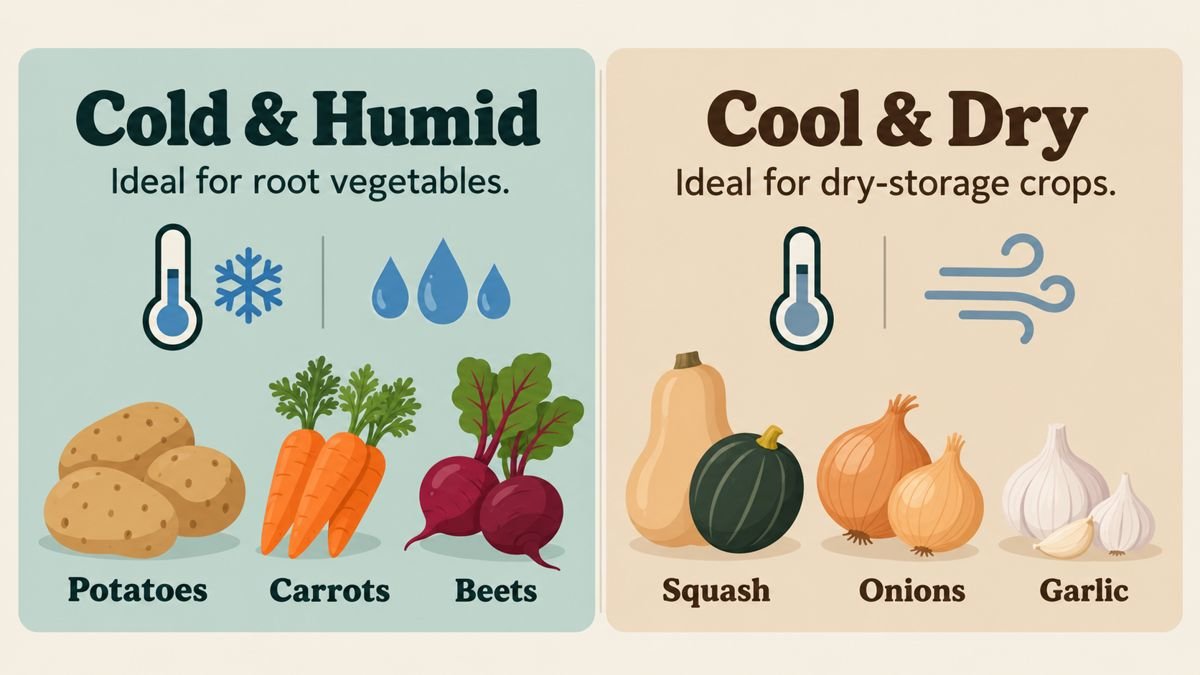
A functional root cellar needs to control four factors: temperature, humidity, darkness, and ventilation, though the ideal levels of each vary considerably depending on what’s being stored. Most root vegetables prefer cold, humid conditions (32–40°F, 90-95% humidity), while winter squash needs warmer, drier storage. Onions and garlic also need dry conditions, but can be stored colder than squash. This is why an effective root cellar setup often includes distinct zones or areas for different storage needs, rather than one uniform environment for everything.
What Makes a Good Root Cellar Space
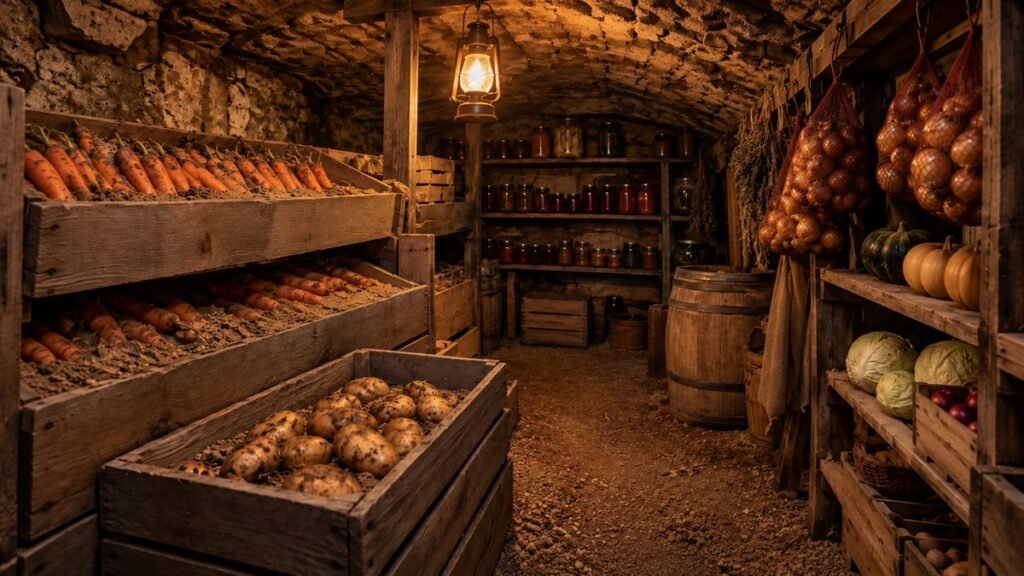
Traditional root cellars are underground or partially underground, taking advantage of the earth’s naturally stable, cool temperature year-round. For home gardeners without a dedicated underground cellar, workable alternatives include an unheated basement corner, a cold garage (in climates that don’t freeze too severely), a well-insulated outdoor storage box for smaller quantities.
The ideal spot has minimal light exposure, stays consistently cool without freezing, allows for some airflow to prevent moisture buildup and mold, and — for the higher-humidity crops — can maintain adequate moisture, sometimes through a dirt floor, a pan of water, or occasionally dampened material nearby.
How to Store Different Vegetables
Potatoes need darkness and ventilation. Cure at 50–60°F and 85–90% humidity for about two weeks, then store around 40°F with 90–95% humidity. Keep them separate from ripening fruit and from onions, which need drier storage.
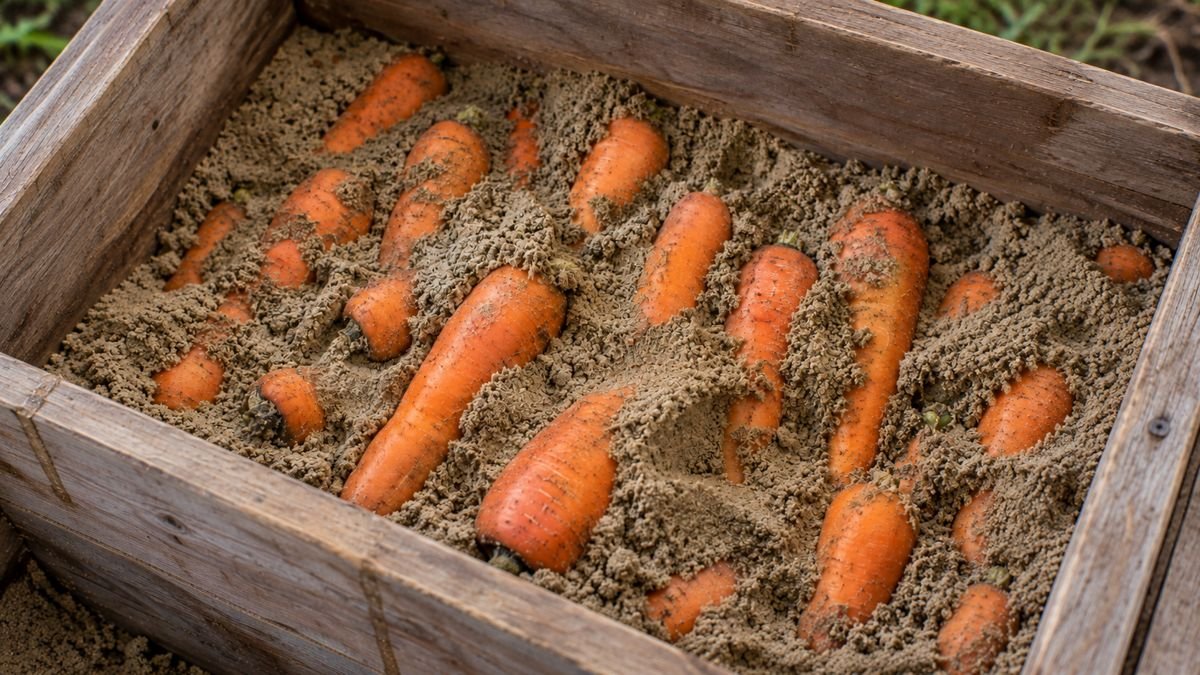
Carrots and beets store best near 32–35°F in very humid conditions. Trim the greens and pack roots in slightly damp sand or sawdust to limit moisture loss; carrots need particularly high humidity to avoid shriveling.
Winter squash and pumpkins need the opposite of most root vegetables: cooler room temperature rather than cold (50–55°F) and considerably lower humidity (50-70%), since these conditions prevent rot while cold, damp conditions (ideal for potatoes and carrots) would cause squash to deteriorate quickly. Cure suitable squash varieties in warm conditions before storage; do not cure acorn squash, as this reduces its storage life.
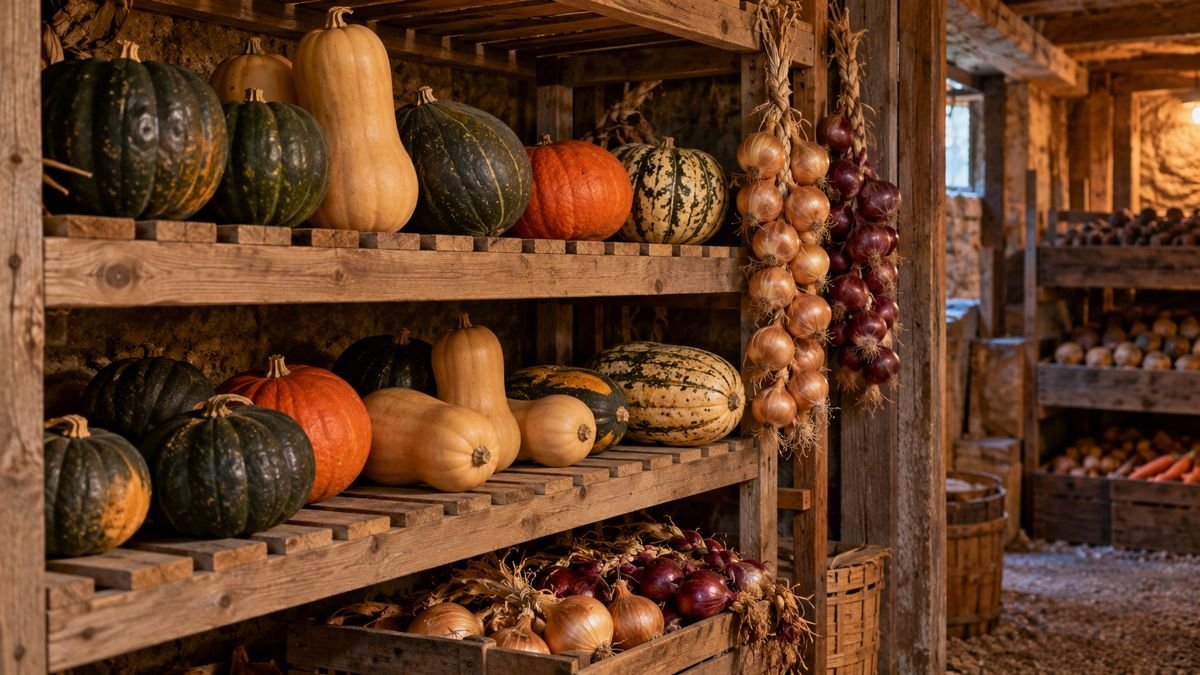
Onions and garlic need curing before storage, followed by good ventilation. Aim for 32–40°F and about 65–70% humidity; mesh bags, braids, or open crates allow airflow. Their dry storage needs differ from carrots and potatoes.
Cabbage stores reasonably well in cold, humid conditions similar to root vegetables, though it has a notably strong smell that many root cellar owners prefer to keep somewhat separated from other stored produce to avoid flavor transfer, particularly to more delicate items like apples.
Apples (often stored alongside root cellar vegetables) prefer cold, humid conditions similar to root vegetables, but should be kept separate from vegetables where practical, since apples release ethylene gas that can accelerate sprouting or spoilage in nearby potatoes and other vegetables.
Organizing a Root Cellar for Multiple Crop Types
Since different crops need meaningfully different conditions, a well-organized root cellar often uses different zones: a colder, more humid section near the floor or in the coolest corner for root vegetables like carrots and potatoes, and a warmer, drier area (sometimes literally a separate shelf or room) for squash, onions, and garlic. For a smaller-scale home setup without room for distinct zones, prioritizing the crops that matter most to your household and accepting some compromise on the others is a reasonable practical approach.
Preventing Common Root Cellar Problems
Rot from excess moisture is one of the most common issues, particularly for crops needing drier conditions like squash and onions stored in an overly humid space. Improving ventilation and checking regularly for early signs of spoilage helps catch this before it spreads to unaffected produce nearby.
Sprouting, especially in potatoes, is accelerated by light exposure, temperatures that are too warm, or proximity to ripening fruit such as apples — addressing all three (darkness, appropriately cool temperature, and separation from ripening fruit) meaningfully extends storage life.
Excessive drying or shriveling, particularly in carrots and beets stored without adequate humidity, is prevented by packing these crops in slightly damp sand, sawdust, or peat moss rather than leaving them exposed to drier air.
Freezing damage, a real risk in an underground or garage cellar during severe cold snaps, is prevented by monitoring temperature during extreme weather and adding extra insulation (blankets, straw bales) temporarily if needed.
Checking Stored Produce Regularly
Whatever the storage setup, checking on stored vegetables every few weeks and removing anything showing signs of rot, mold, or excessive sprouting prevents these problems from spreading to nearby, still-healthy produce — a single spoiling item, particularly in humid storage conditions, can accelerate decay in others nearby through both direct contact and the moisture and gases it releases as it breaks down.
The Bottom Line
Successful root cellar storage comes down to matching each crop to its preferred conditions — cold and humid for root vegetables like potatoes, carrots, and beets, versus cool and dry for squash, onions, and garlic — rather than assuming one uniform storage environment works for everything. With the right conditions and regular checking, a home root cellar setup, even an improvised one in a basement corner or garage, can keep a substantial harvest usable for months without any electricity at all.
Related Growing Guides
Further reading: Iowa State Extension vegetable storage guidance.
Last modified: October 21, 2026