Getting light duration right is one of the most impactful things you can do for seed-starting success, and yet it’s often overlooked in favor of worrying about soil, watering, or temperature. Here’s what seedlings actually need, and why more isn’t always better.
The Short Answer
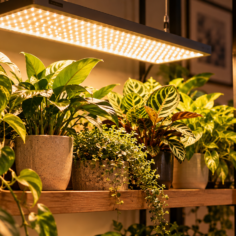
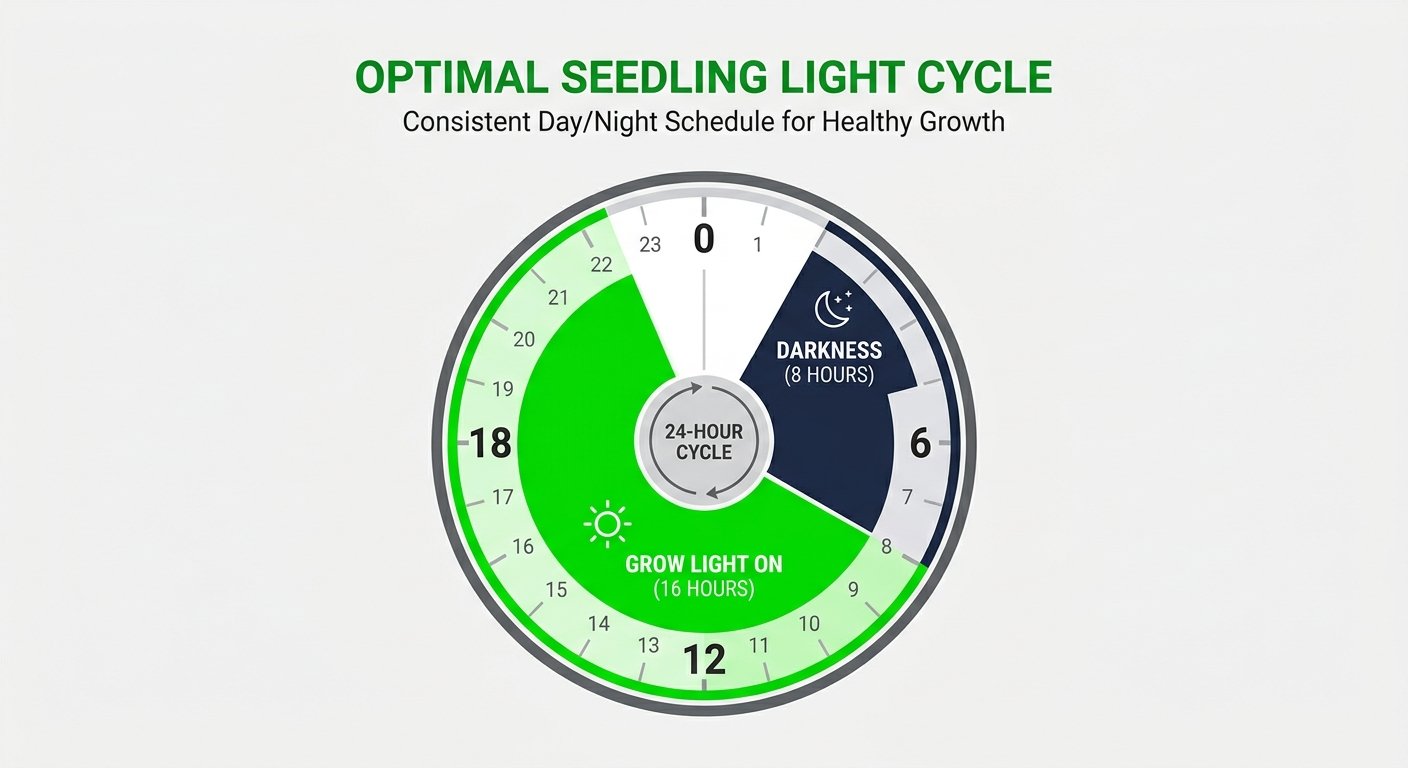
Most vegetable and flower seedlings need 14–16 hours of light per day under a grow light, which is considerably more than natural daylight provides for much of the year, especially in late winter and early spring when most seed-starting happens. This is why supplemental lighting matters so much for indoor seed starting — even a bright window rarely provides both the duration and intensity seedlings need on its own.
Why Seedlings Need So Much Light
Seedlings are working to establish a strong root system and sturdy top growth simultaneously, and photosynthesis — the process that fuels all of that growth — depends directly on light availability. Natural outdoor daylight in early spring often provides only 10–12 hours of daylight, and even that is diffuse and lower-intensity than direct summer sun. A grow light run for 14–16 hours compensates for both the shorter natural day length and the generally lower light intensity available indoors compared to being outside in full sun.
What Happens With Too Little Light
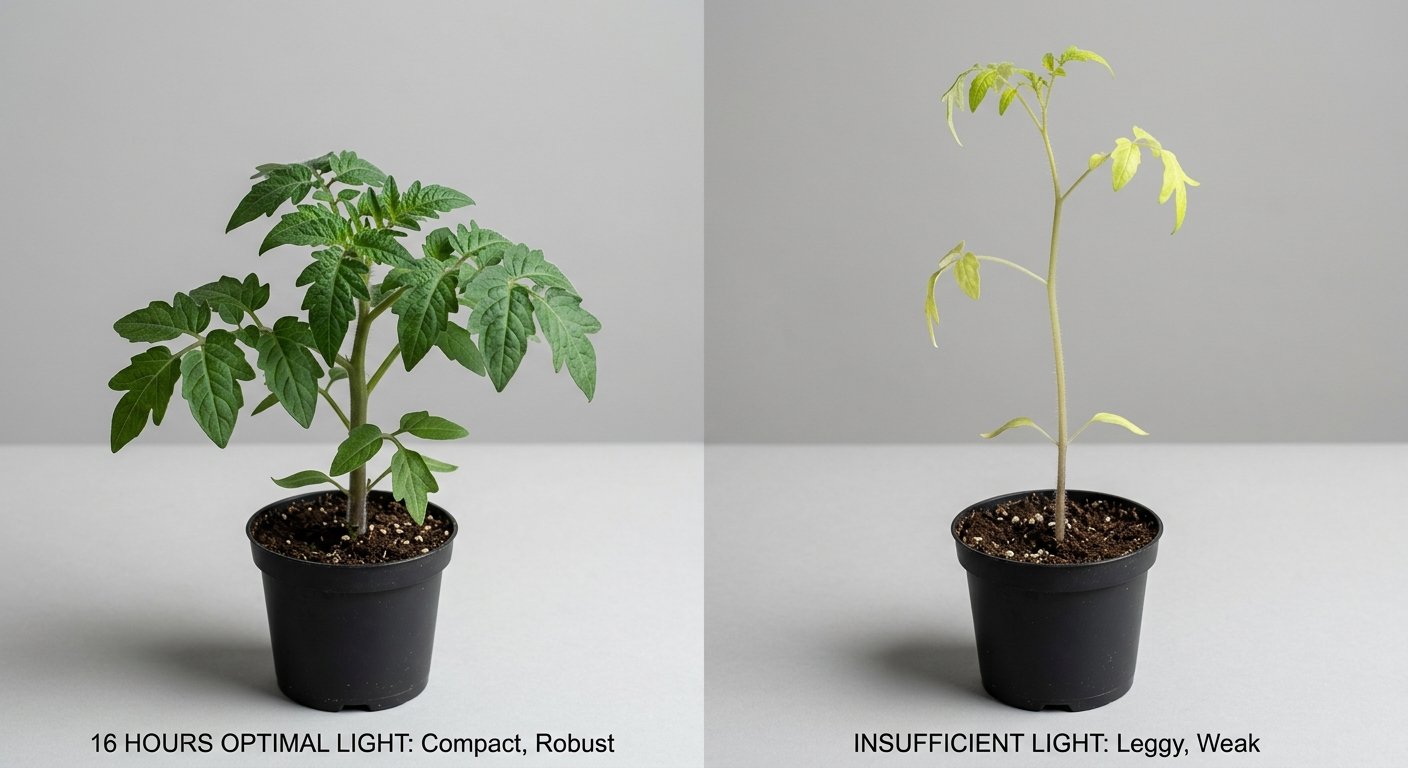
Leggy, stretched, weak-stemmed seedlings are the classic symptom of insufficient light duration or intensity. When seedlings don’t receive enough light, they stretch upward — a response called etiolation — reaching for a stronger light source, producing tall, thin, pale stems that struggle to support the plant’s own weight and often flop over. This weakened structure also makes seedlings more vulnerable to damage during transplanting and slower to establish once in the garden.
Does More Than 16 Hours Help?
Generally, no — and in some cases it can actually cause problems. Plants, like most living things, benefit from a period of darkness for certain metabolic processes, and running lights for close to 24 hours a day, rather than improving growth, can sometimes stress plants or interfere with specific processes like proper flowering cues in a small number of species. For the vast majority of common vegetable and flower seedlings, 14–16 hours strikes the right balance, and pushing beyond roughly 18 hours offers essentially no additional benefit while increasing your electricity cost for no real gain.
How to Manage Light Duration Consistently
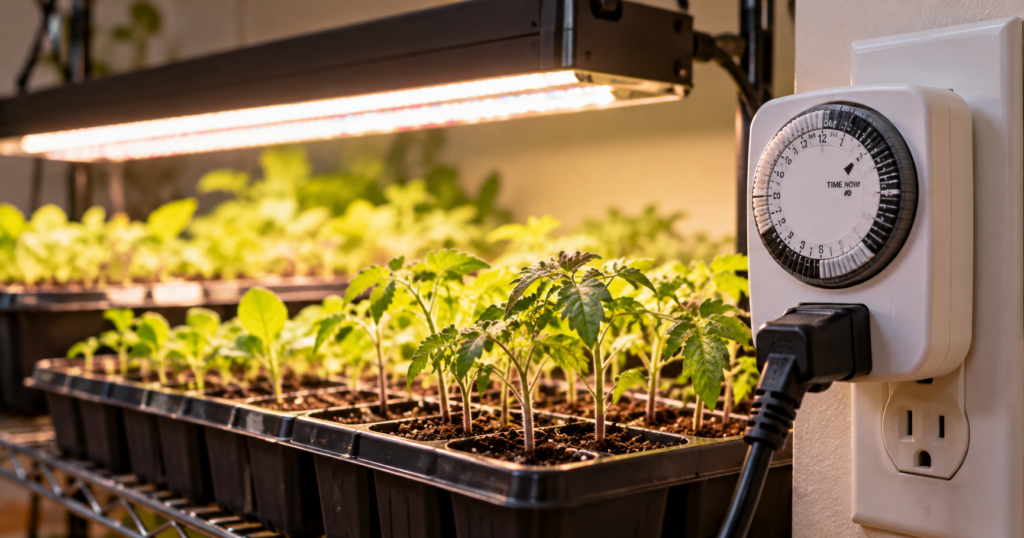
Use an outlet timer. This is by far the easiest and most reliable way to maintain consistent light duration without needing to remember to turn lights on and off manually every day — inconsistent light exposure (skipping days or forgetting to turn lights back on) undermines seedling development more than most people realize. A basic mechanical or digital outlet timer is inexpensive and essentially eliminates this risk entirely.
Set it and mostly forget it. Once a timer is programmed for a 14–16 hour cycle, there’s little need for daily adjustment through the seed-starting period, though you may want to slightly extend hours if seedlings still show minor legginess despite otherwise good care.
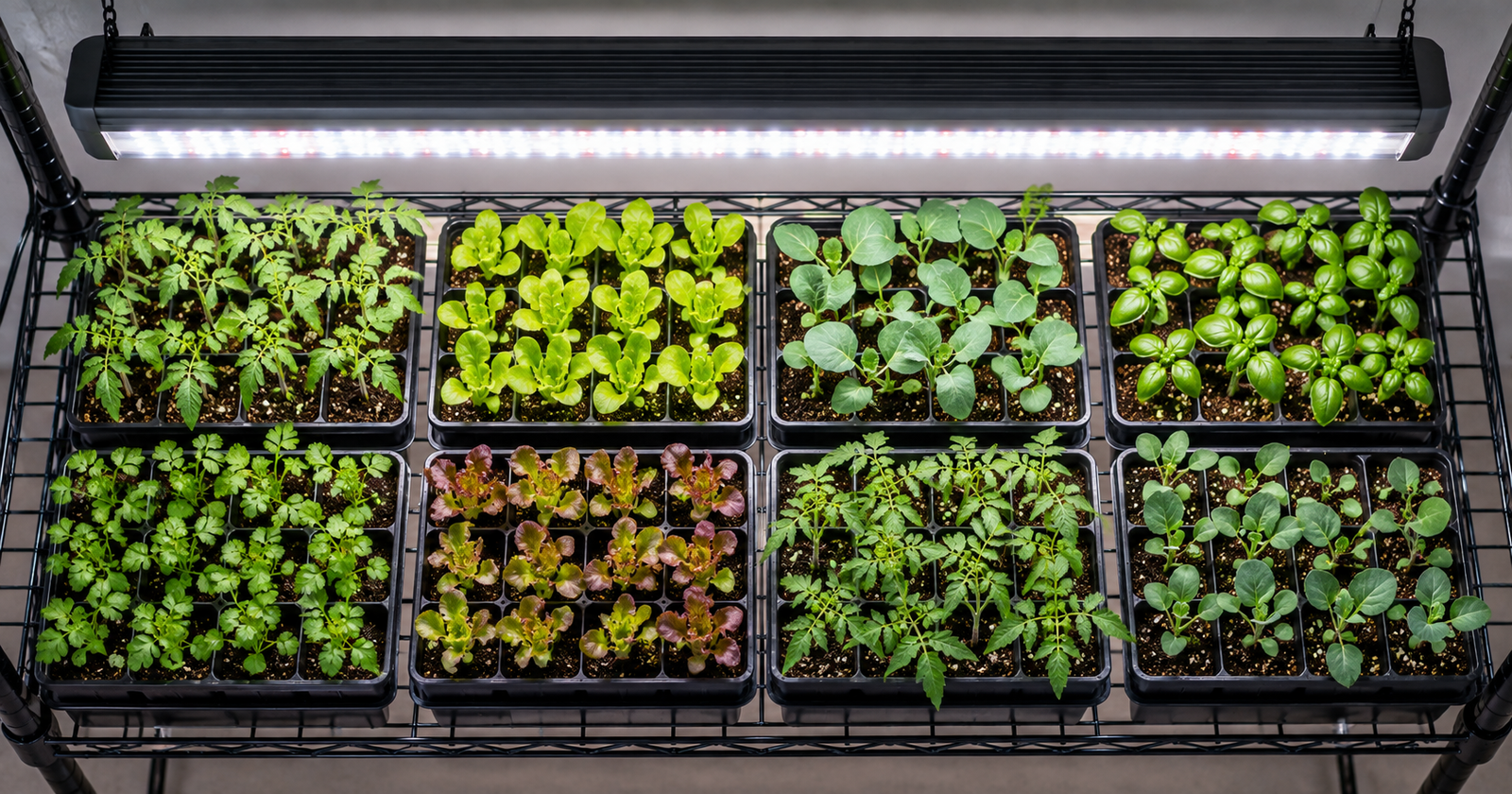
Light Duration vs. Light Distance and Intensity
Duration is only one part of the light equation — distance from the light source and the light’s overall intensity matter just as much, and a seedling can still turn out leggy even with a full 16-hour cycle if the light itself is too weak or positioned too far away. Follow the fixture manufacturer’s seedling-height and intensity guidance. Low-output shop lights may need to sit close to seedlings, while powerful LED panels often need substantially more distance. Raise or dim the fixture if leaves bleach, curl or show heat stress.
Adjusting Duration by Growth Stage
Germination (before sprouting): Most seeds don’t need light to germinate (check your specific seed packet, since some do), but once you see any green emerging, light should be provided immediately and consistently, since even a day or two of delay can start the legginess process.
Active seedling growth: 14–16 hours daily is appropriate for the bulk of the seed-starting period, from emergence through transplant-ready size.
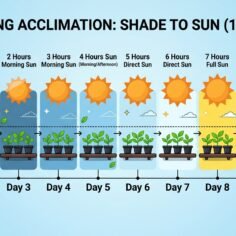
Just before transplanting outdoors: No change to grow light duration is needed, though this is the point where the separate hardening-off process — gradually introducing seedlings to actual outdoor light and conditions — becomes the relevant next step rather than adjusting the indoor light schedule.
Common Mistakes With Grow Light Timing
Inconsistent daily exposure, often from manually managing lights and forgetting some days, producing uneven, stressed growth compared to a stable daily cycle.
Positioning the light too far away, which no amount of extra duration can fully compensate for, since intensity drops off significantly with distance even from a strong light source.
Assuming a sunny windowsill provides enough hours on its own. Even a bright south-facing window rarely provides a full 14–16 hours of usable light in late winter or early spring, which is exactly the season most seed-starting happens — this gap is precisely why supplemental grow lighting exists.
Running lights for excessively long hours hoping to speed growth, which provides little additional benefit past about 16–18 hours and unnecessarily increases electricity use.
The Bottom Line
Most seedlings do best with 14–16 hours of grow light daily, managed consistently with an inexpensive outlet timer rather than manual on-off switching. Pair that duration with correct light distance and intensity, and you’ll avoid the leggy, weak-stemmed seedlings that come from insufficient light — while running well past 16 hours offers little extra benefit for the additional electricity it costs.
Related Seed-Starting Guides
- How to start seeds indoors
- Choosing grow lights for indoor plants
- Hardening off seedlings before transplanting
Last modified: October 16, 2026