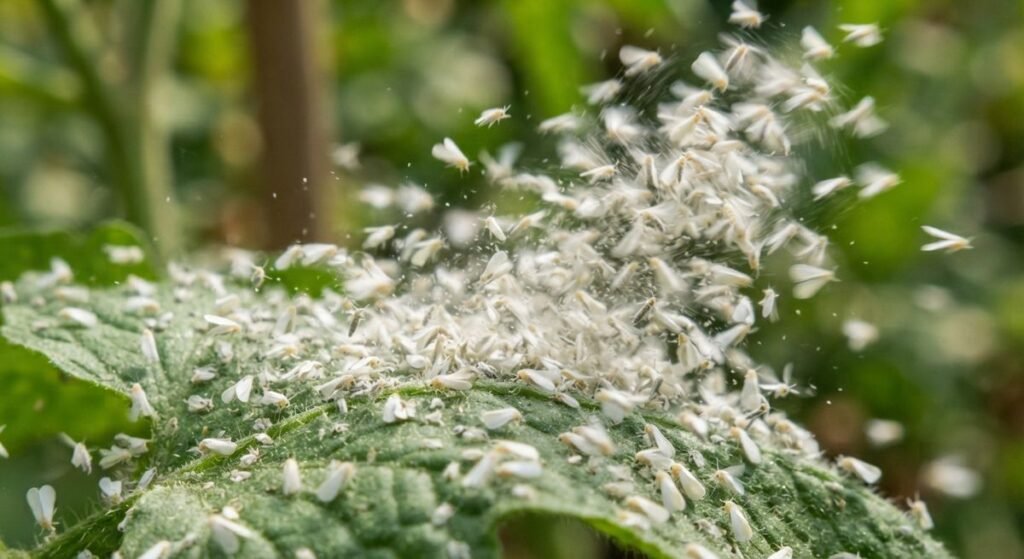
Whiteflies are one of the more visually distinctive common plant pests, easy to identify the moment you disturb an infested plant and watch a small cloud of tiny white insects lift off and scatter, before quickly resettling on the same leaves. That easy identification is helpful, since whiteflies can build large, damaging populations quickly if not addressed.
How to Identify Whiteflies
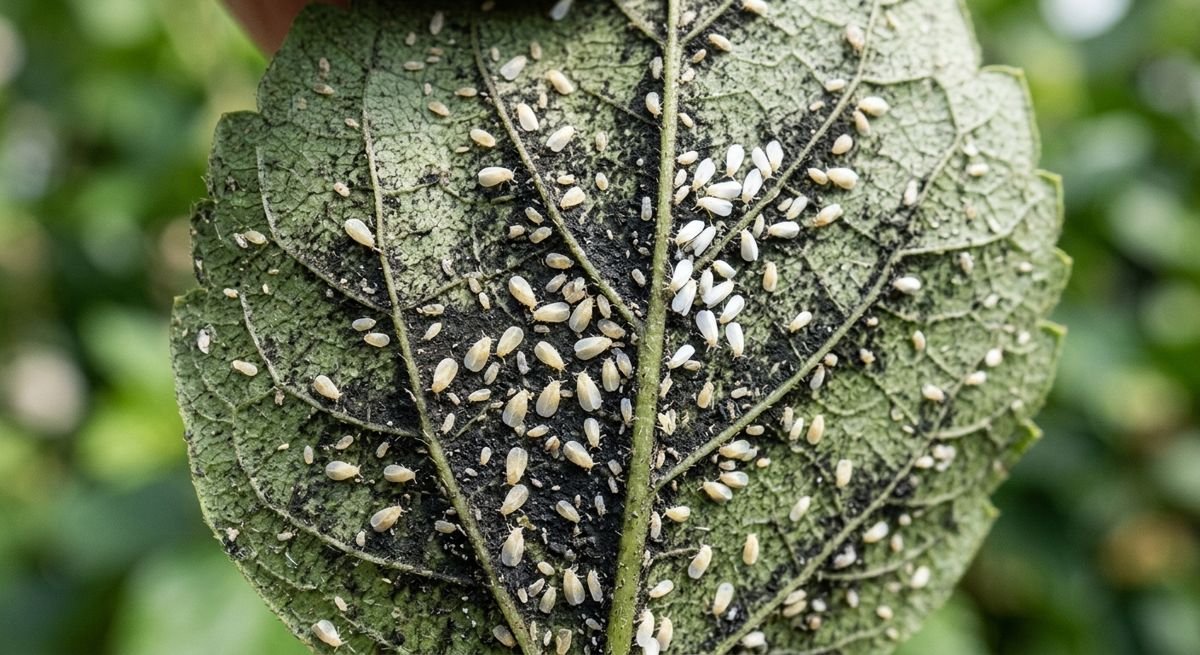
Adult whiteflies are tiny, moth-like insects, about 1/16 inch long, with a dusty white, powdery appearance and wings held in a distinctive tent-like shape over their body when at rest. They cluster on the undersides of leaves and, true to their name, fly up in a small white cloud when the plant is disturbed — a behavior that makes them one of the easier pests to positively identify without needing close magnification.
Signs of a whitefly infestation beyond the visible adults:
- Sticky honeydew residue on leaves and surfaces beneath the plant, a byproduct of whitefly feeding, similar to the residue left by aphids and scale insects
- Sooty mold, a black fungal growth that develops on honeydew residue over time, sometimes serious enough to affect the plant’s overall appearance and health
- Yellowing, wilting, or stunted growth, particularly in heavier infestations, as whiteflies feed by piercing plant tissue and draining sap
- Tiny, pale, oval-shaped nymphs visible on the undersides of leaves if you look closely, representing an earlier life stage before winged adults emerge
Why Whiteflies Are Persistent
Whiteflies reproduce quickly, with a complete generation sometimes taking as little as three to four weeks in warm conditions, and a single female can lay well over a hundred eggs during her lifespan. This fast reproductive cycle, combined with multiple overlapping generations often present simultaneously on a single infested plant, is why whitefly populations can seem to rebound quickly even after a seemingly effective treatment — while adults might be knocked back, eggs and nymphs already present continue developing and emerging as new adults over the following weeks.
How to Treat Whiteflies
1. Use yellow sticky traps
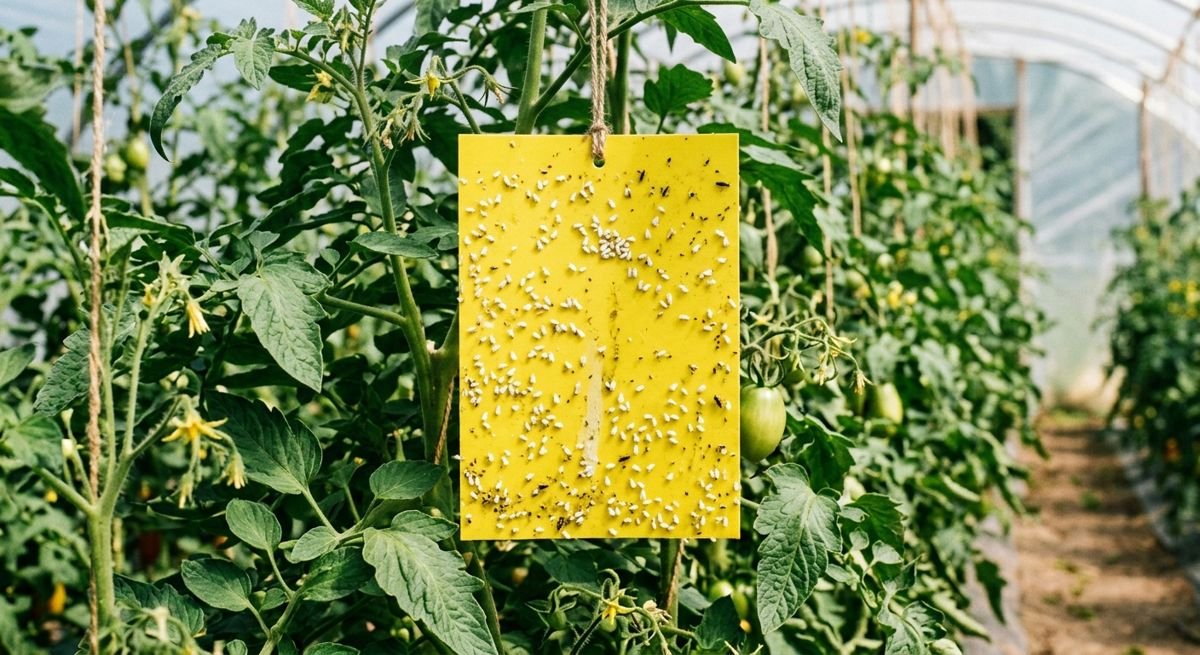
Whiteflies, like fungus gnats, are strongly attracted to yellow, making yellow sticky traps an effective tool for catching adults and monitoring the size of an infestation over time. Position traps near affected plants, ideally at the same height as the foliage rather than above it, since whiteflies tend to stay close to the leaves they’re feeding on.
2. Rinse plants with water
A strong, direct spray of water, focused on the undersides of leaves, physically dislodges a significant number of adults and can help disrupt egg-laying, particularly useful as an immediate first response for a newly discovered infestation.
3. Apply insecticidal soap or neem oil
Insecticidal soaps and horticultural oils control whiteflies they directly contact. Thoroughly cover infested leaf undersides and repeat only at the label’s permitted interval. Use a product labeled for the plant or edible crop, test a small area first, and avoid spraying heat- or drought-stressed plants.
4. Use reflective mulch outdoors
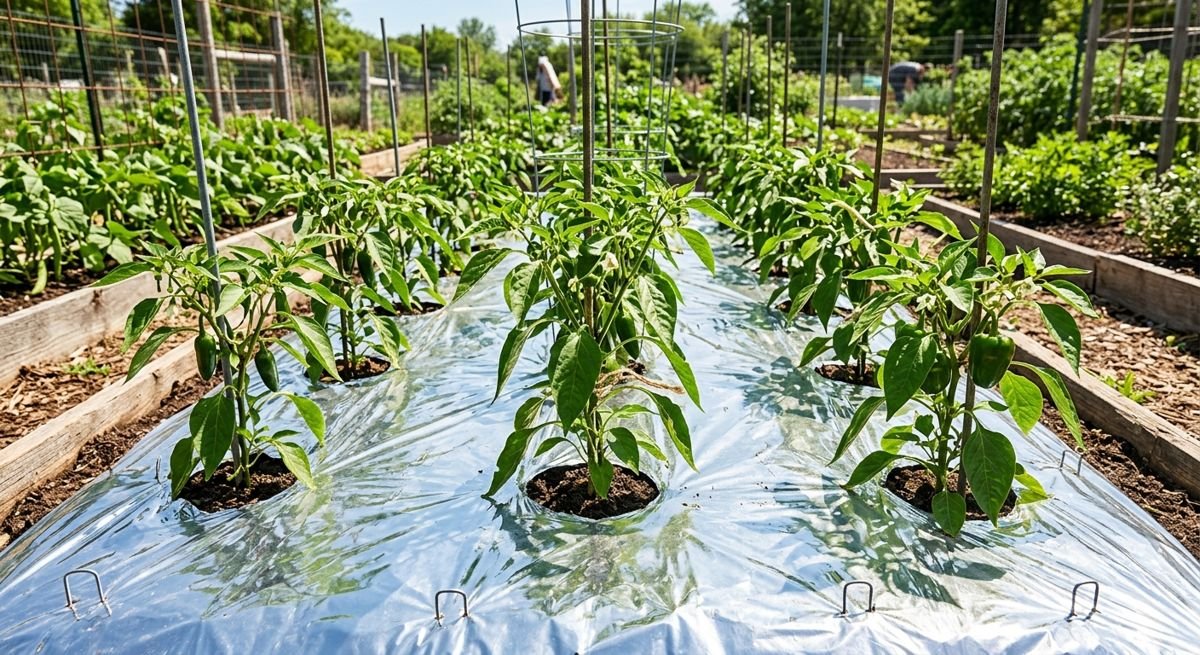
For garden vegetables, reflective silver or metallic mulch laid around the base of plants has been shown to disrupt whiteflies’ ability to locate and settle on host plants, since the reflected light disorients them, providing a meaningful preventive effect particularly useful in gardens with a history of whitefly problems.
5. Introduce natural predators outdoors
Several beneficial insects prey on whiteflies, including certain parasitic wasps, lacewings, and ladybugs. Encouraging these predators through pollen-rich companion planting (dill, fennel, yarrow, and similar flowers) provides ongoing natural control that’s particularly valuable for outdoor infestations where repeated spraying isn’t always practical.
6. Isolate infested houseplants
Since whiteflies spread readily between nearby plants, moving an infested houseplant away from others immediately upon discovery prevents the infestation from establishing more broadly across your plant collection while you work through treatment.
7. Consider a systemic insecticide for severe, persistent infestations
Reserve systemic insecticides for special situations after identifying the pest and checking the product label. Some can harm pollinators and natural enemies, and uses on edible crops vary. Avoid applications to flowering plants visited by pollinators; ask a local extension office for crop-specific guidance before using one.
Whiteflies on Vegetable Gardens vs. Houseplants
Outdoors, whiteflies are a particular concern on tomatoes, peppers, and various brassica crops, and can also transmit certain plant viruses in some regions, making early control especially valuable beyond just the direct feeding damage. Natural predators and reflective mulch tend to be more practically useful outdoor strategies than they are for houseplants.
Indoors, without natural predators to help, consistent, repeated treatment with soap or neem oil and sticky traps for ongoing monitoring becomes more important, since an indoor infestation has no natural checks working in your favor the way an outdoor garden ecosystem does.
Preventing Whiteflies
Inspect new plants carefully before bringing them near existing houseplants or into the garden, since whiteflies are commonly introduced on already-infested nursery stock.
Check the undersides of leaves regularly, since this is where whiteflies concentrate and where an infestation is typically first visible before it becomes an obvious problem from a casual glance at the plant.
Avoid over-fertilizing with nitrogen, since excessive soft, lush new growth is more attractive to whiteflies (and several other common pests) than more moderately fed, sturdier growth.
Use yellow sticky traps proactively in areas with a history of whitefly problems, catching new arrivals before they can establish a breeding population.
The Bottom Line
Whiteflies are easy to spot thanks to their distinctive scattering behavior when disturbed, but their fast reproductive cycle means a single treatment rarely resolves an infestation completely. Combine yellow sticky traps, thorough insecticidal soap or neem oil coverage repeated over several weeks, and — for outdoor gardens — reflective mulch and beneficial insect habitat for the most reliable, lasting control.
Related Growing Guides
- Natural pest control for vegetable gardens
- Identifying and treating aphids
- Spider mites on indoor plants
Further reading: UC IPM whitefly management guide.
Last modified: October 21, 2026