Natural pest control isn’t a single trick but a layered strategy: preventing problems before they start, encouraging the natural predators that keep pest populations in check, and reaching for organic treatments only when needed and targeted specifically at the pest causing trouble. Here’s how to build that strategy for a vegetable garden.
Start With Prevention
Healthy soil grows resilient plants. Well-amended, biologically active soil produces stronger, less stressed plants that are naturally more resistant to pest pressure than nutrient-deficient or poorly-drained plants already struggling before a pest even shows up.
Crop rotation disrupts the life cycle of pests that overwinter in soil near their host plant, since many pests and diseases build up in soil where the same crop family grows repeatedly year after year in the same spot.
Proper spacing improves air circulation, which reduces the humid, still conditions many pests and fungal diseases favor, and makes it easier to spot and address problems early before they spread between crowded, touching plants.
Regular inspection catches problems while they’re small and manageable. Checking the undersides of leaves weekly during the growing season catches aphids, mites, and eggs long before an infestation becomes visible from a casual glance.
Companion Planting
Certain plant combinations genuinely help repel pests or attract beneficial insects, though results vary by garden and shouldn’t be relied on as a sole strategy:
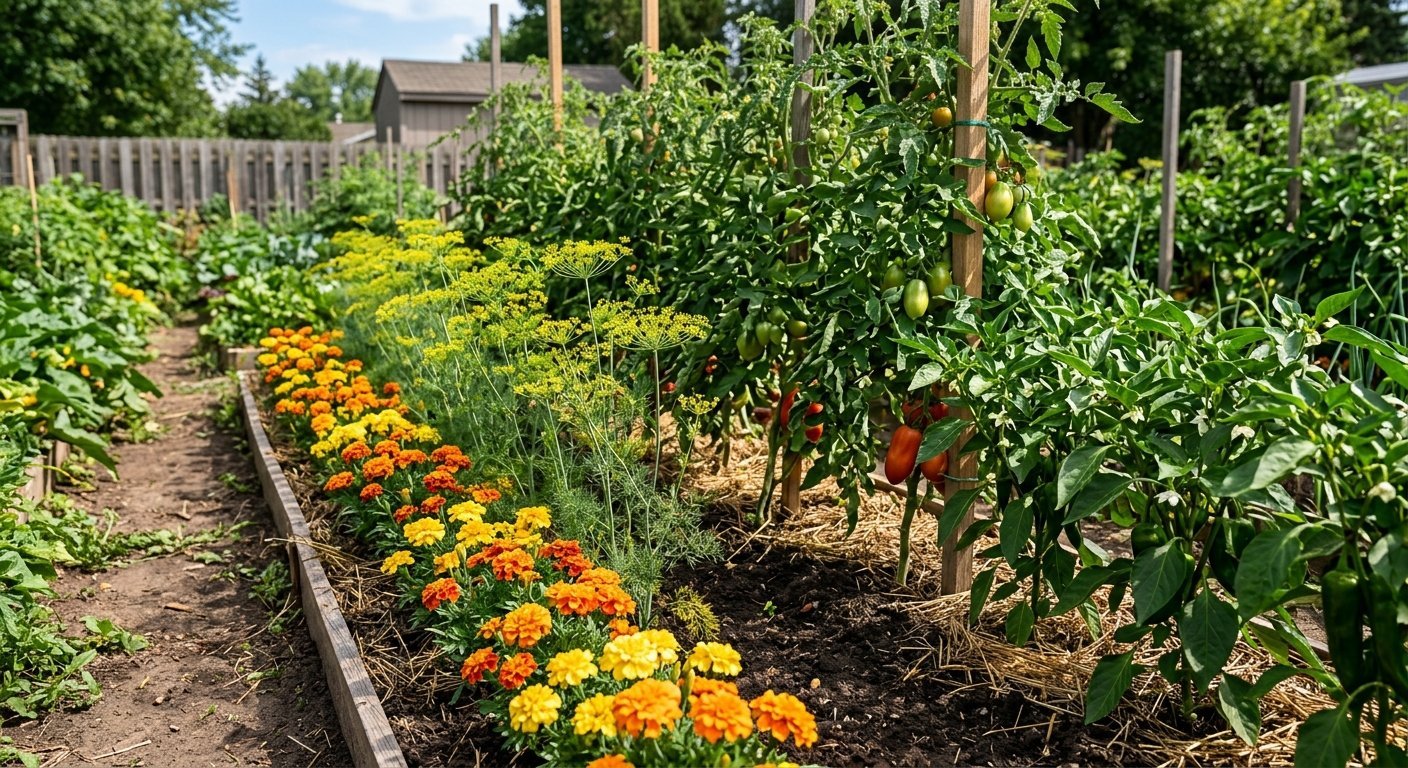
- Marigolds are widely planted among vegetables for their reputed ability to repel certain nematodes and some insects, and their bright flowers also attract pollinators and some beneficial predatory insects.
- Dill, fennel, and yarrow attract parasitic wasps and other predatory insects that prey on aphids and caterpillars.
- Nasturtiums are often used as a "trap crop," drawing aphids away from more valuable plants by being more attractive to them.
- Basil is commonly planted near tomatoes, with some gardeners reporting reduced pest pressure, though the evidence for this specific pairing is more anecdotal than scientifically established.
Encouraging Beneficial Insects
This is one of the most effective long-term natural pest control strategies, since it creates an ongoing, self-sustaining check on pest populations rather than requiring repeated intervention.
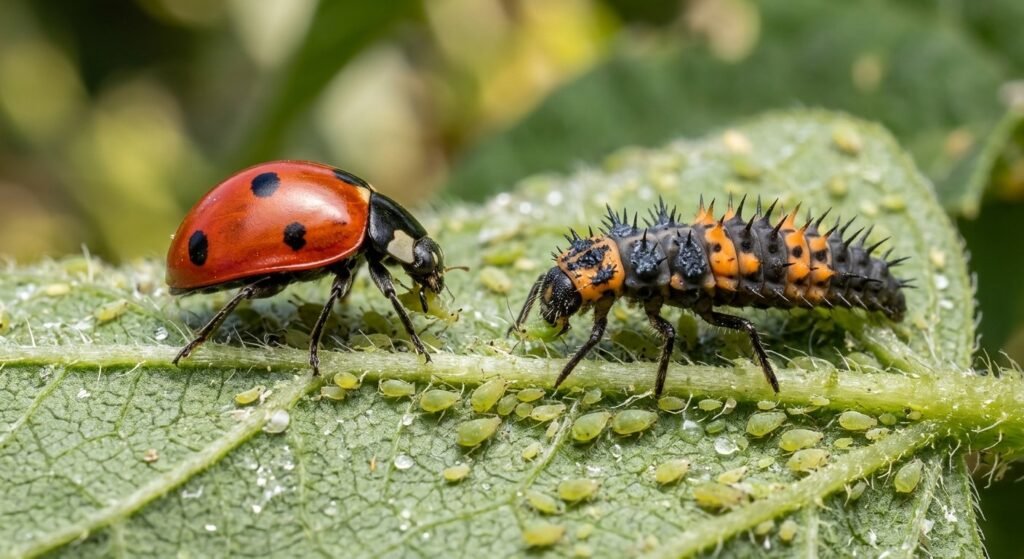
Ladybugs and their larvae consume large numbers of aphids and other soft-bodied pests. Attracting them with pollen-rich flowers like dill, fennel, and yarrow works better long-term than purchasing and releasing them, since purchased ladybugs often disperse without a reason to stay.
Lacewings are voracious predators of aphids, mites, and small caterpillars, particularly in their larval stage, and are attracted by similar flowering plants.
Parasitic wasps (many too small to notice or sting people) lay eggs inside or on pest insects like hornworms and aphids, with the wasp larvae killing the host as they develop — a genuinely powerful natural control that’s easy to accidentally wipe out with broad-spectrum insecticides.
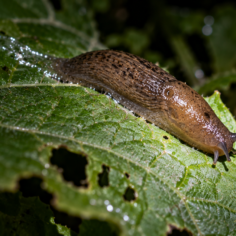
Ground beetles prey on slugs, cutworms, and various soil-dwelling pests, and are encouraged by leaving some undisturbed ground cover or mulch where they can shelter during the day.
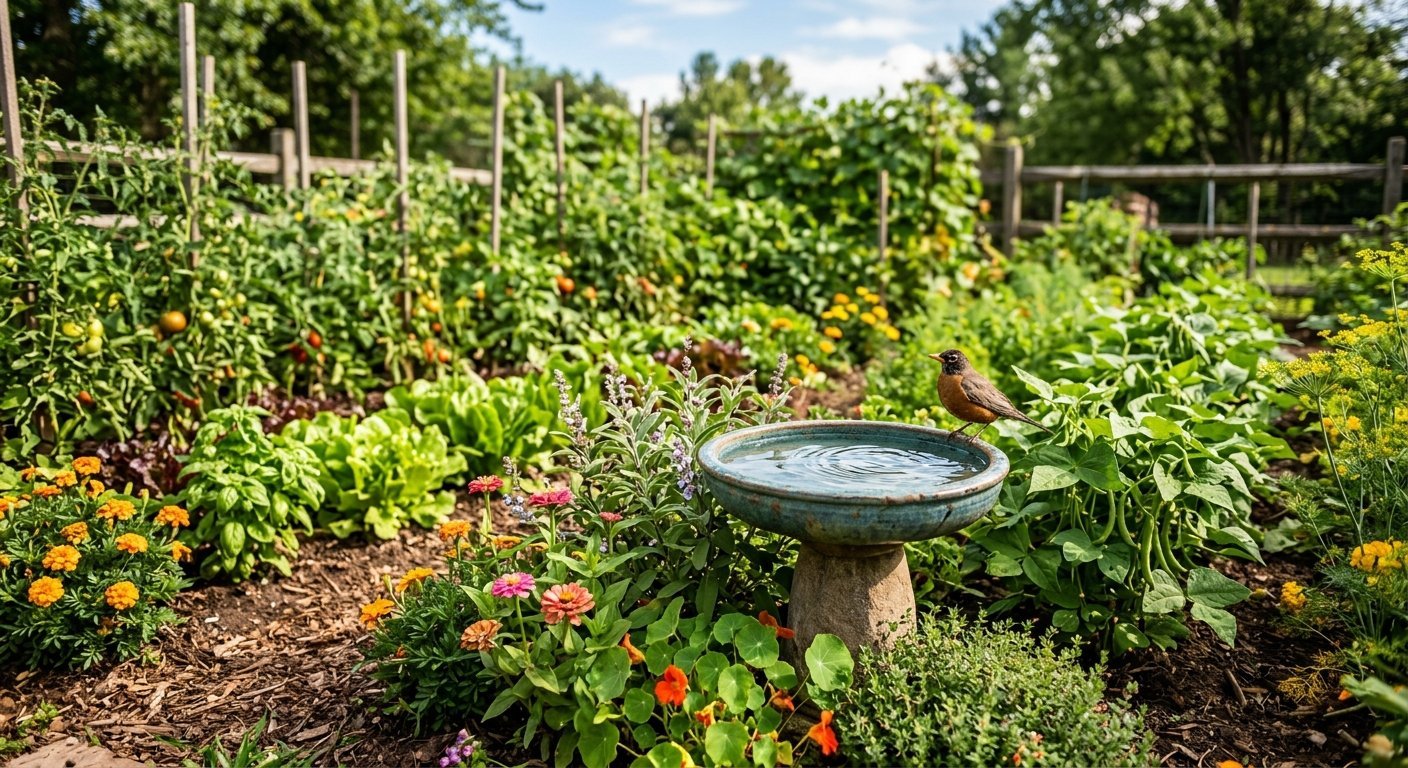
Birds consume enormous quantities of caterpillars and other insects; a simple birdbath or bird feeder near (but not directly in) the vegetable garden can meaningfully increase natural pest pressure from avian predators.
Organic Treatments for When Prevention Isn’t Enough
Insecticidal soap is effective against soft-bodied pests like aphids, whiteflies, and spider mites, working by disrupting their outer cell membranes on contact. It has minimal residual effect and needs thorough coverage, including leaf undersides, with repeat applications every 5–7 days for a full knockdown.
Neem oil works both as a contact insecticide and a systemic deterrent, disrupting pest feeding and reproduction over time. It’s effective against a broad range of soft-bodied pests and some fungal issues, though it takes longer to show results than insecticidal soap.
Bacillus thuringiensis (Bt) is a naturally occurring bacterium specifically toxic to caterpillars when ingested, making it highly effective against hornworms, cabbage worms, and similar pests while remaining harmless to beneficial insects, pets, and humans.
Diatomaceous earth works mechanically, damaging the exoskeletons of crawling insects like slugs and beetles, causing fatal dehydration. It needs reapplication after rain or watering since it loses effectiveness once wet.
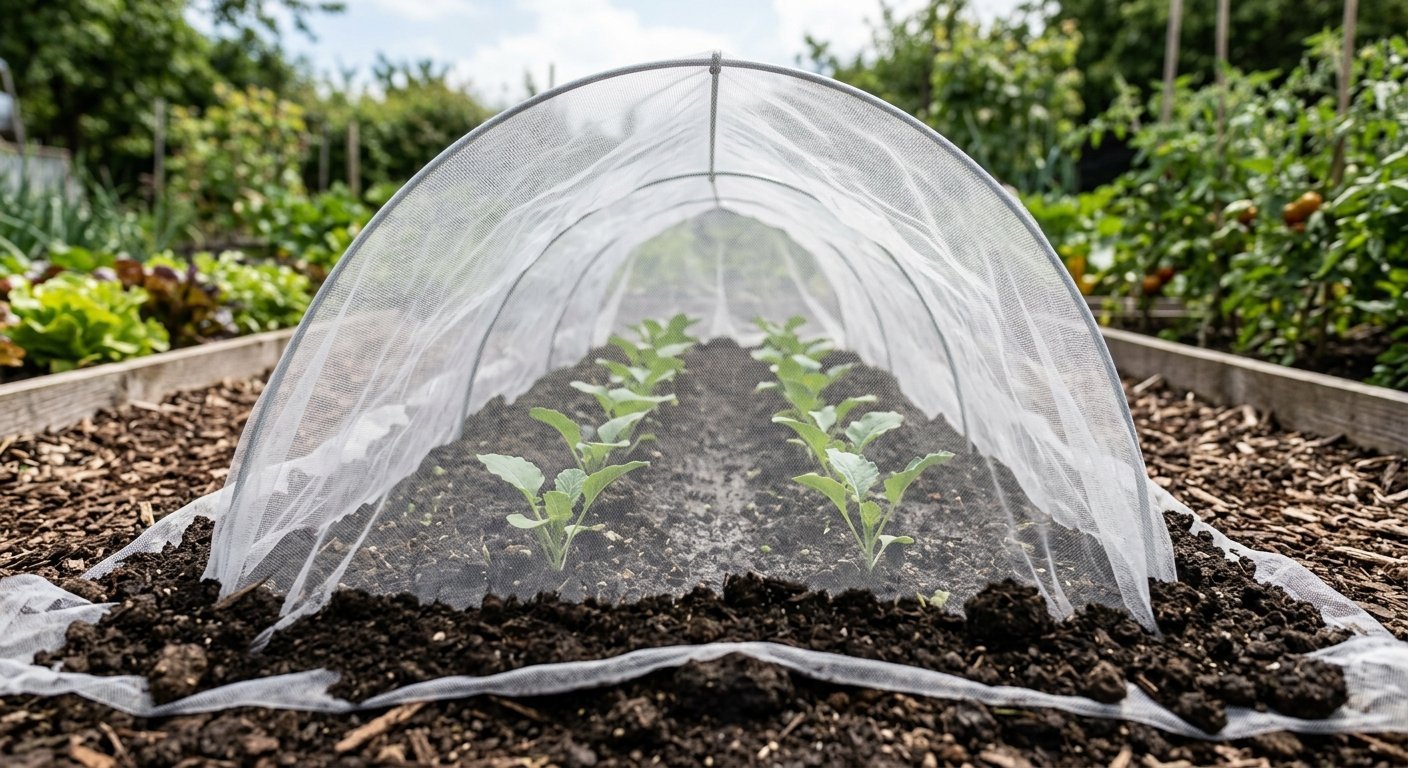
Row covers provide a physical barrier against many flying pests (cabbage moths, squash vine borers, cucumber beetles) without any spray at all, though they need to be removed during flowering for crops that require pollinator access.
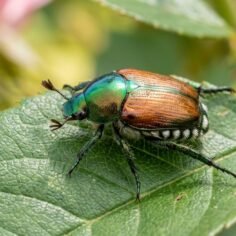
Hand-picking remains one of the most effective, zero-cost methods for larger, visible pests like hornworms, Japanese beetles, and squash bugs, especially in a smaller home garden where the population never gets too large to manage this way.
Building a Seasonal Natural Pest Control Routine
Early season: Focus on prevention — healthy soil prep, appropriate spacing, and companion planting alongside your main crops.
Mid-season (peak pest activity): Increase inspection frequency to weekly, hand-pick larger pests as spotted, and apply targeted treatments (insecticidal soap, Bt, neem oil) as specific problems are identified rather than as a blanket preventive spray.
End of season: Clean up plant debris that can harbor overwintering pests, till (or lightly disturb) soil where pests like hornworms overwinter as pupae, and plan crop rotation for the following season based on what pest and disease pressure showed up this year.
Why Broad-Spectrum Pesticides Often Backfire
Synthetic broad-spectrum insecticides don’t distinguish between pests and the beneficial insects working to control them, often killing off natural predators faster than the pests themselves recover, which can lead to worse pest problems in subsequent weeks as the balance shifts back in the pest’s favor without natural checks in place. This is a key reason natural, targeted pest control approaches often outperform broad chemical intervention over a full growing season, even when the initial pest knockdown looks less dramatic.
The Bottom Line
Effective natural pest control in a vegetable garden layers prevention (healthy soil, spacing, rotation), beneficial insect habitat (flowering companion plants that support predators), and targeted organic treatments (insecticidal soap, neem oil, Bt) applied only when and where specific problems appear. Built together, these methods create a garden ecosystem that increasingly manages pest pressure on its own, season over season.
For help with specific garden pests, see How to Get Rid of Aphids on Any Plant — Indoors or Out and How to Get Rid of Squash Bugs.
Last modified: October 5, 2026