Indoor herb garden kits have become a popular gift and impulse purchase for good reason: they promise fresh herbs on your counter with minimal effort. Whether that promise holds up depends heavily on which kit you choose and how well you understand what it actually needs from you.
Types of Indoor Herb Garden Kits
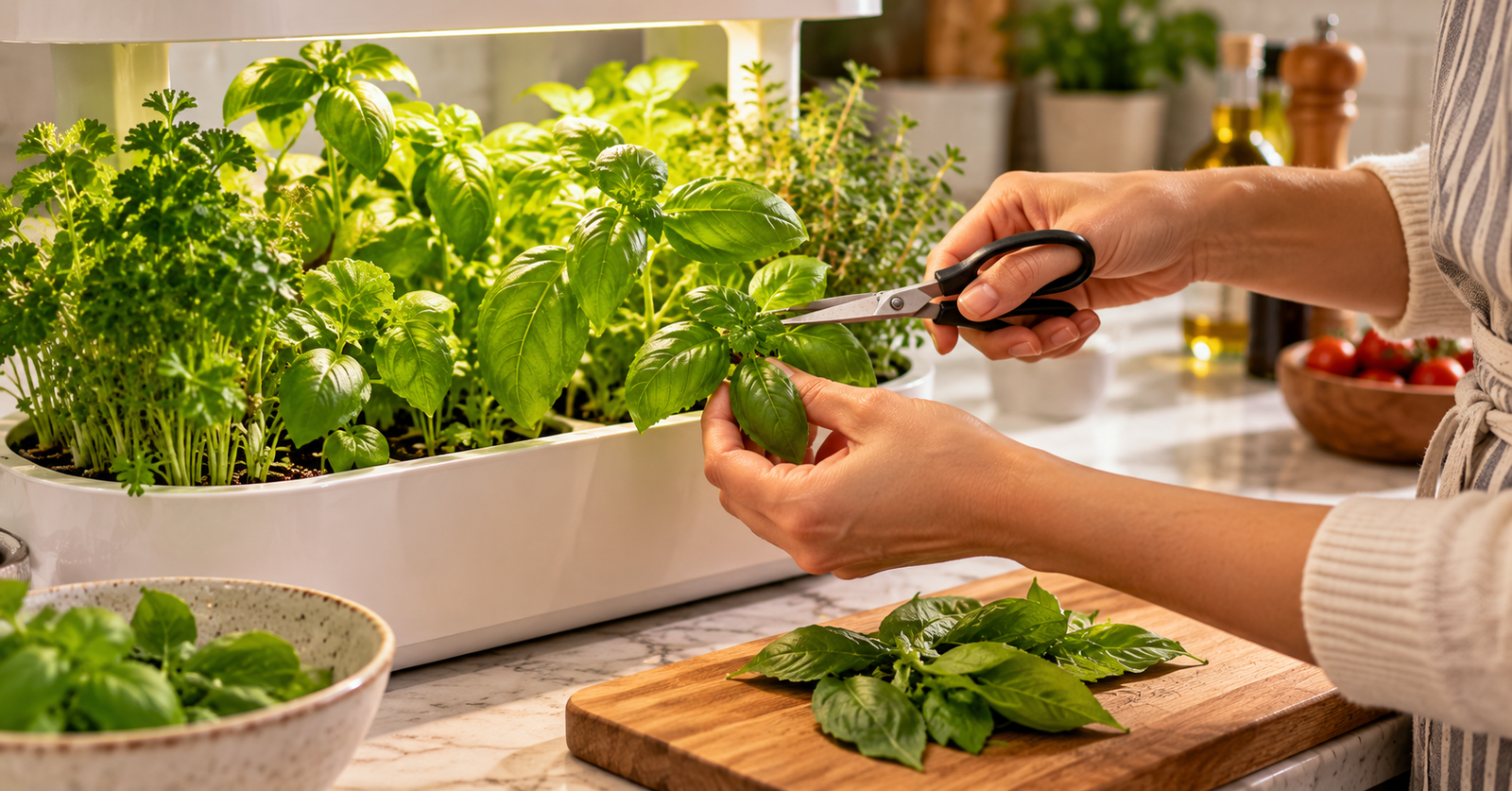
All-in-one hydroponic kits (like AeroGarden and similar products) combine a built-in grow light, a water reservoir with pump, and pre-seeded pods, largely automating the growing process. These are the most beginner-friendly and forgiving option, typically alerting you when to add water or nutrients.
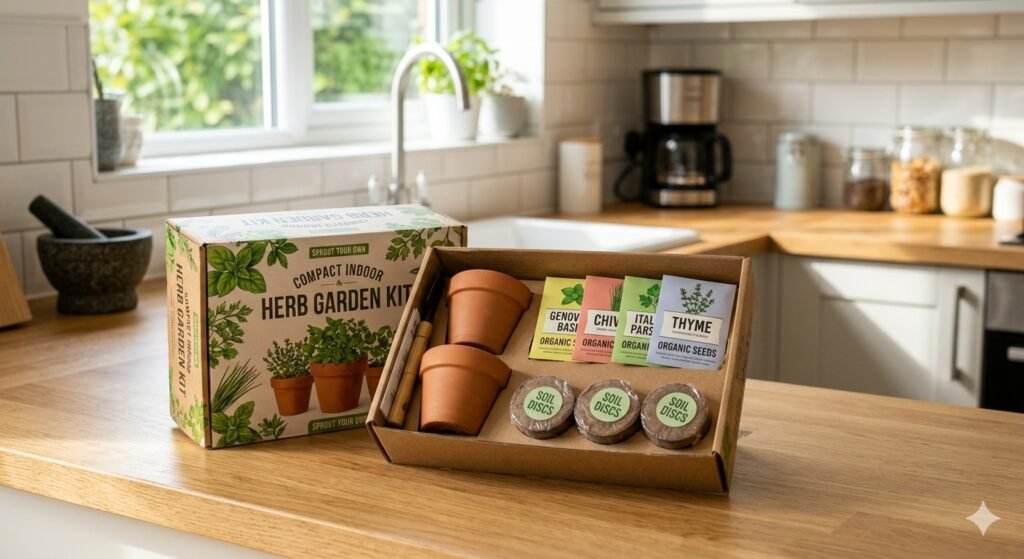
Soil-based starter kits include small pots, soil discs or pellets, and seed packets, relying on you to provide light and manage watering yourself. These are cheaper and simpler in construction but require more active involvement to succeed, particularly around lighting.
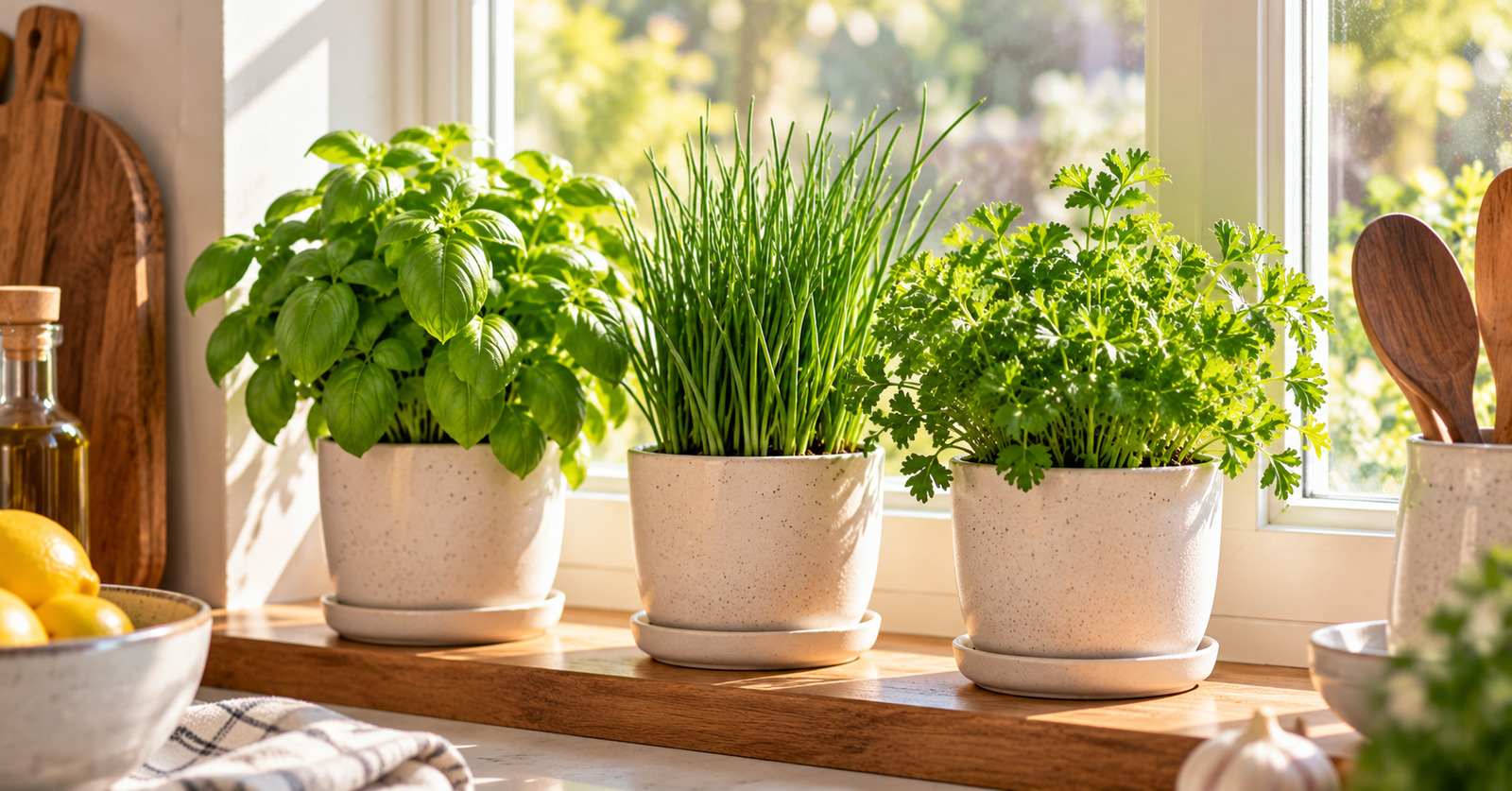
Windowsill planter kits are essentially a stylish container setup meant to sit in natural light, often including soil, seeds, and decorative pots, but no grow light or automated watering — success depends heavily on how much natural light your specific windowsill actually provides.
What to Look For When Buying a Kit
A built-in grow light, or at minimum a clear acknowledgment that the kit needs to sit in a genuinely bright, ideally south-facing window. Most kitchens don’t have windows bright enough to grow herbs well without supplemental light, which is the single most common reason herb kits underperform.
Adequate pot depth. Many decorative kits use shallow pots that look attractive but restrict root growth, especially for herbs like basil and parsley that develop a reasonably substantial root system.
Drainage, or a clear watering system that avoids waterlogging — some decorative kits use sealed containers with no drainage, which work fine with careful, minimal watering but are easy to overwater by habit.
Herb selection suited to indoor growing. Basil, chives, parsley, thyme, and mint all do well indoors; some kits include herbs like rosemary that are notoriously difficult to keep happy indoors long-term due to their preference for lower humidity and excellent air circulation that many homes don’t provide.
Setting Up a Kit for Success
Read the specific instructions for your kit’s light needs. All-in-one hydroponic kits usually specify exact light duration (often 14–16 hours on a timer), while soil-based kits depend on you providing that light yourself, either through a strong window or a separate grow light purchase.
Don’t overwater soil-based kits. Many beginner mistakes come from treating an herb kit like it needs daily watering; most herbs prefer soil to dry out somewhat between waterings, and the small pots common in these kits make it easy to overcorrect into constantly soggy soil.
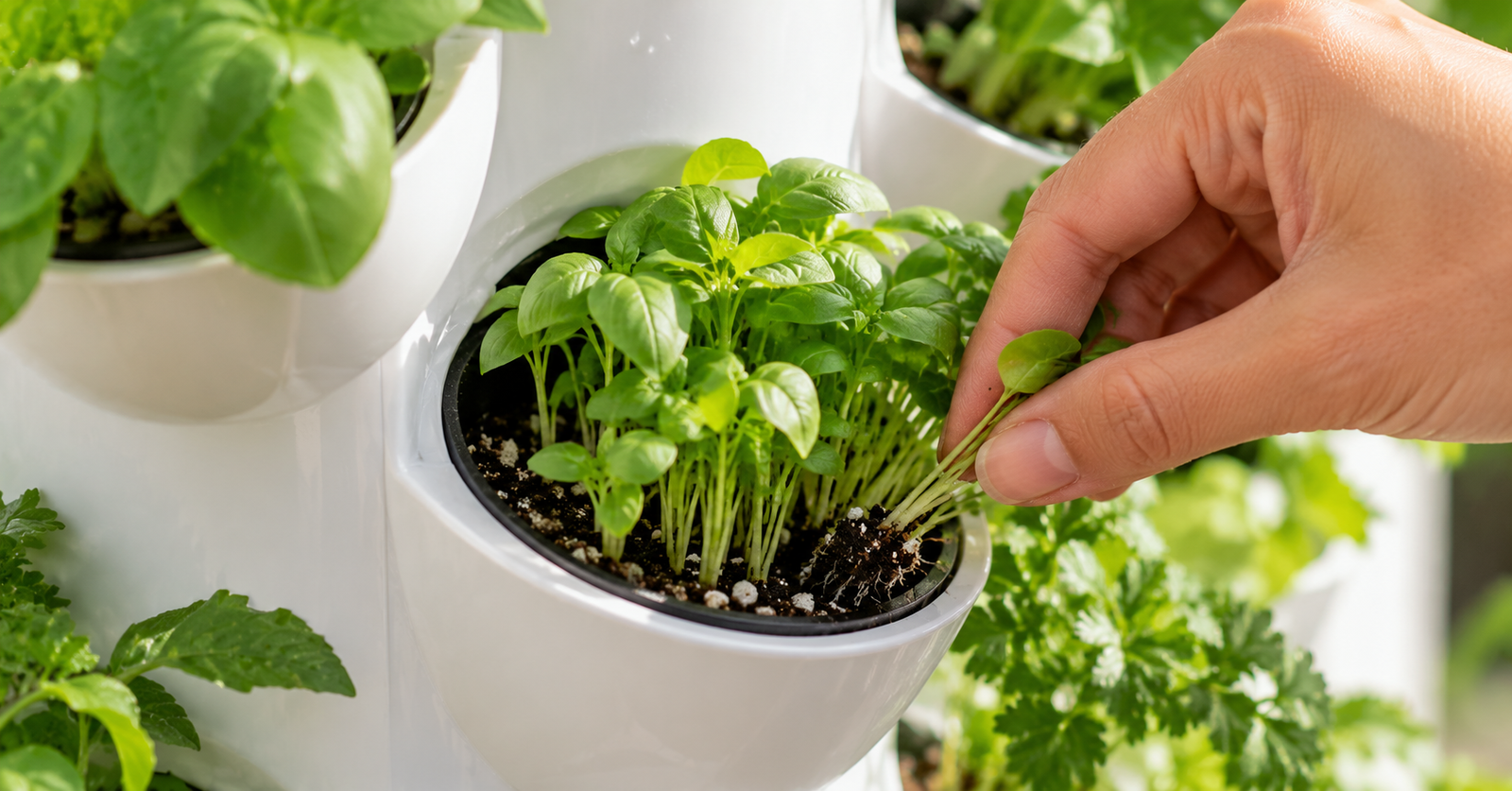
Thin seedlings if multiple sprout in one pod or cell. Crowded seedlings compete for light and nutrients and rarely all survive to maturity — snipping the weaker ones at the soil line, rather than pulling them, gives the strongest one room to develop properly.
Rotate soil-based kits regularly if relying on a window for light, since plants naturally grow toward the light source and can develop lopsided, leggy growth if left facing the same direction for weeks.
Managing an All-in-One Hydroponic Kit
These kits are largely self-managing but still benefit from attention:
- Top off water and nutrients as indicated, usually via an indicator light or a simple weekly check
- Trim herbs regularly once established, not just when you need them for cooking — regular light harvesting encourages fuller, bushier growth rather than a few tall, leggy stems
- Replace seed pods when a plant finishes its productive life, typically after several months, rather than expecting indefinite production from the original planting
Common Reasons Herb Kits Fail
Insufficient light is the single biggest cause of disappointing results, especially with kits that don’t include a grow light and depend on natural window light that often isn’t strong enough, particularly in winter or in rooms that aren’t truly south-facing.
Overwatering, especially in small pots with limited drainage, leading to root rot before the herbs have a chance to establish.
Overcrowded planting, where too many seeds packed into a small space compete against each other rather than any individual plant thriving.
Unrealistic expectations about harvest volume. A small kit growing a few herb plants provides meaningful fresh garnish and light seasoning use, but won’t replace regular grocery store herb purchases for someone who cooks with large quantities regularly.
Best Herbs to Start With, Kit or No Kit
If you’re building your own setup rather than buying a pre-packaged kit, basil, chives, and parsley are the most forgiving and rewarding starting points — fast-growing, tolerant of minor care mistakes, and genuinely useful in everyday cooking. Herbs like rosemary and lavender, while popular in decorative kits, are considerably harder to keep thriving indoors long-term and often better suited to outdoor growing or a very bright, well-ventilated spot if attempted indoors.
The Bottom Line
An indoor herb garden kit can absolutely deliver on its promise, but success depends more on adequate light than almost anything else — an all-in-one kit with a built-in grow light removes most of the guesswork, while a soil-based or windowsill kit succeeds or fails largely based on how bright your actual window is. Choose herbs suited to indoor life, avoid overwatering small pots, and harvest regularly to keep plants productive rather than letting them grow leggy and unused.
Related Reading
To improve your herb-growing setup and preserve your harvest, see Best Grow Lights for Indoor Plants: Buying Guide and How to Dry Herbs From Your Garden: 4 Methods.
Last modified: October 17, 2026