The spotted lanternfly is an invasive planthopper native to Asia that has spread rapidly across the eastern United States since first being detected in Pennsylvania in 2014. It poses a serious threat to grapevines, fruit trees, hops, and hardwood trees, and correctly identifying it — at any life stage — is the first step toward reporting and controlling it.
Why Identification Matters
Spotted lanternflies don’t just feed on plants; they excrete large amounts of sticky "honeydew" as they feed, which promotes sooty mold growth and can coat plants, patios, and cars in a black fungal film. Vineyards and orchards in infested areas have reported significant crop damage and yield loss. Because the insect looks dramatically different across its life cycle, many people miss early infestations simply because they’re looking for the wrong thing.
Egg Masses (Fall Through Spring)
Spotted lanternfly egg masses are the stage most likely to be accidentally transported to new areas, since they’re often laid on smooth, flat surfaces — not just tree bark, but also outdoor furniture, vehicles, stone, and firewood.
What to look for: A grayish-brown, putty-like or mud-like smear, roughly 1–1.5 inches long, with a slightly waxy or cracked texture as it ages. It looks almost like a splash of dried mud stuck to a vertical surface. Each mass contains 30–50 eggs and can survive winter cold, hatching in spring.
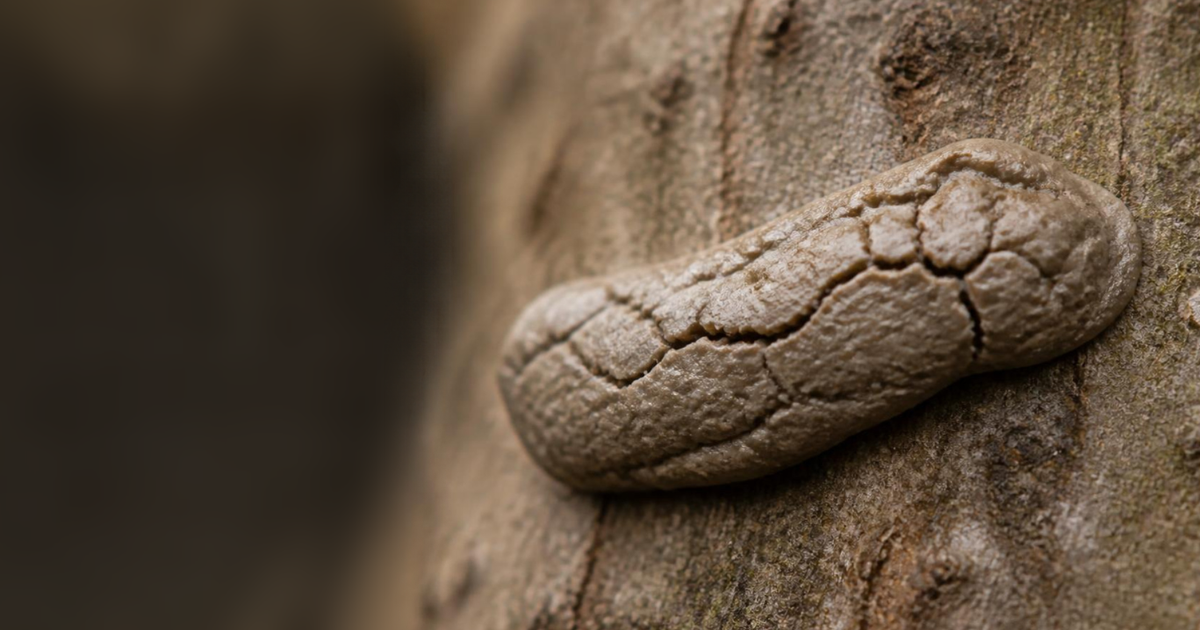
Where to check: Tree trunks (especially tree of heaven, a preferred host), the undersides of outdoor furniture, vehicle wheel wells, firewood stacks, and any smooth outdoor surface near a known infestation.
Early Instar Nymphs (Spring Through Early Summer)
After hatching, nymphs go through four stages before becoming adults, and the first three stages look distinctly different from the last.
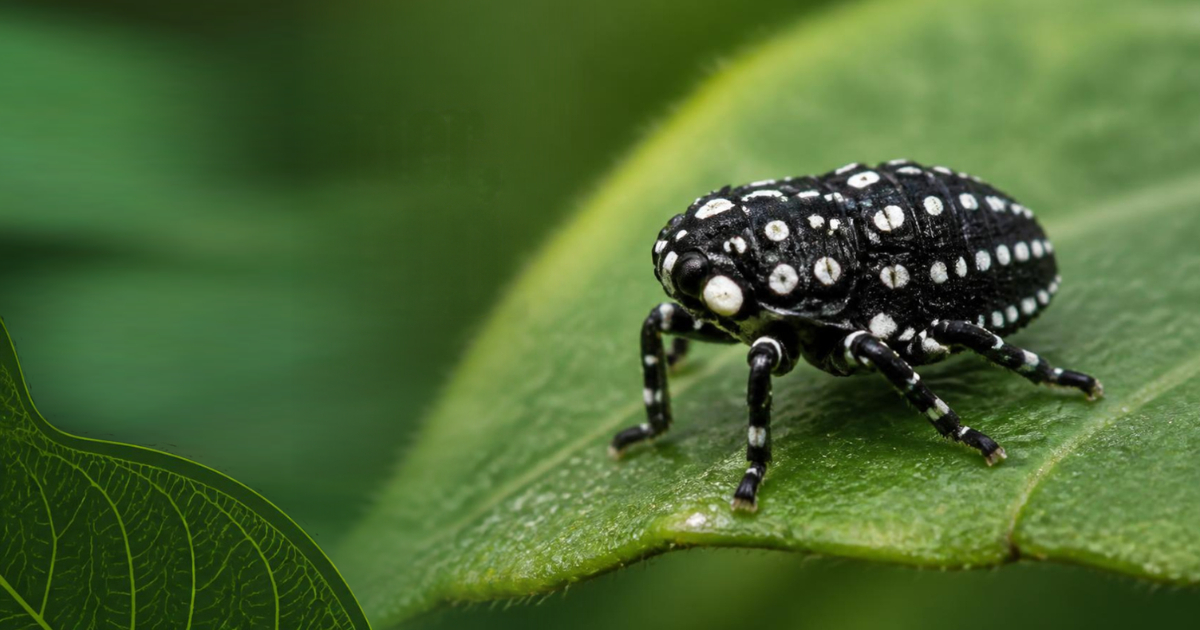
What to look for: Small, wingless insects, roughly 1/4 to 1/2 inch long, black with bright white spots. They’re often mistaken for ticks or beetles at this stage because of the black-and-white coloring and lack of wings.
Late Instar Nymphs (Early to Mid Summer)
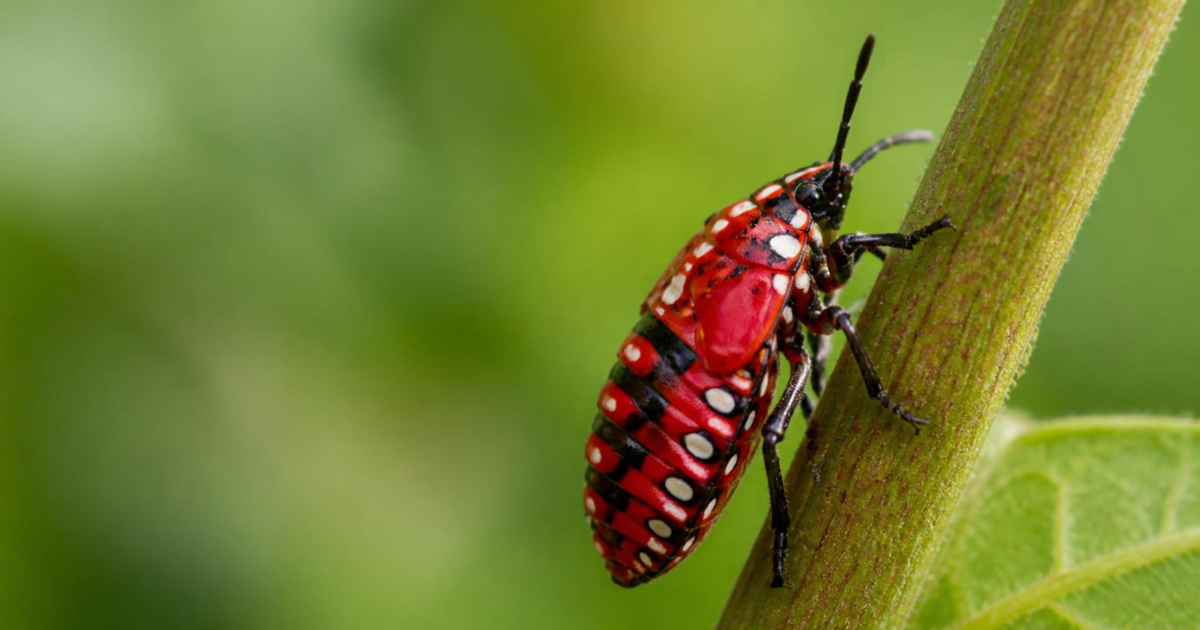
What to look for: The fourth and final nymph stage shows a dramatic color change — bodies turn red with black stripes and the same white spots, roughly 1/2 to 3/4 inch long. This red coloration often causes people to mistake them for a completely different insect from the earlier black-and-white stages.
Adults (Mid Summer Through Late Fall)
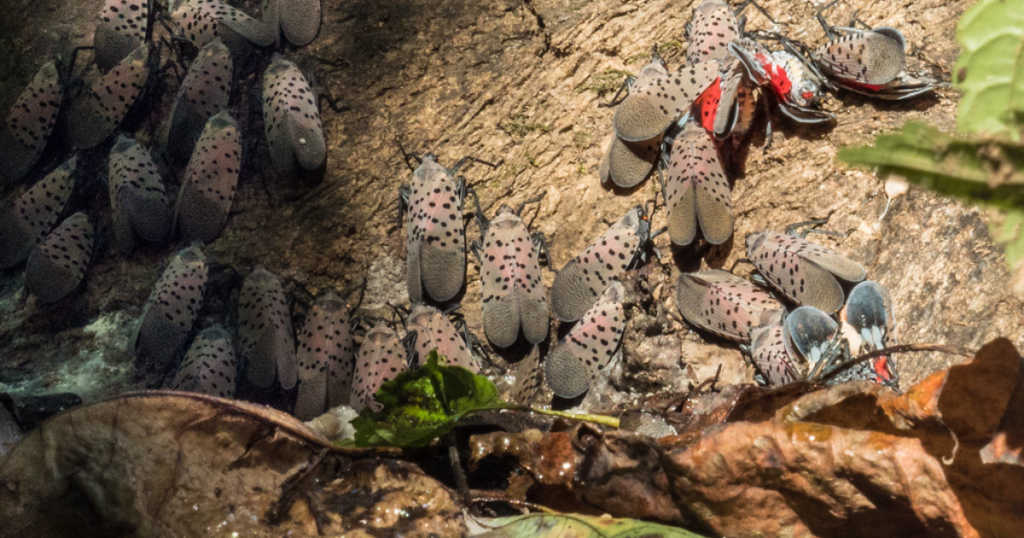
What to look for: Adults are roughly 1 inch long with a distinctive resting posture — wings folded over the back like a tent. At rest, the forewings are grayish-tan with black spots and a black-spotted band near the tips. When they fly or are disturbed, they reveal bright red hindwings with black spots and a white band, making them easy to identify in flight even though they’re much less conspicuous at rest.
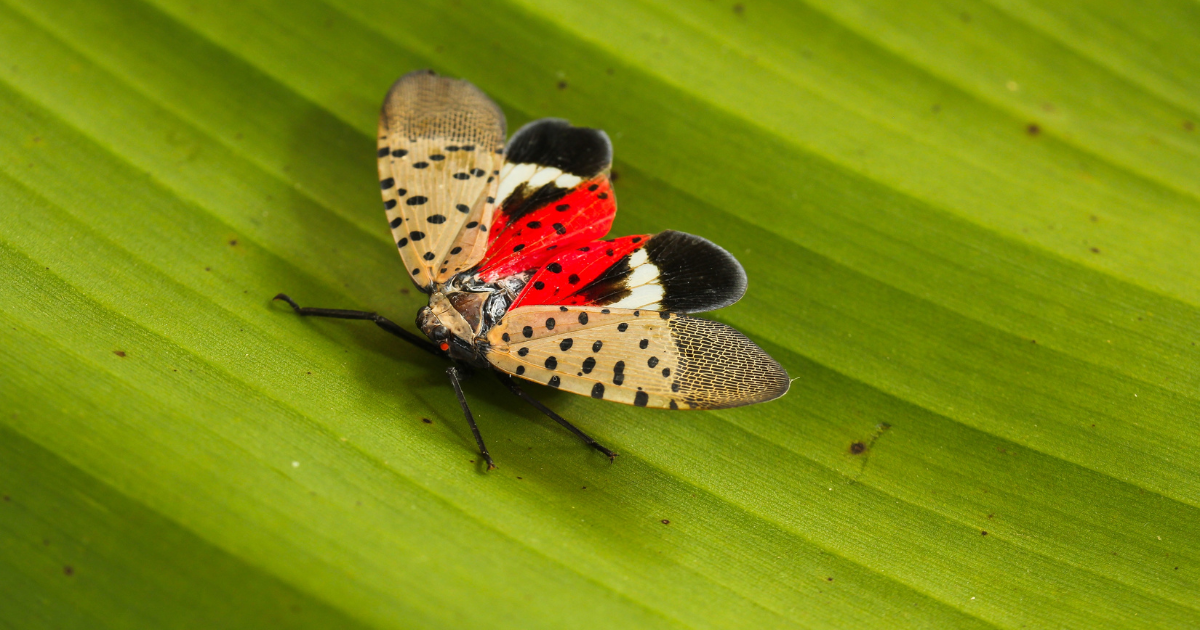
Adults are strong jumpers and can also fly short distances, especially when startled. They congregate in large numbers on host trees, particularly tree of heaven (Ailanthus altissima), grapevines, and black walnut, often clustering so densely that the trunk appears to be moving.
Look-Alikes to Rule Out
A few native insects get mistaken for spotted lanternflies:
- Other planthoppers and leafhoppers can resemble the nymph stages but typically lack the specific white spotting pattern
- Moths, when at rest with folded wings, are sometimes confused with adult lanternflies, but lack the red hindwings and black spotting pattern
- Boxelder bugs share some red-and-black coloring but have a completely different, more elongated body shape without the moth-like wing posture
What to Do If You Find One
Because spotted lanternflies are an actively tracked invasive species in much of the eastern U.S., the recommended response differs by location:
- Report it. Most state departments of agriculture maintain a reporting system — a website form or app — specifically for spotted lanternfly sightings, especially if you’re in a newly affected area or outside the known quarantine zone. Include a photo and location if possible.
- Kill it if you can do so safely, particularly in areas where the population is already established and control efforts are underway. This applies to all life stages, including egg masses.
- Scrape and destroy egg masses. Using a putty knife or similar tool, scrape egg masses into a bag or container of hand sanitizer or rubbing alcohol to kill them before disposal — simply scraping them off without destroying them isn’t enough, since the eggs can still survive and hatch.
- Check vehicles and outdoor gear before traveling from an infested area, particularly in fall, when egg-laying peaks and masses can hitchhike on car exteriors, wheel wells, and camping equipment.
- Avoid moving firewood long distances, since it’s a common way egg masses spread to new regions.
The Bottom Line
Spotted lanternflies go through four visually distinct stages — a mud-like egg mass, black-and-white early nymphs, red-and-black late nymphs, and moth-like adults with red hindwings — and missing any one of them can let an infestation take hold unnoticed. If you’re in or near a known infested region, check host trees and outdoor surfaces through the seasons, and report and destroy what you find.
For help distinguishing other garden pests, see How to Get Rid of Aphids on Plants and Tomato Hornworm Identification & Removal.
Last modified: October 5, 2026